—Matt Gwinta, Sylvester Loving, B1Daily
Libya possesses Africa’s largest proven crude-oil reserves and substantial natural-gas resources, yet during the brutal summer of 2026, families in parts of the country have once again found themselves sweating through hours-long electricity outages.
That contradiction sits at the heart of Libya’s electricity crisis.
The country does not lack energy beneath its soil. It lacks a sufficiently reliable political, fuel-supply and electrical infrastructure system capable of converting those resources into uninterrupted power at the wall socket.
The crisis became particularly severe in July. Amid extreme heat, residents of Tripoli and surrounding areas protested outages that reportedly stretched as long as 14 hours a day. Demonstrators blocked roads and closed government institutions as temperatures climbed toward 50 degrees Celsius in some areas.
But describing the crisis simply as “Libya doesn’t have enough electricity” misses what is actually happening.
The blackouts are the product of several failures colliding at once: fuel shortages, dependence on natural gas, aging and damaged infrastructure, insufficient maintenance, political fragmentation, armed conflict, rapidly rising summer demand and a grid vulnerable to cascading failures.
In other words, Libya’s power crisis is not one broken generator.
It is an entire energy system operating with too little margin for error.
What Is a Rolling Blackout?
A rolling blackout, or load shedding, occurs when the amount of electricity consumers demand exceeds what the grid can safely supply.
Electricity systems have to remain balanced. Power plants must generate roughly the amount of electricity being consumed at a given moment.
When generation falls too far below demand, operators cannot simply allow everyone to continue drawing electricity indefinitely. Doing so risks destabilizing the grid and potentially producing a much larger uncontrolled blackout.
Utilities therefore deliberately disconnect certain areas.
Neighborhood A loses electricity.
Then Neighborhood B.
Then Neighborhood C.
Power can subsequently be restored to one area while another is disconnected.
Hence the term “rolling blackout.”
It is essentially electrical triage.
And Libya’s system has repeatedly found itself requiring it.
Libya’s First Problem: Power Plants Need Fuel
This is arguably the most important piece of the current crisis.
Libya’s power plants overwhelmingly depend upon hydrocarbons.
The U.S. Energy Information Administration reports that natural gas supplied approximately 71 percent of Libya’s electricity generation in 2022, with petroleum accounting for the remaining 29 percent. The EIA also identifies fuel shortages as one of the historical causes of Libya’s blackouts.
That means Libya’s electrical grid and its oil-and-gas infrastructure are joined at the hip.
Interrupt the gas.
You can interrupt electricity generation.
And that is exactly what has happened.
In June 2026, GECOL warned that severe shortages of natural gas and fuel oils had pushed the country’s power stations into a critical situation. According to reporting on the warning, the shortages had already removed more than 1,000 megawatts of available generating capacity.
That’s an enormous amount of electricity to suddenly remove from a strained system.
The problem intensified again in July.
Then Came the Mellitah Crisis
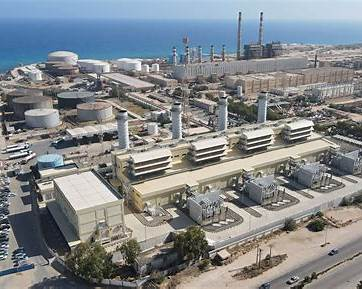
The Mellitah oil-and-gas complex is critically important because gas from Libya’s energy infrastructure feeds electricity generation.
During protests on July 28, demonstrators entered the Mellitah complex, disrupting operations. The disturbance constrained gas supplies required by power stations and knocked generating units offline.
Now the electricity crisis had created protests.
And the protests were disrupting the infrastructure supplying fuel to the electricity system.
It became a vicious circle.
Prime Minister Abdul Hamid Dbeibah subsequently ordered authorities to secure the Mellitah complex and reopen gas lines feeding power plants.
Once gas supplies resumed, GECOL announced that the national grid was gradually returning toward normal operating conditions.
That sequence provides perhaps the clearest demonstration of Libya’s vulnerability.
Gas stops.
Generating capacity falls.
Electricity shortages intensify.
Blackouts lengthen.
Public anger erupts.
Gas infrastructure becomes vulnerable.
The grid deteriorates further.
A country swimming in hydrocarbons can therefore experience an energy shortage without actually running out of energy resources.
The problem is getting those resources reliably from the field, through processing and pipelines, into generating stations and ultimately through the electrical network.
Summer Turns a Weakness Into a Crisis
Then there is the heat.
Air conditioning is not a minor luxury during a North African summer. When temperatures soar, millions of people switch on cooling systems.
Electricity demand consequently explodes.
A healthy grid prepares reserve generation for these peaks.
Libya has far less room for error.
When electricity demand rises at precisely the same time fuel shortages or maintenance problems reduce generation, the two lines cross.
Demand goes up.
Available supply goes down.
Load shedding becomes almost inevitable unless additional generation can quickly be brought online.
The result in July was extraordinary. During the worst periods of the crisis, some areas reportedly endured outages lasting up to 14 hours.
That isn’t merely inconvenient.
Fourteen hours without reliable electricity can disrupt refrigerators, air conditioning, water pumping, communications, businesses, medical services and virtually every other component of modern urban life.
And it forces households and businesses to become their own miniature utility companies.
Generators roar to life.
Fuel consumption rises.
Those who can afford backup electricity survive the blackout more comfortably.
Those who cannot simply sit in the dark.
Libya Is Still Paying for Years of Conflict
The current crisis also cannot be separated from what happened to Libya after 2011.
The country endured years of civil conflict, rival governments, armed groups and political instability.
Electrical infrastructure doesn’t enjoy immunity from war.
Transmission lines can be damaged.
Substations become vulnerable.
Maintenance is delayed.
Foreign contractors leave.
Replacement components become harder to obtain.
Major infrastructure projects stall.
Investment becomes unpredictable.
The EIA says Libya’s electricity generation declined overall after 2013 and specifically attributes the deterioration to more than a decade of civil war alongside inadequate maintenance and investment in aging plants and equipment.
The scars remain embedded inside the electrical system.
And fresh fighting continues to threaten it.
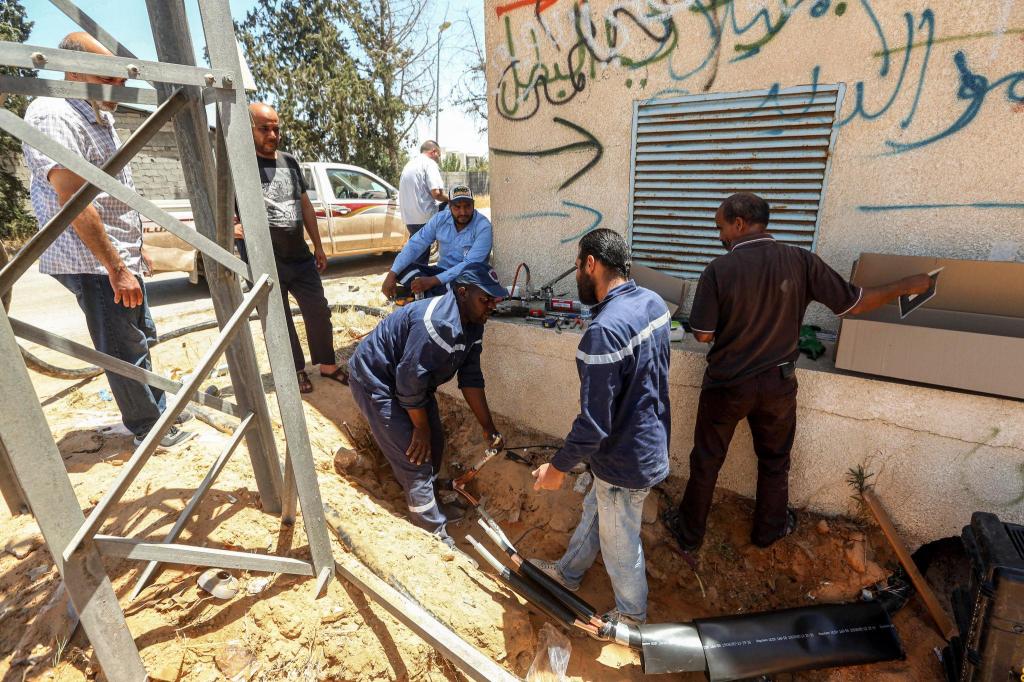
On August 5, GECOL reported that clashes along Libya’s western coast had damaged electricity infrastructure. According to the company, fighting damaged transmission lines, utility poles and transformers, interrupting electricity to residential areas. Repair crews began restoration work after security conditions improved.
That illustrates another maddening feature of Libya’s electricity problem.
Engineers can repair the grid.
Governments can purchase turbines.
GECOL can restore generating units.
But another armed confrontation can literally knock pieces of the network back down.
A Single Failure Can Spread
Libya also faces the technical problem of grid fragility.
On May 30, a major fault involving a 220-kilovolt transmission circuit in Benghazi caused lines connecting Libya’s eastern and western networks to disconnect.
All generating units in the eastern region subsequently shut down. The disturbance also activated protection systems in the western network and caused generating units at the Misrata combined-cycle plant to trip.
Think about what happened there.
One major transmission problem didn’t remain a local problem.
The disturbance traveled through an interconnected electrical system.
That’s why grid operators are so aggressive about maintaining frequency and balancing supply and demand.
Electric grids behave less like collections of independent light switches and more like enormous synchronized machines.
When one important component falls out of rhythm, protection systems begin disconnecting equipment to prevent damage.
Sometimes those protections save the grid.
But they can also leave enormous areas without electricity.
Maintenance Is the Quiet Villain
War receives headlines.
Maintenance rarely does.
But power plants are gigantic mechanical systems containing turbines, generators, compressors, pumps, boilers, transformers and control equipment operating under tremendous stresses.
They require constant maintenance.
Libya’s maintenance backlog has historically been severe.
World Bank analysis has identified poor maintenance, unavailable generating units, insufficient gas supply and broader power-system deficiencies as major constraints on usable generation.
The distinction between installed capacity and available capacity is crucial.
A country might theoretically possess thousands of megawatts of generating equipment.
That does not mean all of it can actually produce electricity tonight.
A 500-megawatt turbine undergoing overhaul produces zero megawatts.
A gas-fired plant without sufficient gas produces less electricity.
A plant disconnected because of a transmission fault cannot deliver its electricity where consumers need it.
A generator damaged during fighting might as well not exist until repaired.
The relevant number isn’t what Libya’s power stations could theoretically generate.
It’s what they can reliably generate at 4 p.m. on a scorching August afternoon when every air conditioner in Tripoli is humming.
Ironically, Libya Had Been Making Progress
There is an important twist to this story.
Libya’s electricity system had shown genuine improvement.
The EIA reported that GECOL’s operational generating capacity increased from approximately 5.8 gigawatts in 2022 to a reported 8.2 gigawatts in 2023, helping improve reliability.
The World Bank likewise says Libya has made progress reducing the duration and frequency of outages since 2022, while warning that further power-station construction, new gas turbines and maintenance of the existing generating fleet remain necessary.
That makes the 2026 crisis particularly revealing.
Libya has demonstrated that it can improve electricity reliability.
But it hasn’t yet created enough resilience to prevent political, fuel and infrastructure shocks from dragging the country backward.
Oil Wealth Does Not Automatically Produce Energy Security
This is perhaps the great Libyan paradox.
Having enormous oil reserves does not automatically give a country a reliable electrical grid.
Oil underground isn’t electricity.
Natural gas in a field isn’t electricity.
The resources must be extracted.
Gas must be processed.
Pipelines must operate.
Fuel must reach power stations.
Turbines must work.
Transmission lines must remain intact.
Substations must function.
Distribution networks must carry electricity into neighborhoods.
Engineers must maintain all of it.
And governments must coordinate the entire machine.
Break enough links in that chain and a petroleum-rich country can still go dark.
Libya is living proof.
The Economic Damage Goes Far Beyond the Electric Bill
Blackouts also quietly tax the economy.
A supermarket losing electricity risks spoiled food.
A restaurant needs refrigeration.
A machine shop cannot operate equipment.
A small technology company loses internet connectivity.
Factories lose production time.
Businesses purchase diesel generators and then pay to fuel and maintain them.
Families buy batteries, solar equipment or generators if they can afford them.
Those costs ultimately appear somewhere in the economy.
And electricity inequality develops.
Wealthier households can purchase generators, battery systems and solar panels.
Poorer families cannot.
So an unreliable national grid gradually creates two Libyas: one that can purchase private energy security and another forced to wait for GECOL.
The Solution Isn’t Simply Building Another Power Plant
Libya certainly needs additional generating capacity.
But building turbines without fixing everything around them would treat only part of the disease.
The country needs reliable fuel supplies to generating stations, aggressive maintenance of existing plants, stronger transmission infrastructure, additional generation, improved grid protection, better management of summer peak demand and considerably greater protection of energy infrastructure from armed conflict.
Diversification matters too.
Libya has extraordinary solar potential.
Solar power cannot replace the entire national system overnight, nor does it eliminate the need for storage and grid investment. But every megawatt generated from sunlight is a megawatt that does not require natural gas to be delivered to a turbine at that moment.
For an electricity system whose vulnerability repeatedly begins with fuel availability, diversification isn’t environmental decoration.
It’s energy security.
Ultimately, Libya’s Electricity Crisis Is a Governance Crisis
Turbines don’t care which political faction controls Tripoli.
Transformers don’t recognize rival governments.
Transmission lines don’t understand militias.
They simply require maintenance, investment, fuel and physical security.
That is precisely why Libya’s prolonged political fragmentation has been so damaging.
A modern electrical grid requires something Libya has struggled to maintain consistently: long-term institutional coordination.
Power plants take years to build.
Transmission projects take years to complete.
Maintenance programs require predictable budgets.
Engineers need security.
Fuel contracts require planning.
Renewable projects need regulatory certainty.
You cannot operate a national electricity system indefinitely through emergency committees and crisis meetings.
At some point, emergency management has to become infrastructure policy.
Libya Doesn’t Have an Energy Problem. It Has an Energy-System Problem.
That distinction explains the rolling blackouts better than anything else.
Libya possesses the fuel.
It possesses power stations.
It possesses experienced engineers.
And after years of investment, it has demonstrated that electricity reliability can improve.
But the system connecting those assets remains frighteningly vulnerable.
A fuel shortage removes generating capacity.
A heatwave sends demand soaring.
A technical fault destabilizes interconnected regions.
Protesters occupy an energy facility.
Fighting damages transmission equipment.
Maintenance takes another generating unit offline.
Suddenly the margin disappears.
And GECOL begins deciding which neighborhoods stay illuminated and which ones go dark.
That is the anatomy of Libya’s rolling blackout crisis.
The lights will become truly reliable only when Libya stops treating electricity as an isolated technical problem and recognizes what the grid really is: the electrical nervous system of the entire country.
Until that system receives stable fuel, maintenance, investment, physical security and political protection, every summer heatwave risks becoming another national electricity emergency.
—Matt Gwinta, Sylvester Loving, B1Daily





Leave a comment