—Michale Lyles, B1Daily
The American housing market is developing a strange new problem: there are plenty of homes looking for buyers, but a generation that should be entering its prime homeownership years is struggling to afford the invitation.
By June 2026, Redfin estimated that roughly 1.5 million home sellers were active in the U.S. market compared with about 1 million buyers, leaving nearly half a million more sellers than buyers. The number of homes listed for sale had climbed to its highest level since 2020. Zillow separately reported about 1.3 million homes for sale nationwide in April, as inventory continued to build while sales remained sluggish.
The problem is not that Americans suddenly stopped wanting houses.
The problem is that an enormous portion of younger Americans cannot afford the houses being offered to them.
What was once described as a housing shortage is increasingly becoming something more complicated: an affordability mismatch. Houses exist. Potential buyers exist. But the prices, mortgage payments, incomes and financial realities connecting the two no longer line up.
The Buyers Are Missing
Redfin’s June numbers paint an extraordinary picture.
There were approximately 1,496,490 sellers and just 1,007,735 buyers in the market, meaning sellers outnumbered buyers by 48.5%. Roughly seven out of ten major metropolitan markets analyzed by Redfin qualified as buyer’s markets.
That should normally produce a buying frenzy.
More inventory means greater selection. Sellers have less leverage. Bidding wars become less common. Price reductions become more likely. Buyers can negotiate repairs, closing costs and concessions.
Yet America’s young buyers are not storming the gates.
Many are standing outside them with calculators.
The National Association of Realtors and Realtor.com found that households have access to roughly one-quarter fewer homes than they would in a properly balanced market, because too much of the available housing stock is priced above what typical households can afford.
For a middle-income household earning about $75,000 a year, only around one-quarter of listings nationwide were financially accessible in the analysis.
That is the contradiction defining the 2026 housing market.
There can simultaneously be too many houses for sale and not enough affordable houses for sale.
Millennials and Gen Z Didn’t Forget to Buy Houses
It has become fashionable in certain corners to describe younger adults as financially irresponsible.
They spend too much.
They don’t save enough.
They supposedly waste their money on restaurants, entertainment, smartphones or vacations.
But those explanations look increasingly ridiculous beside the mathematics of modern homeownership.
A young household isn’t competing against the housing market of 1996 or 2006. It is trying to purchase at today’s prices while financing that purchase at today’s mortgage rates.
Redfin reported that the average 30-year mortgage rate during 2025 was around 6.6%.
That interest rate changes everything.
A house does not merely have a sticker price. For most Americans, its true price is the monthly payment attached to a mortgage.
Take the same mortgage principal and move the interest rate from around 3% to roughly 6.5%, and the payment can increase dramatically even though the buyer hasn’t received a single additional bedroom, bathroom or square foot.
Young buyers are not just confronting expensive houses.
They are financing expensive houses with expensive money.
The Starter Home Is Disappearing From the American Dream
The traditional homeownership ladder once had several rungs.
A young person or couple might purchase a small starter house, build equity for several years, sell it and eventually move into a larger property.
That system becomes difficult when the bottom rung drifts out of reach.
The problem highlighted by NAR and Realtor.com isn’t merely inventory. It is the distribution of inventory by price.
America can add hundreds of thousands of listings while accomplishing relatively little for first-time buyers if those listings overwhelmingly consist of homes costing far more than their incomes support.
Imagine a grocery store telling hungry shoppers that the food shortage has ended because its shelves are packed with $100 steaks.
Technically, inventory is abundant.
Practically, people are still hungry.
Housing increasingly suffers from the same distortion.
First-Time Buyers Are Getting Older
Perhaps no statistic better demonstrates the problem than the changing age of first-time buyers.
Redfin’s analysis of Census Bureau data found that the typical first-time buyer was 35 years old in 2025.
Other methodologies produce different estimates. National Association of Realtors survey data has placed the age considerably higher, illustrating just how dramatically entry into homeownership has shifted depending upon how buyers are measured.
Regardless of the precise dataset used, the broader phenomenon is unmistakable.
Homeownership is being delayed.
And delay has consequences.
If people purchase their first home later, they spend fewer years building home equity. They may delay marriage, children or household formation. They have less time to move from starter homes into larger properties.
The consequences eventually ripple into retirement wealth.
A housing crisis occurring at age 30 can still be visible on someone’s balance sheet at age 65.
Older Homeowners Hold an Advantage Younger Buyers Cannot Replicate
The housing market has also become divided between two very different financial realities.
Millions of existing homeowners bought or refinanced properties when mortgage rates were historically low.
Their mortgages may carry rates around 3% or 4%.
A 28-year-old entering the market today doesn’t get access to that world.
They may be looking at financing closer to twice that rate.
That creates one of the strangest economic divides in America: two families can live on the same street in similarly priced houses while paying dramatically different amounts each month solely because they purchased at different times.
Existing owners accumulated equity as home prices climbed.
Aspiring owners watched the ladder rise while they were still trying to reach the first rung.
The Pandemic Housing Boom Made Things Worse
The pandemic housing market poured gasoline onto the problem.
Remote work, extraordinarily low mortgage rates, migration and housing demand helped ignite enormous price increases in many metropolitan areas.
Buyers competed fiercely.
Some waived inspections.
Others offered above asking price.
Investors entered hot markets.
Builders accelerated construction in booming regions.
Then the Federal Reserve began raising interest rates.
Demand cooled.
But housing prices didn’t instantly return to their pre-pandemic levels.
Austin offers one dramatic example of the reversal. After becoming one of America’s hottest pandemic housing markets, values declined substantially from their peak as increased supply collided with weakened demand.
The broader lesson is important.
Housing prices can adjust downward, but housing affordability does not automatically recover when falling prices are accompanied by elevated borrowing costs.
Sellers Are Discovering That 2021 Is Gone
Some homeowners are also trapped psychologically in yesterday’s housing market.
They remember neighbors receiving five offers in a weekend.
They remember houses selling above asking price.
They remember buyers begging sellers to accept their offers.
That market created expectations.
The 2026 buyer does not necessarily have the financial firepower to meet them.
Redfin found that the seller-buyer imbalance reached historic territory during late 2025 and early 2026. In February, sellers outnumbered buyers by almost 630,000, the largest recorded gap in Redfin’s data going back to 2013.
By June, the numerical gap had narrowed somewhat, but sellers still outnumbered buyers by nearly half a million.
That is a warning to homeowners expecting pandemic-era prices indefinitely.
Eventually, a house is worth what somebody can actually finance.
Young Americans Are Facing More Than the Mortgage
Buying the house is only the beginning.
Prospective owners must consider property taxes, homeowners insurance, maintenance, utilities, repairs and closing costs.
Insurance costs have become particularly important in states exposed to hurricanes, wildfires and other natural disasters.
A buyer who can technically scrape together the mortgage payment may still decide the entire package is financially reckless.
Young Americans are therefore making a calculation previous generations also made, but with harsher numbers attached.
Can I buy this house?
More importantly:
Should I?
Those are different questions.
The Market Could Eventually Force Prices Lower
The seller surplus cannot continue indefinitely without consequences.
If houses remain listed and buyers don’t appear, sellers eventually face several choices.
They can wait.
They can remove the property from the market.
They can rent it.
Or they can lower the price.
That final option is where younger buyers may eventually gain leverage.
Redfin already describes much of the United States as a buyer’s market because buyers have more properties to choose from and therefore greater negotiating power.
But there is an enormous caveat.
A buyer’s market is useful only if you can afford to be a buyer.
Having negotiating power on a $500,000 house doesn’t mean much to a household capable of financing only $275,000.
The Sun Belt Is Feeling the Shift First
Some of America’s former pandemic boomtowns are experiencing the most dramatic changes.
In June, Redfin identified Miami, Nashville, Houston, San Antonio and Austin among the country’s strongest buyer’s markets. Miami had an estimated 140% more sellers than buyers, Nashville 129%, Houston 124%, San Antonio 117% and Austin 101%.
Those numbers would have sounded absurd during the pandemic frenzy.
Yet they demonstrate how quickly housing markets can turn once supply rises and buyers lose purchasing power.
The “housing shortage” story is increasingly becoming regional.
Some communities still desperately lack homes.
Others now have plenty of homes but too few people able or willing to purchase them at current prices.
This Is Becoming a Generational Problem
America’s housing crisis is therefore moving into a dangerous second stage.
Stage one was scarcity.
There were too few homes.
Prices exploded.
Buyers competed.
Stage two may be economic separation.
Homes return to the market, but younger households remain locked outside because the financial requirements of ownership have outrun their earnings.
That situation cannot be repaired simply by constructing luxury subdivisions.
America needs housing at prices connected to American incomes.
That means increasing the supply of starter homes, townhouses, modest single-family houses and other entry-level properties rather than treating every new development as an opportunity to push prices toward the upper end of the market.
Nearly a Million Buyers Exist, but That Isn’t Enough
There is one important correction to the dramatic claim circulating around this story.
It would be inaccurate to say that “nearly a million houses have been abandoned on the market because there are no young buyers.”
The latest available data tell a more nuanced story.
There are well over one million homes listed for sale, and roughly one million estimated active buyers, but the seller side remains dramatically larger. Zillow counted about 1.3 million homes for sale in April, while Redfin estimated almost 1.5 million sellers and approximately 1 million buyers in June.
And not every missing buyer is young.
Still, younger and first-time buyers are disproportionately exposed to affordability problems because they generally have less accumulated home equity and wealth available for down payments.
That is why the generational angle matters.
America Built Homes Its Next Generation Can’t Afford
The most troubling possibility isn’t that young Americans don’t want homeownership.
It is that the country constructed an economy in which they increasingly cannot justify buying one.
There are houses.
There are people who want houses.
There are sellers who want to sell.
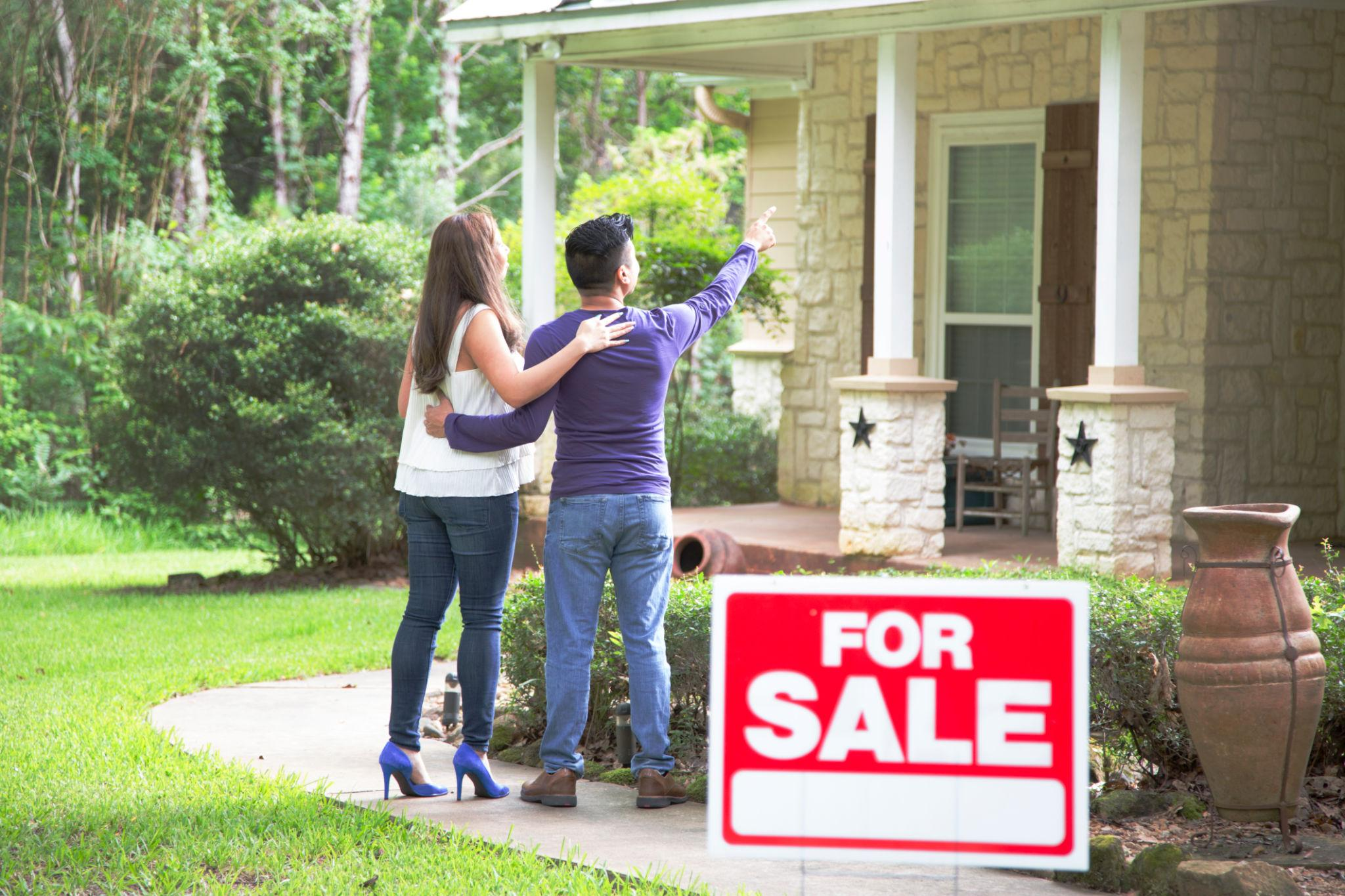
There are younger adults who want families, yards, garages, spare bedrooms and a permanent piece of America to call their own.
But between those groups stands a wall built from home prices, mortgage rates, insurance, taxes and insufficient entry-level inventory.
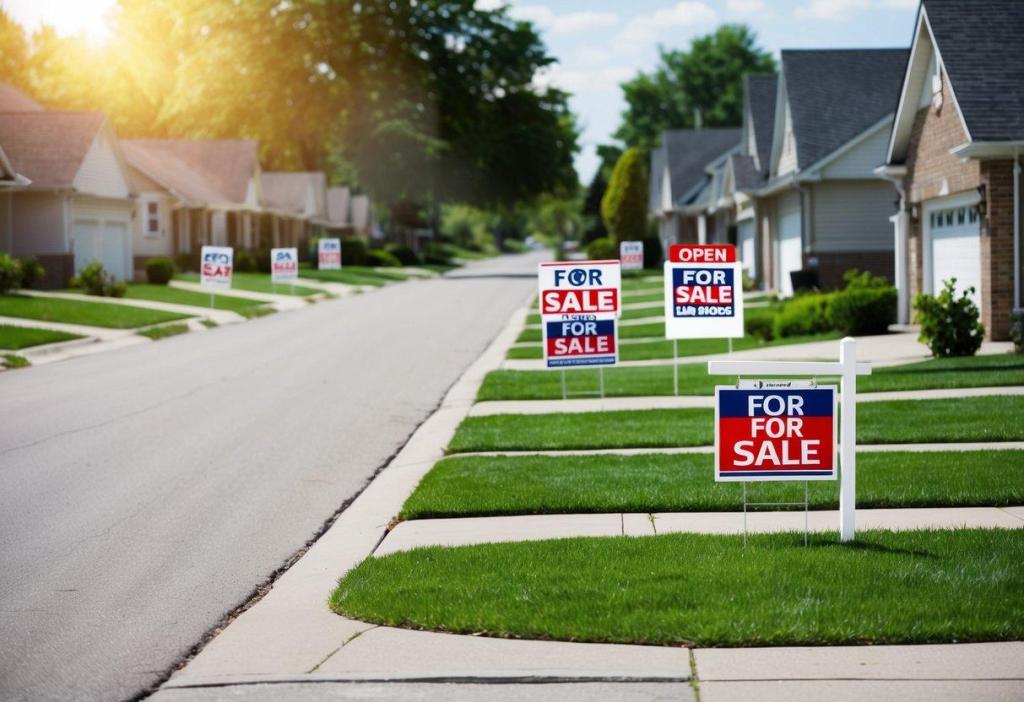
The result is an American housing market crowded with For Sale signs while millions of potential future homeowners remain renters.
That should concern more than real estate agents.
Homeownership has historically been one of America’s primary engines for household wealth creation. When a generation enters that system later, or never enters at all, the consequences extend beyond housing.
They affect wealth inequality.
Retirement.
Family formation.
Neighborhood stability.
And the ability of one generation to pass assets to the next.
America does not merely have a housing inventory problem anymore.
It has a buyer-production problem.
The country created houses faster than it created the economic conditions necessary for the next generation to purchase them.
Until that equation changes, more lawns may carry For Sale signs while the buyers those homes were supposedly built for keep driving past.
—Michale Lyles, B1Daily






Leave a comment