—Sylvester Loving, Michael Lyles, B1Daily
The most powerful weapon in the American arsenal may not sit aboard an aircraft carrier or inside a missile silo. It may sit quietly inside the plumbing of the international financial system.
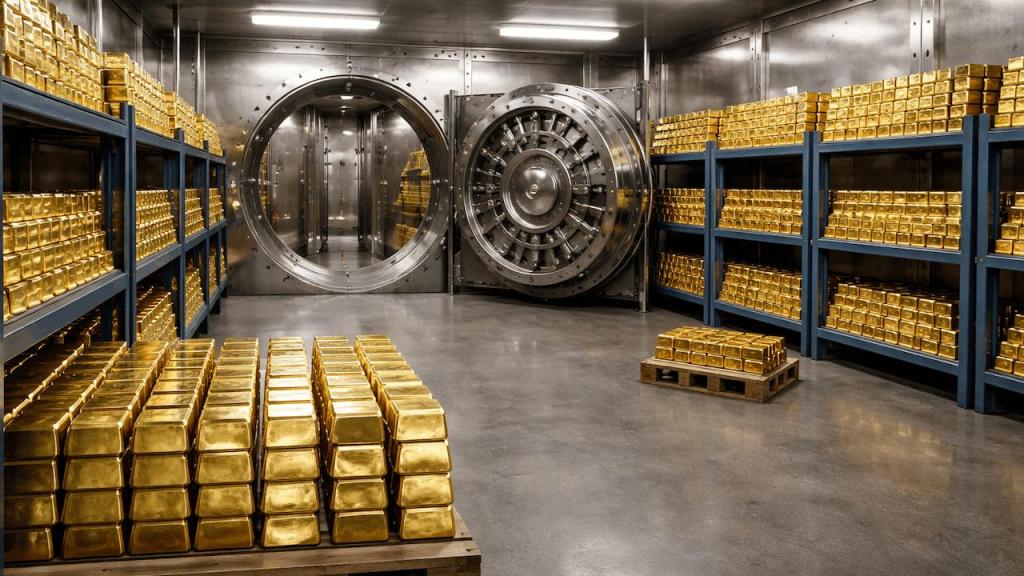
For countries that collide with Washington, the danger is not limited to military intervention. Governments can lose access to dollar clearing, overseas bank accounts, foreign-exchange reserves, investment assets, and, in some circumstances, gold stored beyond their borders. That reality has fueled an increasingly provocative argument across the developing world: does Western control over the global financial architecture allow the United States and its allies to neutralize countries economically before, during, or after confronting them politically?
The historical record establishes that Washington has frozen and controlled foreign state assets. It also establishes that Western sanctions can make national reserves inaccessible to governments Washington opposes. What the evidence does not establish is a sweeping American program of literally stealing other countries’ gold specifically to prevent the creation of a gold-backed competitor to the dollar.
That distinction matters. The documented history is already controversial enough without turning inference into fact.
Gold Is More Than a Shiny Metal
Gold occupies a peculiar place in geopolitics because it can function outside another government’s monetary system.
A country holding billions of dollars in Treasury securities or deposits ultimately possesses claims embedded in a financial network heavily influenced by the United States. Physical gold stored domestically is different. It has no issuing government, cannot be created by another central bank, and can potentially be transferred or pledged without relying entirely upon dollar-based infrastructure.
That makes gold especially attractive to countries worried about sanctions.
This helps explain why central banks have increased their interest in gold as protection against geopolitical and sanctions risk. The lesson delivered by modern sanctions is difficult to miss: a foreign reserve is only completely useful when its owner can actually access it.
And Washington possesses extraordinary leverage because the dollar remains at the center of global finance.
America Once Wanted the Dollar Tied to Gold
There is an irony buried beneath today’s suspicions about gold-backed challengers.
The United States itself built its postwar monetary supremacy partly on gold.
Under the Bretton Woods system established in 1944, participating countries generally maintained fixed exchange rates against the dollar while the United States promised foreign monetary authorities that dollars could be converted into gold at $35 per ounce.
America emerged from World War II with enormous economic power and gold holdings. The arrangement therefore placed the dollar at the center of international commerce while giving foreign governments confidence that the dollar represented something tangible.
But the system developed a fundamental contradiction. As dollars accumulated overseas, foreign dollar claims eventually exceeded the amount of American gold available to redeem them at the official rate. In August 1971, President Richard Nixon closed the so-called gold window and ended dollar convertibility into gold.
The dollar survived.
More importantly, it remained dominant without gold.
That was an extraordinary achievement. The world’s leading reserve currency had migrated from a partially gold-backed system toward one supported by the size of the American economy, Treasury markets, financial institutions, political relationships and confidence in U.S. obligations.
From Washington’s perspective, preserving that system is unquestionably a major strategic interest.
But preserving dollar dominance and stealing foreign gold are two very different claims.
Libya Is Where the Argument Becomes Explosive
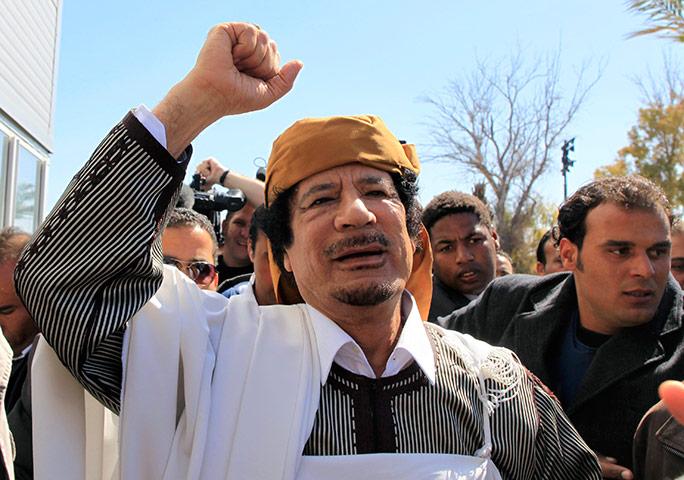
No country features more prominently in the gold-and-dollar debate than Libya under Muammar Gaddafi.
Gaddafi promoted greater African monetary and financial independence and Libya possessed substantial financial resources. After rebellion erupted in 2011, the United States imposed sweeping sanctions against Gaddafi’s government.
This portion is not speculation.
President Barack Obama’s Executive Order 13566 blocked property belonging to the Libyan government, its agencies and controlled entities within U.S. jurisdiction. The restrictions extended to Libya’s central bank.
Then came war.
NATO intervened, Gaddafi’s government collapsed and Gaddafi was killed.
That sequence has helped produce one of the most persistent theories about the intervention: that Gaddafi’s plans for African monetary independence, sometimes described as a proposed gold-backed African dinar, threatened Western currency dominance and therefore helped motivate his removal.
It is an intriguing geopolitical argument, but it should not be presented as an established explanation for the war. Evidence that Western officials knew about Libya’s gold or Gaddafi’s monetary ambitions does not by itself prove that destroying a gold-backed currency was Washington’s reason for intervention.
There is also an important fact that complicates the simple “America stole Libya’s gold” narrative.
In December 2011, the U.S. Treasury announced that it was unblocking more than $30 billion in Libyan government assets, including assets associated with the Central Bank of Libya and Libyan Arab Foreign Bank. Certain Libyan Investment Authority assets, including precious metals, remained blocked at that stage.
That is evidence of enormous Western financial power over Libya.
It is not evidence that the United States simply hauled Libya’s national gold supply away and kept it.
The more defensible criticism is arguably more unsettling: the international system gives Washington and allied financial centers the ability to determine whether another sovereign government can access portions of its own wealth.
Venezuela Learned the Same Lesson
Venezuela provides another revealing example, although an important distinction is necessary: the famous Venezuelan gold dispute involved the Bank of England, not gold seized and held by the United States.
Venezuela had placed part of its central-bank gold abroad, a perfectly normal reserve-management practice. But when Nicolás Maduro’s government became internationally isolated and Washington and London recognized opposition leader Juan Guaidó, control of those reserves became entangled in the political dispute over Venezuela’s legitimate government.
During the COVID-19 crisis, Venezuela’s central bank sought access to roughly $1 billion worth of gold held in London, proposing that proceeds be transferred through the United Nations Development Programme for humanitarian purchases. Litigation followed over who had authority over the reserves.
Whatever one thinks of Maduro, the episode sent an unmistakable signal to governments around the world:
Gold stored overseas may belong to you legally while remaining beyond your practical control politically.
That lesson reaches far beyond Venezuela.
Afghanistan Showed the Power of Financial Immobilization
When the Taliban seized Afghanistan in 2021, another version of the same phenomenon appeared.
Afghanistan’s central bank possessed billions of dollars in international reserves, much of which was held outside Afghanistan. After the Taliban takeover, the new rulers could not simply obtain those reserves.
Again, this was not American soldiers breaking into Kabul’s central bank and carrying gold bars onto airplanes.
It demonstrated something more sophisticated.
Modern financial warfare frequently does not require physically confiscating treasure.
If reserves are held in institutions subject to American jurisdiction, dollar infrastructure or allied governments, access can potentially be blocked.
The vault can remain locked without anyone moving the gold.
Iraq and the Danger of Turning Suspicion Into History
Iraq is another country frequently cited in claims that American military intervention was followed by the disappearance or confiscation of national wealth.
There were enormous seizures of cash, assets and valuables during and after the 2003 invasion, and control of Iraqi financial resources became an important component of the occupation.
But claims that the United States invaded Iraq specifically to steal its gold or prevent Saddam Hussein from establishing a gold-backed rival to the dollar require evidence that has never been convincingly established.
The same problem appears in claims that Iraq was invaded because Saddam moved oil transactions away from dollars.
Currency policy can certainly have geopolitical implications. Yet chronological coincidence is not proof of causation.
An investigation worthy of the subject has to separate three things:
what happened, what policymakers intended, and what critics believe those actions ultimately accomplished.
Blurring them produces a better conspiracy theory but a worse history.
The Dollar Doesn’t Need America to Steal Gold
There is another weakness in the theory that Washington must eliminate gold-backed currencies to preserve the dollar.
A government announcing that its currency is “backed by gold” does not magically create a competitor to the dollar.
Reserve currencies require enormous financial markets, convertibility, political stability, reliable institutions, liquidity and widespread international acceptance. Governments and corporations need somewhere to place gigantic quantities of money safely.
The dollar’s strength comes substantially from that ecosystem.
America therefore doesn’t need to invade every country contemplating a gold-linked currency to maintain dollar dominance.
At the same time, Washington does have a strategic interest in preserving the dollar-centered financial order because that system provides the United States with tremendous economic and geopolitical advantages.
Those two propositions can coexist.
The Real Power Is the System
This is where the conversation becomes more interesting than the allegation of soldiers stealing bullion.
Imagine two countries.
Country A keeps $50 billion worth of reserves inside institutions controlled entirely within its borders.
Country B keeps $50 billion scattered through overseas banks, dollar-denominated securities and custodial accounts in jurisdictions allied with the United States.
Both countries technically possess $50 billion.
But during a geopolitical confrontation, they may discover that they possess two very different kinds of sovereignty.
Country B’s wealth runs through somebody else’s switches.
That is the extraordinary power created by financial centralization.
The United States can impose sanctions preventing Americans from conducting certain transactions. It can freeze assets under American jurisdiction. Because American financial institutions and the dollar are deeply integrated into international commerce, those restrictions can reverberate far beyond U.S. borders.
That can devastate a targeted government’s ability to acquire foreign currency, finance imports or move money internationally.
No truck full of stolen gold is necessary.
Why Countries Are Buying Gold Again
This vulnerability helps explain why gold has regained geopolitical importance.
For countries worried that relations with Washington could deteriorate, the calculation is straightforward. Dollar reserves are extraordinarily useful during ordinary times. During a sanctions confrontation, however, dependence upon financial infrastructure controlled by an adversary becomes a liability.
Physical gold stored domestically provides a degree of insulation.
That does not make a country sanctions-proof. Venezuela itself demonstrates that gold cannot cure economic mismanagement, political instability or dependence on external markets.
But gold offers something increasingly valuable in a fragmented world: an asset without another government’s signature printed across it.
That is why the emerging global gold rush should concern Washington more than fantastical stories about secret vault robberies.
Countries do not need to believe that America literally steals gold.
They only need to believe that their reserves could someday become inaccessible.
The Bigger Threat to Dollar Dominance
Ironically, aggressive use of America’s financial power could eventually encourage exactly the diversification Washington would rather avoid.
If governments believe dollar reserves can become geopolitical leverage, they have incentives to diversify into gold, other currencies, alternative payment networks and assets outside Western jurisdictions.
None of those alternatives presently reproduces the complete ecosystem surrounding the dollar.
But monetary dominance rarely disappears overnight.
It erodes around the edges.
One bilateral trade agreement settles outside dollars. Another central bank purchases additional gold. Another country repatriates bullion from foreign vaults. Another payment network bypasses American financial institutions.
Individually, these moves barely disturb the monetary ocean.
Collectively, over decades, they could change its currents.
America Doesn’t Have to Steal the Gold to Control the Battlefield
So does the United States have a documented history of invading countries, stealing their gold and destroying governments specifically to prevent gold-backed currencies from challenging the dollar?
The available evidence does not justify making that claim as fact.
But dismissing the entire concern would also miss the deeper story.
The United States sits at the center of a global financial architecture that gives it extraordinary influence over international transactions and foreign assets located within its jurisdiction. Washington has repeatedly frozen foreign state property. Libya demonstrated the reach of those powers when U.S. sanctions blocked Libyan government and central-bank assets before billions were subsequently released.
Meanwhile, Venezuela demonstrated the political vulnerability of sovereign gold stored abroad, even though London rather than Washington physically controlled the disputed bullion.
These cases are important precisely because they don’t require a secret conspiracy.
They reveal something sitting openly in the architecture of international finance.
The twentieth century taught governments that military independence requires control over their territory.
The twenty-first may be teaching them that monetary independence requires control over their reserves.
And that could ultimately pose a greater long-term challenge to dollar supremacy than any single gold-backed currency ever could.
—Sylvester Loving, Michael Lyles, B1Daily






Leave a comment