—Vanessa Edwards, B1Daily
A neighborhood can have restaurants, convenience stores and shelves packed with food while still leaving residents struggling to find something as basic as affordable fresh vegetables.
That contradiction sits at the heart of America’s food-access problem.
The term “food desert” has traditionally described communities where residents have limited access to supermarkets and other sources of affordable, nutritious food. The U.S. Department of Agriculture increasingly uses terms such as “low income and low access” because distance alone doesn’t tell the entire story. Income, transportation, vehicle availability and the types of retailers within reach all determine whether someone can realistically obtain healthy food.
For many communities, particularly lower-income urban neighborhoods and rural areas, the problem isn’t that residents don’t understand that fruits, vegetables and minimally processed foods are healthier. The problem is that the healthier choice can be the harder choice to obtain.
And that makes food access a public-health issue.
When Your ZIP Code Shapes Your Dinner Plate
Imagine two families receiving the same nutritional advice.
The first family lives five minutes from a supermarket stocked with affordable produce, lean meat, whole grains and fresh dairy products.
The second lives miles from a full-service grocery store, doesn’t own a car and depends on a nearby convenience store where packaged snacks, sugary drinks and highly processed foods dominate the shelves.
Telling both families simply to “eat healthier” ignores the radically different environments in which they’re making decisions.
USDA’s updated Food Access Research Atlas specifically examines factors such as distance from food retailers, household resources, vehicle availability and public transportation because food accessibility is more complicated than whether a supermarket technically exists somewhere nearby.
The health consequences matter. The CDC says poor diets contribute to chronic illnesses including heart disease, type 2 diabetes and obesity, while lower-income communities are among those more likely to lack convenient places offering affordable healthier foods.
Healthy eating therefore cannot be treated exclusively as a matter of personal responsibility.
Choice requires access.
The Grocery Store Problem
One obvious solution is attracting supermarkets to underserved neighborhoods.
That matters. A full-service grocery store can provide thousands of products under one roof and create local employment.
But dropping a supermarket into a neighborhood isn’t a magic cure.
A store must remain economically sustainable. Residents need transportation to reach it. Prices have to be affordable. Products should reflect the cultural preferences of the surrounding community. And the store needs enough consistent customers to remain open.
That’s why the strongest food-access strategy isn’t simply “build more supermarkets.”
Communities need multiple layers of food infrastructure.
The CDC identifies approaches including incentives for retailers to operate in underserved areas, linking local food hubs with small businesses, expanding farmers markets, improving healthy-food availability at existing retailers and supporting fruit-and-vegetable incentive programs.
Some of the most interesting solutions are happening outside traditional supermarket walls.
Community Gardens: Turning Empty Lots Into Assets
An abandoned urban lot can collect weeds, trash and frustration.
Or it can grow tomatoes.
Community gardens represent one of the simplest forms of neighborhood food independence. Vacant or underused land can be transformed into plots producing vegetables, herbs and fruit while giving residents greater control over at least a portion of their food supply.
Their value extends beyond the harvest.
Gardens can teach children where food comes from, provide older residents with opportunities for physical and social activity, create neighborhood gathering spaces and build practical knowledge about growing food.
But community gardens shouldn’t become an excuse for governments to abandon larger food-access investments. A few raised beds cannot feed thousands of households year-round.
They are one piece of the puzzle.
Mobile Markets: If the Grocery Store Won’t Come, Put It on Wheels
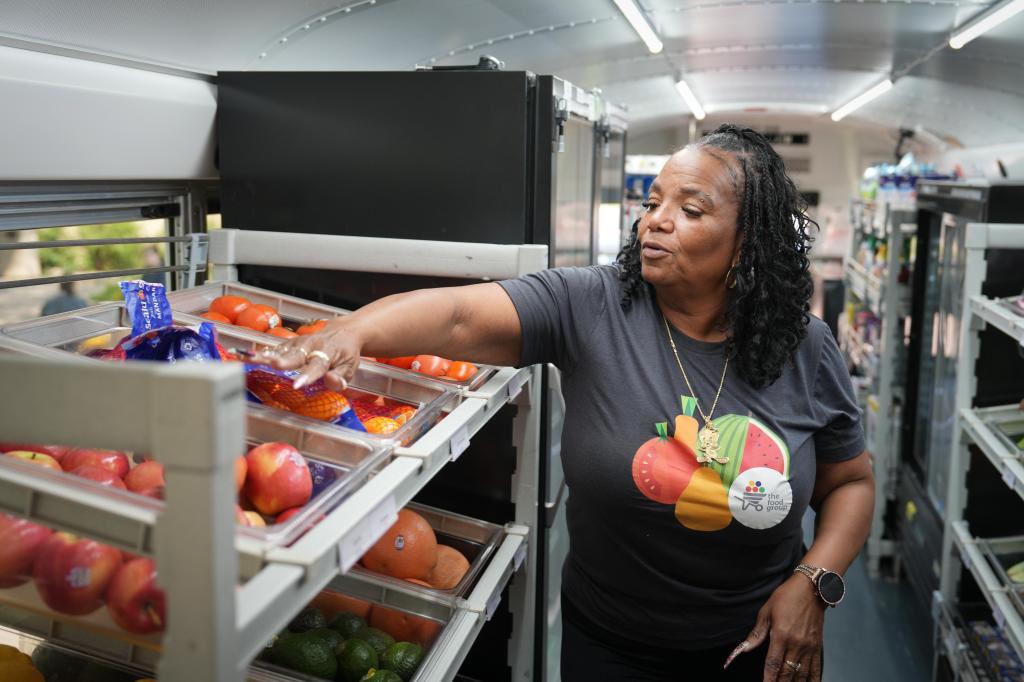
Another promising model puts the grocery aisle on a truck.
Mobile food markets can bring fruits, vegetables and other groceries directly into neighborhoods with limited retail access. Instead of requiring residents to travel several miles to a supermarket, refrigerated trucks can establish regular stops at churches, apartment complexes, community centers and other neighborhood locations.
USDA has studied mobile markets as a comparatively low-cost alternative to establishing traditional brick-and-mortar stores in underserved communities.
The concept is refreshingly practical.
Transportation is part of the food-access problem, so instead of asking every resident to solve the transportation problem individually, move the food closer to the residents.
Mobile markets aren’t replacements for supermarkets either. Their inventory and schedules can be limited. But paired with permanent stores, farmers markets and community gardens, they can close important gaps.
Strengthening Neighborhood Stores
There is another resource hiding in plain sight: the stores already operating in underserved neighborhoods.
Corner stores and small independent grocers frequently have something large supermarket chains desperately want: location.
They are already embedded within communities.
Rather than waiting years for a national grocery chain to build a supermarket, cities and nonprofit organizations can help existing neighborhood retailers install refrigeration, source affordable produce and expand healthier inventory.
That turns food-access policy into neighborhood economic development.
Instead of residents’ grocery dollars automatically flowing to corporations outside the community, locally owned stores can capture more of that spending, employ neighborhood residents and potentially purchase products from regional farmers and food producers.
Food access then becomes not merely a health initiative but an ownership strategy.
Farmers Markets Need to Be Affordable Markets
Farmers markets can also connect consumers directly with growers, but affordability matters.
A beautiful farmers market filled with premium produce doesn’t solve food insecurity if nearby families cannot afford to shop there.
Programs that allow SNAP participants to use benefits at participating markets, combined with fruit-and-vegetable incentives, can help close that gap. The CDC specifically identifies produce incentive programs as one strategy communities can use to improve access to healthier foods.
That creates an economic loop worth encouraging:
Public nutrition assistance → household food → local retailer or farmer → regional economy.
Instead of treating nutrition programs exclusively as emergency assistance, policymakers can design them to strengthen local food infrastructure at the same time.
Community Ownership Changes the Equation
Perhaps the most important word in “community-led solution” is led.
Residents shouldn’t simply be surveyed after outside organizations have already decided what their neighborhood needs.
They should have ownership.
A neighborhood grocery cooperative can allow residents to become members and stakeholders. Community land trusts can protect agricultural spaces from development. Local entrepreneurs can operate markets. Churches can provide land for gardens. Schools can partner with nearby farms. Neighborhood organizations can help determine where mobile markets stop and what foods they carry.
The people living with the problem often understand its practical details better than consultants looking at a map.
They know which bus route doesn’t run frequently enough.
They know which convenience store everybody uses.
They know which apartment complex houses dozens of seniors without cars.
They know which abandoned lot has sat empty for fifteen years.
They know which foods families actually cook.
That knowledge is infrastructure too.
Food Access Is Health Infrastructure
America spends enormous amounts treating chronic disease after it develops.
Improving food environments attacks part of the problem earlier.
That doesn’t mean broccoli is a substitute for doctors, medication or medical treatment. It means healthcare and healthy environments should complement each other.
The CDC argues that making nutritious foods affordable and readily available creates conditions in which healthier choices become easier.
That principle should shape how policymakers think about underserved neighborhoods.
A supermarket isn’t merely retail.
A community garden isn’t merely landscaping.
A mobile market isn’t merely a truck.
A farmers market isn’t merely a weekend attraction.
Together they form part of the infrastructure determining what food reaches people’s kitchens.
And when communities themselves participate in designing and owning that infrastructure, food-access programs can accomplish something even larger.
They can improve health while creating businesses, jobs, neighborhood investment and greater control over one of life’s most fundamental necessities.
The long-term solution to food deserts isn’t parachuting vegetables into struggling neighborhoods once a month.
It is creating durable local food ecosystems where healthy food is affordable, convenient and economically connected to the people who live there.
Because healthy communities shouldn’t have to travel across town just to find healthy food.
—Vanessa Edwards, B1Daily






Leave a comment