—Michael Lyles, B1Daily
There was a time when laying off thousands of workers was regarded as evidence that something had gone terribly wrong inside a corporation.
By the end of the Jack Welch era, Wall Street could interpret layoffs as evidence that management was finally doing something right.
That transformation is one of the most consequential changes in modern American business history.
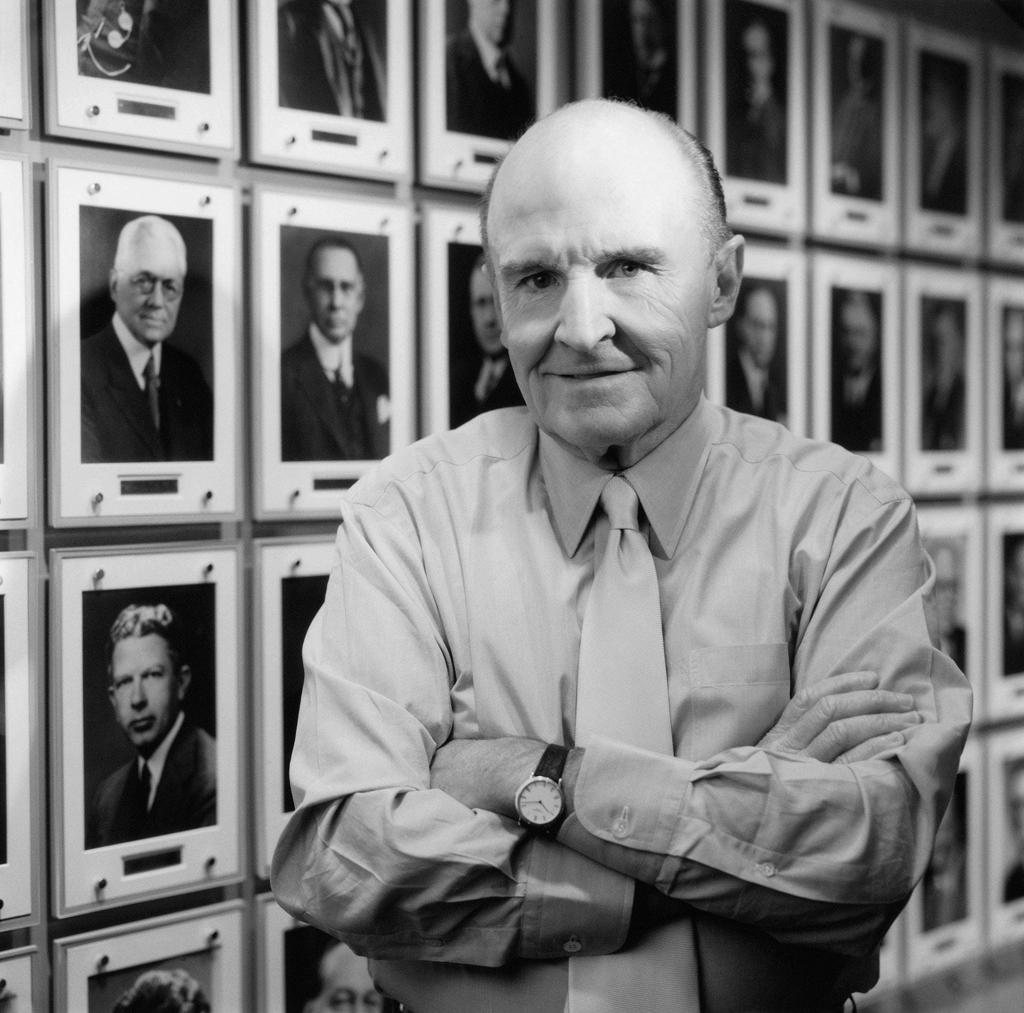
When Jack Welch became CEO of General Electric in 1981, GE was already one of America’s great industrial institutions. It manufactured everything from appliances and aircraft engines to electrical equipment. The company represented an older model of American capitalism in which giant corporations employed enormous workforces and often maintained relationships with employees lasting decades.
Welch had different ideas.
His GE would be leaner, faster, more competitive and ruthlessly focused on performance.
Businesses that could not become No. 1 or No. 2 in their markets were candidates for restructuring or disposal. Bureaucratic layers were eliminated. Factories closed. Businesses were sold. Jobs disappeared.
Welch became so closely associated with workforce reductions that he acquired the nickname “Neutron Jack,” a reference to the neutron bomb’s supposed ability to kill people while leaving buildings standing.
Yet Wall Street loved much of what it saw.
During Welch’s roughly two decades running GE, the company’s market capitalization increased spectacularly, turning him into one of America’s most celebrated executives. Fortune named him its “Manager of the Century” in 1999.
The message traveled throughout corporate America.
A CEO wasn’t merely responsible for managing a company.
The CEO was responsible for maximizing its value.
The Corporation Becomes a Portfolio
Welch’s philosophy fit perfectly with the shareholder-value revolution spreading through American business.
Instead of viewing GE as a permanent collection of factories, workers and divisions, management increasingly treated the corporation as a portfolio of businesses.
A division existed because it generated adequate returns.
If it didn’t, management could fix it, sell it or close it.
Financially, the logic could be compelling.
Socially, it represented a dramatic change.
The corporation no longer necessarily owed a struggling factory or community patience simply because generations of workers had built the company there.
Capital could move.
Workers usually couldn’t.
The Layoff Becomes Management Strategy
Welch did not invent layoffs.
Companies had dismissed workers throughout industrial history.
What changed was their meaning.
Layoffs increasingly became proactive rather than exclusively reactive.
Management didn’t necessarily need to wait for bankruptcy or catastrophic losses. A profitable company could reduce employment simply because executives believed the company could become more profitable with fewer workers.
That distinction helped reshape the psychological contract between American employers and employees.
The old expectation of lifetime employment began disappearing.
Workers were increasingly responsible for maintaining their own employability.
Corporations were increasingly responsible for maintaining shareholder returns.
Rank-and-Yank
Welch also became famous for an aggressive performance-management culture often associated with ranking employees and removing persistent low performers.
The philosophy was straightforward: reward the best, develop the middle and remove the weakest.
Supporters argued that this prevented complacency.
Critics argued that forced rankings encouraged internal competition, damaged teamwork and created an atmosphere where employees feared becoming tomorrow’s expendable percentage.
Regardless of the verdict, Welch’s enormous prestige meant executives across America studied GE.
Business schools studied GE.
Consultants studied GE.
Corporate boards wanted their own Jack Welch.
Financialization Comes to GE
Perhaps the most important part of Welch’s legacy wasn’t layoffs at all.
It was finance.
GE Capital expanded dramatically and became an increasingly important contributor to GE’s earnings. The company famous for manufacturing turbines and appliances became deeply involved in lending and financial services.
That worked spectacularly until the financial crisis exposed how much risk had accumulated inside the model.
The later unraveling of GE would cause a major reassessment of Welch’s legacy. Critics questioned whether some of the extraordinary performance associated with his leadership had depended too heavily on financial engineering, acquisitions and relentless pressure to meet earnings expectations.
The icon developed cracks.
Welch’s Real Legacy
Jack Welch didn’t single-handedly destroy corporate loyalty.
Globalization mattered.
Automation mattered.
Wall Street mattered.
Milton Friedman’s shareholder philosophy mattered.
Hostile takeovers mattered.
Changes in executive compensation mattered.
But Welch demonstrated that an executive could aggressively restructure an enormous American corporation, eliminate jobs and be celebrated as a management superstar while doing it.
That was culturally revolutionary.
The corporation increasingly stopped promising:
“Give us your career and we’ll give you security.”
The new arrangement became:
“Give us performance for as long as we need you.”
American workers have been living with that bargain ever since.
—Michael Lyles, B1Daily




Leave a comment