—Matt Gwinta, B1Daily
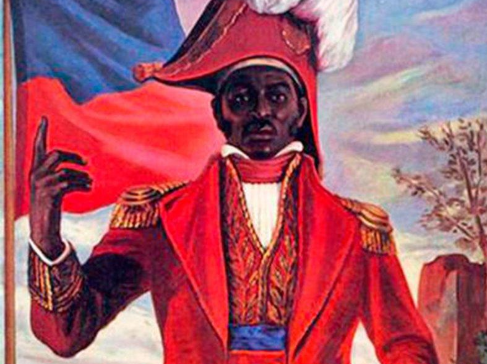
Haiti did something in 1804 that terrified the slaveholding world: enslaved Black people defeated one of Europe’s great military powers and created an independent nation.
The Haitian Revolution was unquestionably a military and political victory. Haiti became the second independent country in the Americas and the first modern state created through a successful revolt of enslaved people.
Yet there is another way to examine what happened afterward. Haiti won its revolution, but the international system made that victory extraordinarily expensive to keep.
France Lost the War, Then Sent the Bill
The most devastating blow arrived not in 1804 but 21 years later.
In 1825, French King Charles X recognized Haitian independence only after demanding an enormous indemnity. Haiti agreed to pay 150 million francs, ostensibly compensating former French colonists for property lost during the revolution. That property included plantations and, grotesquely, the formerly enslaved people themselves.
Contemporary U.S. diplomatic records confirm both the 150-million-franc obligation and the severe drain its early payments placed on Haiti’s finances.
Think about the historical absurdity: France had enslaved Haitians, Haiti fought for its freedom, and then the formerly enslaved society was forced to compensate interests connected to the former slaveholding colonial order.
Haiti had won the battlefield.
France found another weapon: debt.
Independence Without Economic Freedom
The indemnity was later reduced, but the financial damage didn’t simply disappear.
Haiti had to borrow money and dedicate government revenue toward servicing foreign obligations. Decades later, American diplomats were still describing the French debt as an enormous burden on Haiti’s finances. In 1875, U.S. diplomat Ebenezer Bassett reported that Haiti’s finances were exhausted, the French debt was in arrears and the government was seeking another foreign loan.
That matters because money servicing debt couldn’t simultaneously build roads, schools, ports, sanitation systems, agricultural infrastructure and strong government institutions.
The United States also refused to recognize Haiti until 1862, partly reflecting the hostility of a slaveholding republic toward a nation born from a successful slave revolution.
Haiti therefore entered the nineteenth century politically independent but economically isolated and financially constrained.
But France Doesn’t Explain Everything
It would be too simple, however, to blame every subsequent Haitian political failure exclusively on France. There is a serious issue with loyalty system of its people to one and another, and without a proper code of conduct, all other poltical moves become mute.
Haiti developed serious internal political divisions almost immediately after independence. Jean-Jacques Dessalines was assassinated in 1806, and the country subsequently divided between competing governments before Jean-Pierre Boyer reunified much of it.
Military strongmen, coups, constitutional crises and struggles among political elites repeatedly weakened the country’s institutions. By the nineteenth century, American diplomatic correspondence was already describing periods in which constitutional succession threatened to collapse into armed confrontation.
Those were Haitian political failures, and they deserve acknowledgment.
But they didn’t occur inside a laboratory.
They developed in a young nation emerging from a catastrophic colonial slave economy, devastated by war, diplomatically isolated and eventually saddled with an extraordinary foreign financial burden.
Did Haiti “Technically Lose”?
Not in the literal historical sense.
Haiti won the Haitian Revolution. France’s attempt to restore colonial control and slavery failed spectacularly, and Haitian independence survived.
But if victory means gaining the freedom and resources necessary to construct a stable, prosperous state, the aftermath becomes considerably more complicated.
France lost direct control of Haiti but managed to extract wealth from its former colony afterward. The U.S. State Department’s own historical account says the French indemnity kept Haiti in a persistent state of debt and gave France substantial influence over Haitian trade and finances.
That economic burden interacted with Haiti’s own political conflicts, weak institutions, foreign interference and later occupations to create problems that compounded across generations.
So perhaps Haiti’s tragedy wasn’t that its revolution failed.
It was that Haiti won one of history’s greatest battles for freedom, only to discover that the colonial powers had another battlefield waiting for it, one fought with debt, diplomatic isolation and economic power instead of muskets and cannons.
—Matt Gwinta, B1Daily





Leave a comment