—Kerry Hill, B1Daily
Corporate America discovered racial justice with astonishing speed in 2020.
Following the murder of George Floyd and the nationwide protests that followed, corporations issued statements about systemic racism, announced diversity initiatives, pledged money to racial-equity causes and promised to rethink everything from hiring to supplier relationships.
Black squares appeared. Statements arrived. Executives discovered vocabulary that seemingly hadn’t existed in their boardrooms the previous year.
Then the political weather changed.
And suddenly, some of those convictions became considerably more negotiable.
From Corporate Principle to Corporate Liability
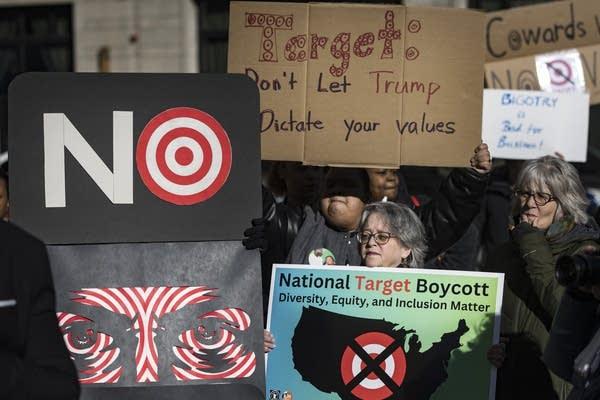
Beginning in 2024 and accelerating in 2025, major companies scaled back, eliminated or restructured diversity initiatives. The list included Walmart, Target, Meta, Amazon, McDonald’s, Ford, Lowe’s, John Deere and Tractor Supply, although the specific changes varied substantially between companies.
By 2025, Reuters described Corporate America as caught between the DEI commitments it embraced after 2020 and mounting legal and political pressure against them.
The retreat has continued amid a tougher federal enforcement environment. In February 2026, the EEOC sent Fortune 500 leaders a letter warning that employment practices labeled DEI can violate Title VII when employment decisions are motivated by race, sex or other protected characteristics.
Companies certainly have legitimate reasons to ensure their programs comply with civil-rights law.
But that still leaves a harder question:
If diversity was truly a fundamental corporate value, why did so much of the language surrounding it prove so disposable?
The Corporate Commitment Had an Expiration Date
The numbers tell part of the story.
SHRM reported that average references to DEI in S&P 500 companies’ annual filings fell from 12.5 in 2022 to four in 2024, the lowest level since 2020. Meanwhile, 55% of chief human resources officers surveyed expected companies to scale back or eliminate DEI initiatives during 2025.
That doesn’t prove every corporation abandoned diversity. Some companies maintained programs, while others changed terminology or redesigned initiatives in response to legal concerns rather than eliminating their underlying goals.
But the broader retreat exposes the weakness of corporate activism built around branding rather than durable institutional change.
If racial equity is proclaimed when consumers demand it but quietly renamed, reduced or abandoned when politicians attack it, Black Americans are justified in asking whether they witnessed conviction in 2020 or corporate risk management dressed in social-justice language.
Black America Should Remember the Lesson
This isn’t an argument that every DEI program was effective.
Some became bureaucratic exercises. Others generated expensive consulting contracts without producing measurable improvements for ordinary workers. Critics have also raised legitimate legal objections when programs cross from expanding opportunity into making employment decisions based on protected characteristics.
But eliminating ineffective DEI and abandoning serious efforts to eliminate discrimination are two very different things.
Corporate America should still be judged by measurable outcomes: Who gets interviewed? Who gets promoted? Who receives executive mentorship? Which businesses receive supplier contracts? Are discrimination complaints investigated seriously? Are qualified employees receiving genuine opportunities regardless of race?
Those questions matter considerably more than whether an HR department still has the letters D-E-I attached to its door.
Maybe the Logo Was Always the Point
Corporate America wants consumers to believe corporations possess values.
The DEI retreat provides a useful test of that claim.
A genuine principle should survive some degree of inconvenience. If a company’s commitment disappears whenever the political environment becomes hostile, perhaps it wasn’t embedded deeply enough to qualify as a principle in the first place.
Black America should learn from that.
Corporate statements are not economic power. Diversity slogans are not ownership. Representation campaigns are not substitutes for Black businesses, investment, professional networks and institutions capable of surviving changes in corporate fashion.
Corporate America may eventually rediscover DEI under another acronym. The terminology will change. Consultants will develop new presentations. Marketing departments will find safer vocabulary.
But Black Americans should remember what happened when the winds shifted.
The real test of corporate commitment was never what companies said when supporting diversity was fashionable. It was what they were willing to defend when supporting it became expensive.
—Kerry Hill, B1Daily






Leave a comment