—Sylvester Loving, B1Daily
Imagine discovering that sacred objects belonging to your ancestors had been taken during an invasion, shipped across an ocean, sold through dealers and eventually placed inside the mansion of a millionaire who calls them his “African collection.”

Apparently, add enough time, auction catalogs and champagne receptions and looting can acquire excellent interior decorating credentials.
That is the uncomfortable history behind portions of the Western market for African antiquities. Sculptures, masks, royal objects, religious pieces and ceremonial artifacts removed from African societies during colonial rule eventually entered museums, auction houses and private collections around the world. UNESCO describes African cultural heritage scattered through foreign museums and private collections as part of the continuing legacy of colonial dispossession.
And while not every African artwork in a private collection was stolen, objects with dubious or explicitly colonial provenance deserve far more scrutiny than they receive.
The Benin Bronzes Show Exactly How This Happened
Few examples are more damning than the Benin Bronzes.
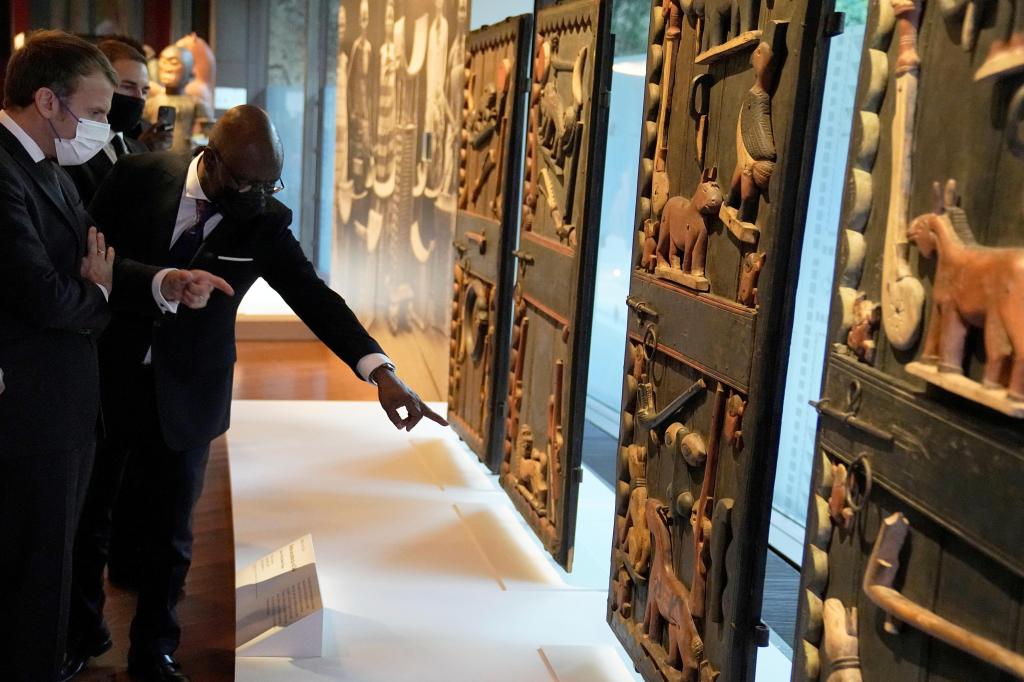
In 1897, British forces invaded Benin City in present-day Nigeria, burned the royal palace and seized thousands of royal treasures. The Smithsonian estimates roughly 3,000 objects from the raid eventually entered museums and private collections around the world.
These weren’t abandoned trinkets somebody discovered in an attic.
They included royal plaques, sculptures, ceremonial objects and representations of rulers and ancestors belonging to a sophisticated African kingdom.
Even the British Museum acknowledges that after the invasion, hundreds of plaques were distributed among museums and dealers. Its collection later expanded through major private collections.
And wealthy collectors became part of the pipeline.

Financier and art collector Joseph H. Hirshhorn acquired Benin works that were eventually donated to the Smithsonian. Wealthy developers Paul and Ruth Tishman also accumulated African art connected to the 1897 raid before their collection eventually reached the Smithsonian through Disney.
That history turns the genteel phrase “private collection” into something requiring another question:
Private collection of what, acquired from whom, and under what circumstances?
Money Doesn’t Create Cultural Ownership
There is something deeply unsettling about ancient African cultural objects becoming prestige commodities for people with no relationship to the communities that created them.
A wealthy collector may legally purchase an artifact at auction.
That doesn’t automatically settle the moral question of whether the object should have been available for purchase in the first place.
If an object was genuinely stolen during colonial conquest, another sale decades later doesn’t cleanse the original theft. It merely adds another receipt to the journey.
This is especially important when dealing with sacred or royal objects.
UNESCO notes that African artifacts targeted for restitution can include royal regalia, ceremonial masks, religious objects and even ancestral remains whose removal damaged cultural and spiritual continuity within the communities from which they originated.
These aren’t merely expensive sculptures.
Some were pieces of living cultures.
Yet somewhere along the journey, African heritage was transformed into Western collectible merchandise.
Imagine the Situation Reversed
Suppose African soldiers invaded a European kingdom, burned its royal complex, carried away sacred Christian objects, royal regalia and ancestral treasures, and then distributed them across African museums and wealthy private homes.
A century later, imagine Europeans asking for them back.
Now imagine the owners replying:
“Sorry. I bought it legally.”
Nobody would struggle to understand the absurdity.
Yet African nations have repeatedly encountered precisely this philosophical problem. Objects removed during colonial conquest subsequently passed through dealers, museums, estates and private collections until determining ownership became a legal labyrinth.
The paperwork changed.
The history didn’t.
The Billionaire Trophy Cabinet Needs Provenance Checks
This doesn’t mean wealthy people should be prohibited from owning African art.
Contemporary African artists deserve wealthy collectors. Legitimately traded historic artworks can have lawful private owners. African art shouldn’t be placed behind some cultural force field preventing anybody outside Africa from appreciating or purchasing it.
The line should be provenance.
Collectors purchasing culturally significant antiquities should face serious expectations to establish where an object originated, when it left its country, who previously possessed it and whether there is evidence of looting, colonial seizure or illegal export.
One recent case demonstrates why.

A marble bust held by a private client in France was investigated after experts linked it to ancient Cyrene in Libya, an archaeological area plagued by looting. The sculpture was ultimately returned to Libya in 2023 after evidence raised serious concerns about its illicit origin.
That’s how the system should work.
Wealth should not purchase immunity from historical scrutiny.
Restitution Is Finally Gathering Momentum
The good news is that the old arrangement is cracking.
Germany agreed with Nigeria to return 1,130 Benin Bronzes, while the Smithsonian transferred ownership of 29 works determined to have been taken during the 1897 raid.
The process continues. In 2026, the University of Zurich announced that provenance research determined 14 of its 18 Benin works were most likely looted and warranted restitution.
These returns establish an important principle:
Possession isn’t always legitimacy.
Something can sit inside a prestigious collection for a century and still carry the fingerprints of colonial violence.
Africa’s History Shouldn’t Be Somebody Else’s Trophy
There is a difference between appreciating another culture and possessing pieces of that culture that were taken during conquest.
Africa’s ancient civilizations produced extraordinary bronze casting, wood carving, ivory work, religious objects, royal regalia and monumental sculpture long before modern collectors assigned dollar values to them.
Those objects tell African history.
They document African religions, kingdoms, political systems, artistic traditions and ancestors.
When legitimately acquired, displaying them internationally can spread knowledge and appreciation.
But when an artifact can be traced to colonial looting, illegal excavation or trafficking, the moral equation changes.
A wealthy person’s bank account should not outweigh a people’s claim to stolen cultural heritage.
Collectors holding questionable African antiquities should open their archives, establish provenance and cooperate with restitution investigations. Museums should do the same. Auction houses should demand documentation before culturally sensitive objects reach the block.
Because an artifact doesn’t become less stolen simply because the thief died 100 years ago.
And Africa’s history should not remain scattered across the trophy rooms of the wealthy merely because colonialism managed to leave behind receipts.
—Sylvester Loving, B1Daily




Leave a Reply