—Michael Lyles, B1Daily
For Black Americans locked out of an increasingly expensive housing market, the path to homeownership may require looking beyond the traditional suburban house.
One option deserves considerably more attention: manufactured housing.

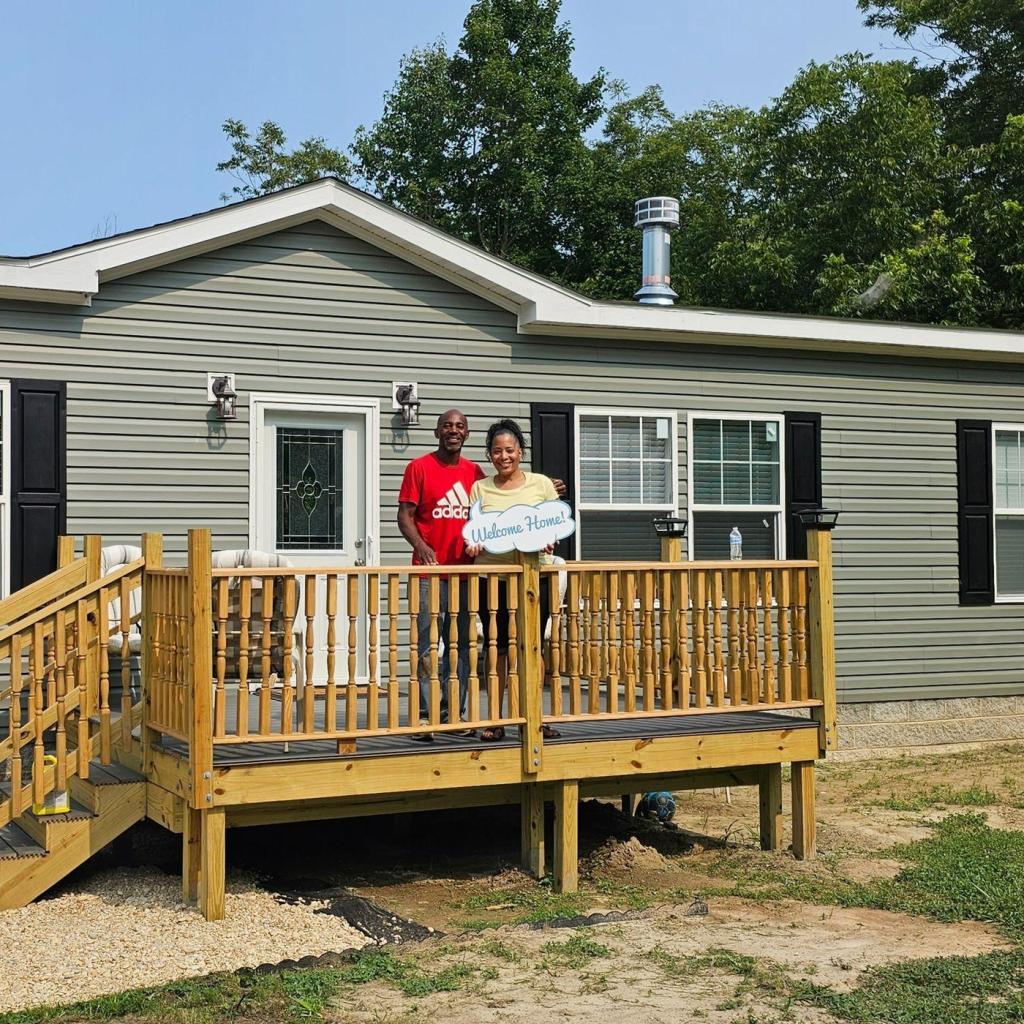
Modern manufactured homes aren’t necessarily the cramped “trailers” of popular imagination. Newer models can offer multiple bedrooms, large kitchens, energy-efficient construction and contemporary designs at prices that can be substantially below comparable site-built houses. HUD research has concluded that factory-built housing offers significant opportunities for affordable homeownership.
For Black families trying to turn monthly housing expenses into ownership, that affordability could make manufactured housing a surprisingly powerful tool.
The Biggest Problem Is Getting Through the Door
America’s racial homeownership gap remains deeply connected to wealth.
Buying a conventional house requires more than making the monthly mortgage payment. Buyers can face down payments, closing costs, inspections, repairs, property taxes and rapidly increasing purchase prices.
Manufactured housing attacks one part of that equation immediately: the cost of the house itself.
The Census Bureau’s Manufactured Housing Survey specifically tracks manufactured-home prices alongside new site-built houses, reflecting how significant this sector has become within the broader housing market.
That lower entry price could matter enormously for households that earn enough to sustain homeownership but don’t have $300,000, $400,000 or $500,000 available for a conventional house.
Black Rural Homeowners Are Already Using Them
This isn’t merely theoretical.
Research cited by Pew found that manufactured housing represents an especially important source of homeownership for Black households in rural America. Among Black homeowners in non-metropolitan areas, approximately 30% lived in manufactured homes, compared with 17% of white homeowners.
That’s a giant flashing arrow pointing toward an overlooked housing strategy.
Instead of treating manufactured housing as something inferior to “real” homeownership, Black families, housing advocates and policymakers should ask how to make this form of ownership work better.
Because there is a crucial catch.
Own the Land Too
This is where the strategy either becomes interesting or turns into a trap.
Buying a manufactured home while renting a lot in a privately owned manufactured-home community can leave the homeowner vulnerable to increasing lot rents and park ownership changes. HUD research notes that roughly two out of five manufactured homeowners don’t own the land beneath their homes.
That creates the bizarre situation of owning your house while somebody else owns the dirt keeping it stationary.

For Black wealth building, the stronger model is therefore:
Manufactured home + owned land + permanent placement + favorable mortgage financing.
Land changes the equation.
A family isn’t merely purchasing a structure. They’re acquiring real estate, and the land itself can appreciate as the surrounding community develops.
This could be particularly interesting in rural communities, smaller Southern cities and places where buildable lots remain affordable.
Financing Is the Dragon Guarding the Castle
Manufactured housing isn’t automatically cheap money.
Many buyers use chattel loans, which finance the structure as personal property rather than financing the house and land together as real estate. Research commissioned by Pew found that about 42% of manufactured-housing loans were chattel loans, and Black borrowers were among the groups more likely to use them.

These loans can be more expensive than traditional mortgages.
That’s why policymakers serious about Black homeownership shouldn’t merely subsidize manufactured-home purchases. They should help families purchase land, title qualifying homes as real property and access conventional, FHA or other appropriate mortgage financing.
HUD notes that traditional mortgage financing generally requires the manufactured home and land to be treated as real estate.
That distinction sounds bureaucratic.
Financially, it can be enormous.
Imagine a Different Black Housing Strategy
Instead of concentrating exclusively on helping Black buyers chase increasingly expensive existing houses, cities and states could make inexpensive residential lots available for manufactured-home development.
Black community-development organizations could acquire land and create resident-owned manufactured-home communities.
Families could purchase smaller parcels outside expensive metropolitan cores and install high-quality manufactured homes.
Local governments could reform zoning rules that unnecessarily exclude modern manufactured housing.
And housing programs could focus on ownership of both the structure and the ground beneath it.
Suddenly manufactured housing stops looking like a consolation prize.
It starts looking like another route onto the property ladder.
Don’t Chase the American Dream. Redesign It.
Black homeownership policy doesn’t need to revolve around reproducing the exact suburban development model created after World War II.
The objective should be ownership, stability and wealth creation.
A $150,000 manufactured home sitting on land you own may ultimately provide considerably more financial independence than endlessly renting a $2,000 apartment while trying to save enough to purchase a $400,000 conventional house.
Manufactured homes aren’t a magic solution. Financing can be treacherous, land matters enormously, zoning can create obstacles and not every manufactured home will appreciate like conventional real estate.
But dismissing the entire category because of the word “manufactured” would be equally foolish.
HUD research has previously suggested manufactured housing could play a meaningful role in closing racial homeownership gaps if its financing problems are addressed.
That’s the opportunity.
Don’t simply make cheaper homes available to Black families. Build a system that helps Black families own the home, own the land beneath it and capture the wealth created by both.
That could turn manufactured housing from America’s overlooked housing sector into one piece of a serious Black homeownership strategy.
—Michael Lyles, B1Daily





Leave a Reply