—Barrington Williams, B1Daily
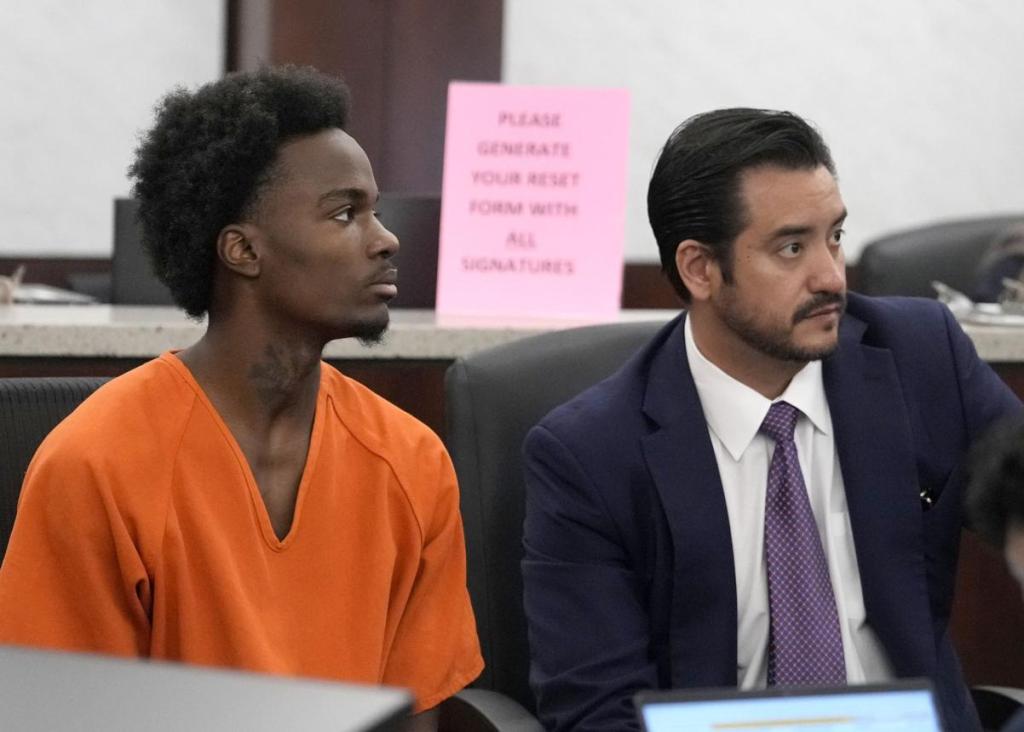
A person walks into court legally presumed innocent.
The judge decides whether that person can return home while the case proceeds or spend weeks or months behind bars. That decision is supposed to turn on factors such as public safety and the likelihood of appearing in court.
Yet decades of research have repeatedly found something that should infuriate anyone who believes justice is supposed to be colorblind: Black defendants frequently receive harsher treatment in America’s bail and pretrial system than white defendants.
Call the disparity what it is when race changes how freedom is distributed: a racial injustice.
The U.S. Commission on Civil Rights concluded that America’s cash-bail system contains “stark racial and gender disparities,” with Black and Latino defendants experiencing higher pretrial detention rates and more financial conditions of release than other groups. The Commission also reported that Black defendants are less likely than white defendants to be able to afford bail and cited research finding their average bond amounts are often approximately $10,000 higher.
That isn’t equality before the law.
The Disparity Has Been Measured Again and Again
Research covering felony cases in large urban courts found racial disparities were especially pronounced in decisions to deny bail, particularly in violent-crime cases.
Other research summarized by the Prison Policy Initiative found Black defendants in large urban jurisdictions were more than 25 percent more likely than white defendants to be held before trial. Another major study covering Miami-Dade and Philadelphia found Black defendants were more likely to receive monetary bail, received bail amounts nearly $10,000 higher when money bail was imposed, and were more likely to be detained before trial.
Not every jurisdiction produces the same result, and not every disparity can automatically be attributed to racial bias. Some studies have found smaller differences or different outcomes after controlling for criminal history, charges and other legally relevant factors.
But that makes one particularly rigorous finding difficult to dismiss.
A 2022 study published in the American Economic Review used the quasi-random assignment of judges to examine bail decisions in New York City. Researchers concluded that roughly two-thirds of the Black-white disparity in release rates was attributable to disparate impact in release decisions and found evidence consistent with both racial bias and statistical discrimination.
That’s not somebody screaming racism on social media.
That’s empirical research finding race mattered.
Innocent Until Proven Guilty Should Mean Something
Pretrial detention isn’t a criminal sentence.
These are people who, at that stage, have not been convicted of the charges against them.
Yet losing a bail decision can turn an accusation into immediate punishment.
A detained defendant can lose a job.
Miss rent.
Lose a car.
Become separated from children.
Have enormous difficulty helping an attorney prepare a defense.
And suddenly accepting a plea bargain can become more attractive simply because it offers a route out of jail.
Research has linked pretrial detention with increased likelihood of conviction and other downstream consequences.
So when racial disparities appear at the courthouse door, they don’t necessarily remain there.
They can echo through the rest of the case.
Poverty Makes the Problem Worse
Then America adds money to the equation.
Two defendants can receive exactly the same $10,000 bond and experience completely different justice systems.
One defendant calls family, contacts a bondsman and goes home.
The other cannot afford release and sits in jail.
The U.S. Commission on Civil Rights reported that more than 60 percent of defendants detained before trial were being held because they couldn’t afford bail. It also found Black defendants were less likely to be able to afford bail than white defendants.
That creates a system where wealth can determine freedom before guilt has even been established.
Add documented racial disparities in bail decisions and America’s historic racial wealth gap, and the result becomes particularly troubling.
This Is What Institutional Racism Can Look Like
Racism doesn’t require a judge to announce racial prejudice from the bench.
Institutional racial inequality can operate through discretionary decisions, financial requirements and supposedly neutral rules that repeatedly produce unequal treatment.
That does not mean every Black defendant denied bond was denied because of race. Judges can have legitimate reasons for detention, including serious evidence of dangerousness or flight risk.
But the existence of legitimate detention cannot be used to wave away disparities that remain after researchers account for legally relevant differences.
When comparable defendants encounter systematically different chances of freedom and researchers find evidence of racial bias, the system has a racism problem whether anyone inside the courtroom wants to use that word or not.
Justice cannot mean one presumption of innocence for defendants with money, another for defendants without it, and another still when race influences the decision.
A courthouse cannot promise equal justice under law while accepting racial inequality at the bond hearing.
If race helps determine who gets to walk out the courthouse door and who waits for trial behind bars, that isn’t equal justice. It is exactly the kind of racial injustice the justice system is supposed to prevent.
—Barrington Williams, B1Daily
 B1Daily
Leave a comment