—Merrick Crosby, B1Daily
For centuries, Black Americans were told to wait.
Wait for freedom.
Wait for civil rights. Wait for equal access to housing. Wait for equal access to education. Wait for equal treatment under the law.
And now, when one American city finally attempts to do something concrete about the damage inflicted by decades of discrimination, the federal government wants to step in and shut it down.
The target is Evanston, Illinois, home to what is widely recognized as the first municipal reparations program in the United States. The program was designed to address specific harms suffered by Black residents who were subjected to discriminatory housing policies that prevented generations of families from building wealth through homeownership.
This wasn’t some vague handout. It wasn’t a lottery ticket. It wasn’t a blank check.
It was an attempt to compensate for documented government-backed discrimination that locked Black families out of opportunities that white families routinely enjoyed.
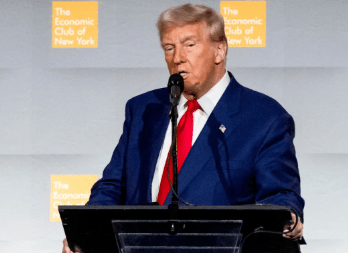
Yet according to reports, the Trump administration is challenging the program, raising questions about whether race-conscious remedies can withstand federal scrutiny.
The irony is staggering.
For decades, the federal government helped create many of the racial disparities that still exist today. Redlining wasn’t a conspiracy theory. It was policy. Housing discrimination wasn’t accidental. It was institutional. Black neighborhoods were systematically denied investment while white communities accumulated wealth that would be passed down through generations.
The result is visible today.
The average Black family possesses only a fraction of the wealth held by the average white family. Homeownership gaps remain significant. Generational wealth disparities persist. Entire communities are still dealing with the economic consequences of decisions made decades ago.
When critics say reparations are unfair, they rarely answer a simple question:
What is the appropriate remedy when discrimination is proven?
If the government wrongfully seizes property, compensation follows. If a corporation harms consumers, settlements follow. If a worker is discriminated against, damages may be awarded.
Yet when Black Americans seek remedies for documented and measurable discrimination, suddenly the concept of compensation becomes controversial.
The opposition to Evanston’s program reveals a deeper discomfort in American politics. Many leaders are willing to acknowledge historical injustices in speeches and commemorations. Fewer are willing to support policies that attempt to address their lasting economic consequences.
That contradiction lies at the heart of the reparations debate.
America celebrates the courage of civil rights activists. It honors the victims of segregation. It acknowledges the reality of discriminatory housing policies. But when a community attempts to take action beyond symbolic statements, resistance emerges almost immediately.
Supporters of Evanston’s program argue that this is precisely why reparations remain necessary.
The issue is not simply about the past.
It is about the present-day consequences of policies that transferred wealth, opportunity, and property rights away from Black communities and toward others. Ignoring those consequences does not erase them. It merely allows them to continue.
Whether one supports or opposes reparations, the larger question remains unavoidable: if government policies helped create racial wealth disparities, does government have any responsibility to help address them?
Evanston answered that question with a cautious “yes.”
Its critics are answering with a forceful “no.”
The outcome of that fight could determine whether future reparations efforts across the country move forward or are stopped before they begin.
What troubles many supporters is not simply the legal challenge itself. It is the message it sends.
When Black communities ask for justice, they are often told to pursue legal channels. When they pursue legal channels, they are told the remedy goes too far. When they propose modest programs targeted at documented harms, they are accused of being divisive.
At some point, Americans must decide whether acknowledging history means anything beyond words.
Because if every attempt to address historical discrimination is met with opposition, then “never forget” starts sounding a lot like “never repair.”
—Merrick Crosby, B1Daily





Leave a comment