—Kerry Hill, B1Daily
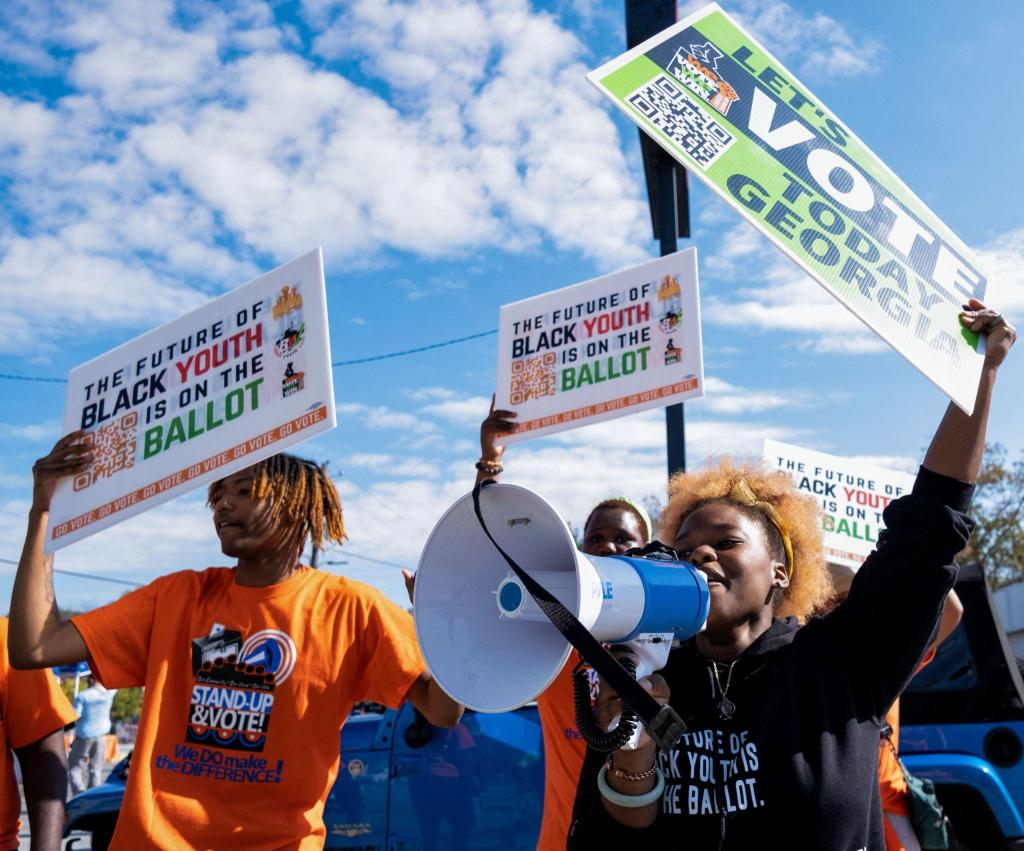
For much of modern American politics, one assumption has been remarkably durable: Democrats could count on overwhelming support from Black voters.
That assumption is becoming less comfortable.
Black Americans remain one of the Democratic Party’s strongest constituencies, and current polling provides little evidence of a mass migration into the Republican Party. But underneath those numbers is a more interesting development: a portion of the Black electorate appears increasingly willing to make Democrats compete for its support rather than treating that support as automatic.
The Democratic Advantage Is Still Enormous
Any discussion of a Black political realignment needs to begin with the numbers.
Pew Research Center’s 2026 party-affiliation survey found 73 percent of Black adults identified with or leaned toward the Democratic Party, compared with 14 percent who identified with or leaned Republican. Another 13 percent didn’t lean toward either party or declined to answer.

That is hardly a Republican revolution.
But compare it with 2020, when Pew measured Black adults at 81 percent Democratic or Democratic-leaning and 14 percent Republican or Republican-leaning.
The interesting movement isn’t primarily Black Democrats suddenly becoming Republicans.
Some of it is Black voters becoming less attached to either party.
The 2026 Midterms Show the Same Complicated Picture
Pew’s July 2026 midterm polling makes the situation even clearer.
Among Black registered voters, 68 percent said they would support the Democratic congressional candidate, while only 8 percent preferred the Republican.
But a surprisingly large 25 percent either supported another candidate or weren’t sure.

That quarter of the Black electorate deserves attention.
It doesn’t mean those voters will ultimately abandon Democrats. Some undecided voters will inevitably return to familiar partisan preferences before Election Day.
But it does suggest Democrats cannot necessarily assume every Black voter who rejects Republicans will automatically vote Democratic.
There is increasingly political territory between those two choices.
Younger Black Voters Are Especially Interesting
The generational divide may matter even more.
Axios reported in August that younger Black voters were increasingly willing to challenge established Democratic leaders and endorsements during the 2026 primaries. Election data and polling also suggest younger Black voters are more open to considering Republicans than their parents and grandparents.
Pew previously found 17 percent of Black voters under 50 identified with or leaned Republican, compared with just 7 percent of Black voters 50 and older.
That doesn’t necessarily make younger Black Americans conservative.
In fact, many younger Black voters remain progressive.
The more significant development may be their willingness to reject the idea that longevity, civil-rights credentials or endorsement from established Black Democratic leaders automatically determines their vote.
A voter can be progressive and still distrust the Democratic establishment.
A voter can dislike Republicans while being frustrated with Democrats.
And a voter can simply decide that neither party owns their ballot.
Those distinctions are becoming increasingly important.
Democrats Have Heard the Warning
Perhaps one of the strongest signs of concern comes from Democratic-aligned organizations themselves.
The Congressional Black Caucus Institute launched a multimillion-dollar SO VOTE initiative this week aimed at Black, young, rural and lower-propensity voters ahead of the midterms.
Former HUD Secretary Marcia Fudge said communities including Black, brown, poor and rural voters have long complained that neither political party devotes sufficient time to engaging them.
Former Democratic Rep. Cedric Richmond similarly described the need for sustained engagement with rural voters who feel alienated from Democratic campaigns.
That isn’t the behavior of a political organization assuming turnout will simply happen.
It is recognition that loyalty must continually be maintained.
Republicans See an Opening
Republicans have noticed the same trends.
GOP strategists have increasingly discussed Black voters as a potential area for expansion, particularly among younger voters and men. Republicans point to issues including entrepreneurship, taxes, school choice, criminal justice reform and immigration as potential areas of appeal.
Democrats counter that Republican policies on voting rights, Medicaid, civil rights and other issues conflict with the interests of many Black communities.
But there is another possibility that doesn’t fit neatly into either party’s preferred narrative:
Black voters could become more politically independent without becoming Republican.
That might ultimately be the more consequential change.
The Black Electorate Has Never Been One Ideological Block
Treating Black Americans as politically interchangeable has always flattened a complicated electorate.
A Black union worker in Detroit, entrepreneur in Atlanta, churchgoing grandmother in Mississippi, college student in Philadelphia and suburban professional outside Washington may share experiences surrounding race while having very different opinions about taxes, immigration, policing, abortion, foreign policy or education.
The Democratic coalition historically managed to contain many of those differences because civil rights, voting rights and economic policy created powerful reasons for Black voters to remain aligned with the party.
But political coalitions aren’t permanent contracts.
They survive because voters continue believing the relationship serves their interests.
The Bigger Change May Be Psychological
That is why obsessing over whether Black voters are “becoming Republican” may miss the larger story.
Current evidence doesn’t show Republicans approaching parity with Democrats among Black voters. Democrats still possess an overwhelming advantage.
The more consequential question is whether the expectation of automatic Democratic loyalty is weakening.
A Black voter doesn’t have to put on a MAGA hat to become politically independent.
They can vote Democratic for president, Republican for mayor, independent for city council, stay home during another election and support a progressive challenger against an establishment Democrat in a primary.
Political independence isn’t necessarily switching teams.
Sometimes it is deciding you don’t belong to a team at all.
And if that attitude continues spreading, both parties will confront something American politics hasn’t consistently demanded of them when dealing with Black voters:
They will have to compete for the vote rather than presume they already know where it is going.
—Kerry Hill, B1Daily

 B1Daily
Leave a comment