—Kerry Hill, B1Daily
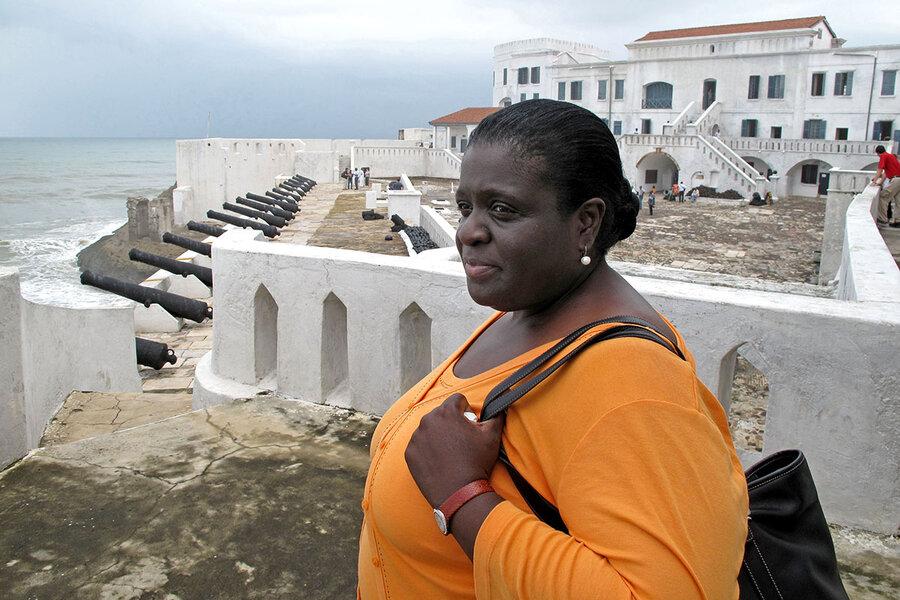
Africa can be ancestral. It can be culturally familiar. It can inspire an emotional connection powerful enough to bring Black Americans to tears at Cape Coast Castle.
But Africa is not Wakanda.
And perhaps it is time for Black Americans to stop expecting it to be.
There is nothing wrong with Black Americans embracing Africa, studying African history, visiting African countries or building relationships with Africans. The problem begins when a continent containing more than 50 countries and thousands of ethnic and linguistic communities gets transformed into an imaginary homeland where racial solidarity supposedly erases nationality, culture, class and politics.
That Africa doesn’t exist.
Ancestry Is Real. Automatic Belonging Isn’t.
The transatlantic slave trade severed millions of enslaved Africans and their descendants from specific ethnic communities, languages and homelands. That historical rupture understandably created a desire among some Black Americans to reconnect with the continent.
Ghana has deliberately encouraged that connection.
Its 2019 Year of Return invited descendants of enslaved Africans to visit and reconnect with the country. The effort evolved into Beyond the Return, and Ghana has granted citizenship to hundreds of members of the African diaspora. As of 2023, Ghana’s Diaspora Affairs Office estimated that roughly 1,500 African Americans had relocated there since 2017.
President John Mahama went even further in June 2026, publicly inviting people of African descent to come to Ghana and pointing toward the country’s Right of Abode provisions.
That’s significant.
But being welcomed by a government as part of the African diaspora isn’t necessarily the same thing as becoming culturally Ghanaian.
A Black American arriving in Accra is still arriving with an American accent, American expectations, American cultural habits and a distinct history stretching through slavery, Reconstruction, Jim Crow, the Great Migration and the civil-rights struggle.
That identity doesn’t evaporate when the plane lands.
Africa Isn’t One People With One Opinion
Another romantic idea deserves retirement: that shared Blackness automatically produces political or cultural solidarity.
Africa itself doesn’t operate that way.
A massive 2026 Afrobarometer study covering 38 African countries found that 85 percent of respondents valued their national identity at least as highly as their ethnic identity. Only about half said they trusted people belonging to different ethnic groups at least somewhat.
That doesn’t mean Africans are broadly intolerant. In fact, the same research found substantial acceptance of neighbors from different ethnicities and nationalities.
But attitudes toward immigration were considerably more complicated.
Sixty-four percent wanted their governments to admit fewer foreign job seekers or none at all, while Africans were almost evenly divided over whether immigrants benefited their economies.
That’s an important reality check.
If Africans themselves distinguish between Ghanaian, Nigerian, Kenyan, Ethiopian, Senegalese, Zulu, Akan, Igbo, Oromo and countless other identities, why would a Black American automatically become simply “African”?
Blackness can create connections.
It doesn’t erase borders.
Stop Looking for a Racial Paradise
There is another uncomfortable contradiction.
Some Black Americans understandably look toward Africa because they are exhausted by racism in the United States.
But crossing the Atlantic doesn’t eliminate prejudice, inequality, ethnic discrimination, xenophobia or class hierarchy.
Afrobarometer found that four in ten respondents across 38 countries believed their ethnic group was at least sometimes treated unfairly by their government. A majority also believed people were frequently treated unequally under the law.
Africa is populated by human beings.
That sounds ridiculously obvious, but romanticization sometimes requires saying obvious things.
Human societies contain generosity and selfishness, solidarity and prejudice, extraordinary wealth and crushing poverty, competent governments and dysfunctional ones.
Africa isn’t uniquely flawed.
It simply isn’t exempt from humanity.
Black Americans Shouldn’t Erase Their Own Culture Either
Perhaps the strangest consequence of romanticizing Africa is the tendency of some Black Americans to treat their own culture as somehow incomplete.
Black Americans didn’t spend centuries culturally frozen, waiting to reconnect with Africa.
They created something new.
Blues. Jazz. Gospel. Hip-hop. Soul food. Historically Black colleges. Black churches. Distinct dialects. Political movements. Literature. Fashion. Dance. Family traditions and regional cultures.
Black American history isn’t merely the empty space between African ancestry and some hypothetical return home.
It is its own enormous branch of the African diaspora.
Visiting Ghana doesn’t require pretending Georgia has no history.
Learning Yoruba doesn’t require being embarrassed about African American Vernacular English.
Appreciating jollof rice doesn’t require declaring soul food culturally inferior.
Connection doesn’t require self-erasure.
Africa Should Be Known, Not Imagined
None of this means Black Americans should distance themselves from Africa.
Quite the opposite.
Visit.
Study African history beyond slavery.
Invest carefully.
Build businesses with local partners.
Learn languages.
Read African writers.
Talk to ordinary Africans rather than allowing social media influencers to explain an entire continent from a luxury apartment in Accra.
And if moving there genuinely improves your life, move.
Ghana, in particular, has made a remarkable effort to reconnect with descendants of people ripped from Africa through the slave trade. That deserves recognition. Other West African countries, including Benin and Sierra Leone, have also developed diaspora citizenship or return initiatives.
But go because you’ve learned about the country that actually exists.
Don’t go searching for an imaginary racial utopia.
Africa doesn’t need to be perfect to be meaningful to Black Americans.
And Black Americans don’t need Africa to validate their identity.
Perhaps the healthiest relationship between the two begins when both sides stop trying to squeeze each other into romantic historical fantasies and start meeting as they actually are: different branches of an enormous diaspora with overlapping ancestry, distinct histories and plenty still to learn from one another.
—Kerry Hill, B1Daily

 B1Daily
Leave a comment