—Vanessa Edwards, B1Daily
Plenty of organizations talk about saving Black communities. New Era Detroit built its reputation by putting people in the streets and doing the work neighborhood by neighborhood.
Founded by Zeek Williams, New Era Detroit and its nonprofit arm, New Era Community Connection (NECC), have developed a distinctly grassroots approach to Black community organizing.

The organization calls it “mudroots”, emphasizing direct outreach, year-round community involvement and self-sufficiency rather than parachuting into neighborhoods for occasional events.
That distinction helps explain why New Era has remained visible in Detroit for more than a decade.
More Than Marches and Speeches
New Era’s philosophy is built around five forms of accountability: self, household, community, economic and political accountability.
Its economic message encourages supporting Black businesses, creating businesses, improving financial literacy and circulating money within Black communities. Its community philosophy argues that residents themselves should become active participants in improving and protecting their neighborhoods.
And New Era has translated those ideas into a surprisingly broad collection of programs.
The organization’s website lists initiatives involving financial literacy, mental health, conflict resolution, free self-defense training, youth business ownership, programs for young Black boys and girls, Black-business tours and neighborhood outreach.
This isn’t activism confined to a microphone.
It’s infrastructure.
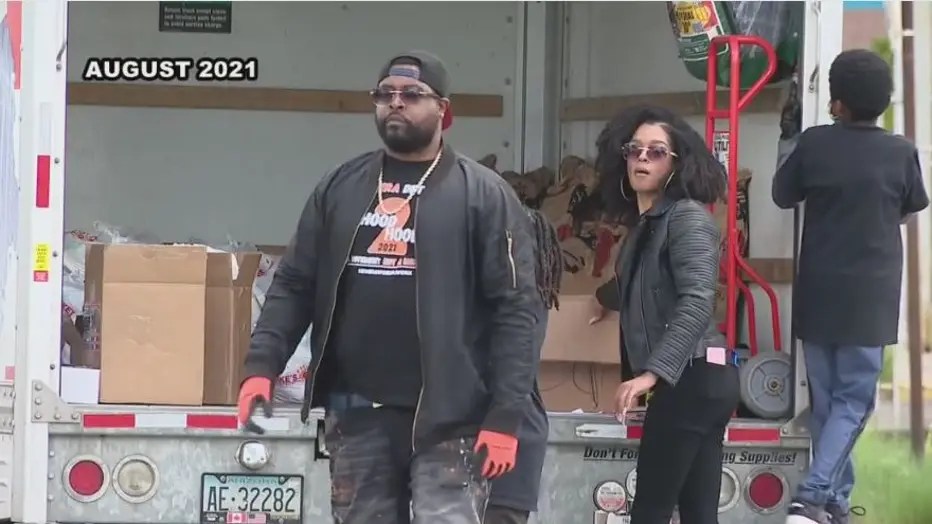
Hood 2 Hood Takes the Organization Directly to the People
Perhaps New Era Detroit’s signature initiative is Hood 2 Hood.
Instead of expecting residents to travel to a conference or community center, volunteers travel directly through Detroit neighborhoods, talking with residents, distributing resources and engaging children and families.

Planet Detroit reported that the program began in 2014 and has distributed recreational items to children while connecting families with financial resources. At the time of its reporting, New Era Detroit had roughly 30 core members alongside hundreds of seasonal and year-round volunteers.
FOX 2 described Hood 2 Hood as combining the atmosphere of a mobile block party with community engagement, including resources for families and toys for children.
The philosophy is simple but powerful:
Don’t wait for struggling neighborhoods to come looking for you.
Go to them.
New Era Has Become Part of Detroit’s Violence-Prevention Strategy
Perhaps the clearest indication that New Era’s work has moved beyond symbolic activism is its involvement in Detroit’s community violence intervention efforts.
New Era Community Connection was selected as one of the organizations participating in Detroit’s violence-reduction initiative, receiving responsibility for working within a designated area using its own community-based strategy.
Its approach emphasizes relationships.
Members walk neighborhoods, interact with residents, organize events and attempt to prevent violence before somebody pulls a trigger.
That’s a fundamentally different model from waiting until violence occurs and then sending police afterward.
New Era’s argument is essentially that people who actually live in and understand Black neighborhoods can become part of the public-safety solution themselves.
Black Men Being Visible Matters
One of the organization’s newer programs makes that philosophy particularly visible.
In 2026, New Era brought back its Brothas on the Block community walks, gathering dozens of Black men of different ages to walk Detroit neighborhoods and provide a positive presence for residents and children.
Williams told CBS Detroit that the walks are intended to build relationships both among participating men and between those men and neighborhood residents.
There is something quietly powerful about that.
Black men are routinely discussed in American media through the vocabulary of crime statistics, incarceration and dysfunction.
New Era flips the camera around.
Here are Black men checking on neighborhoods.
Black men interacting with children.
Black men building relationships.
Black men taking responsibility for the places where they live.
No superhero cape required. Just sneakers and consistency.
They Turned a Symbol of Fear Into a Community Headquarters
New Era’s physical headquarters might be the perfect metaphor for the organization itself.
The building in Detroit’s Grandmont Rosedale area was once a corner store associated by some residents with crime and fear. One local woman recalled being robbed at gunpoint there decades earlier.
Today, that same building houses New Era Community Connection.
Outlier Media reported that the headquarters now serves as a community hub where residents hold meetings, receive resources, raise concerns and attend neighborhood gatherings. Residents interviewed by the publication described New Era’s presence positively.
That’s community development in its most literal form.
Take a place people once feared.
Occupy it.
Repair its meaning.
Then turn it into somewhere neighbors gather.
The Black Community Doesn’t Only Need Organizations During a Crisis
This may be New Era Detroit’s most important contribution.
Black communities frequently receive enormous attention after something terrible happens.
A shooting.
A police killing.
A riot.
A controversial court case.
Suddenly politicians arrive, cameras appear and organizations hold emergency meetings.
Then the cameras disappear.
New Era’s model argues that community organizing has to exist before the emergency.
Williams has criticized what he calls an “event mindset” toward community service, where organizations appear for occasional backpack drives or holiday giveaways but don’t build continuous relationships. His alternative is treating community work as a lifestyle rather than an event.
That philosophy explains the breadth of New Era’s programming.
Children need mentorship.
Families need resources.
Neighborhoods need safety.
Entrepreneurs need customers.
Young people need economic opportunities.
Residents need political education.
People struggling emotionally need mental-health support.
Those aren’t separate universes.
They’re pieces of the same neighborhood.
Black Empowerment Looks Different When Somebody Actually Builds It
New Era Detroit isn’t going to solve every problem facing Detroit’s Black population.
No organization could.
But its significance comes from demonstrating what organized Black community responsibility can look like in practice.
The organization isn’t simply demanding that somebody else fix the neighborhood.
Its members are asking what residents can build themselves, while still holding institutions and government accountable for their responsibilities.
That balance matters.
Self-determination doesn’t mean government gets excused from doing its job.
It means Black communities don’t have to remain motionless while waiting for somebody else to rescue them.
New Era Detroit has spent more than a decade putting that idea into motion.
Walk the blocks.
Talk to families.
Mentor children.
Support Black businesses.
Teach financial literacy.
Reduce conflicts.
Create safer neighborhoods.
Build institutions.
Then come back tomorrow and do it again.
There is nothing glamorous about consistency.
But consistency is how communities are actually built.
And in Detroit, New Era has turned that philosophy into something residents can see walking directly down their street.
—Vanessa Edwards, B1Daily



Leave a comment