—Terrence Dorner, B1Daily
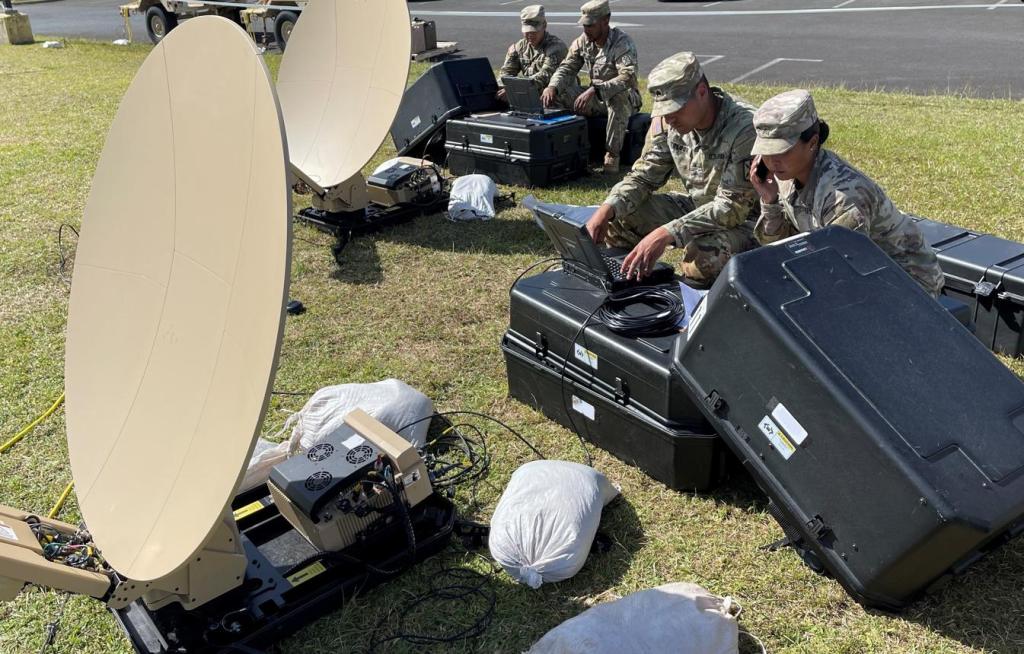
The next major advancement in American battlefield technology may not be a hypersonic missile, stealth aircraft, or autonomous combat drone. It could be a suitcase-sized communications system capable of connecting military forces that previously struggled to exchange critical battlefield intelligence.
On October 29, General Dynamics Information Technology (GDIT) unveiled Vion, an artificial intelligence-enabled tactical communications platform intended to eliminate longstanding barriers between American military networks and those operated by coalition partners.
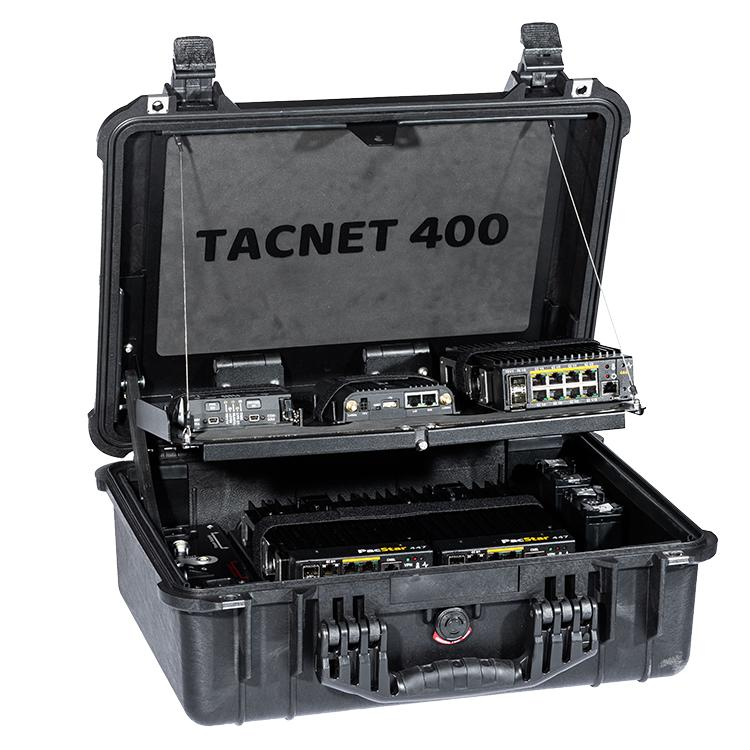
Designed as a portable Mission Partner Environment, Vion allows deployed personnel to establish secure connections with command headquarters and allied forces while exchanging intelligence, messages, voice recordings, and video.
The objective is to improve battlefield interoperability, a critical capability as modern military operations increasingly depend on rapid information exchange between multiple services and allied nations.
Breaking Down the Military’s Digital Barriers
For decades, American and allied military forces have operated communications networks built around different hardware, software, and security requirements. These isolated systems, commonly called network silos, can complicate the exchange of intelligence during multinational operations.
Vion is designed to address that problem through an open architecture that connects otherwise incompatible communications environments.
Its artificial intelligence capabilities are intended to help translate and manage different forms of information, while its modular design allows new technologies to be integrated without replacing an entire communications infrastructure.
GDIT also incorporates zero-trust cybersecurity principles, requiring continuous verification of users and systems rather than automatically trusting devices simply because they are connected to an authorized network.
For deployed forces, these capabilities could reduce the time required to establish secure communications with coalition partners.
Friendly Fire Highlights the Stakes
The urgency surrounding military network integration extends beyond convenience.
During a March 2026 friendly-fire incident, Kuwaiti air defenses mistakenly shot down three American F-15E Strike Eagle aircraft. The incident highlighted the dangers that can emerge when coalition forces struggle with identification, coordination, and the exchange of operational information.
Defense Information Systems Agency officials have cited the incident while emphasizing the need for better-connected military networks.
Although Vion has not been demonstrated to prevent such incidents, its underlying mission reflects a broader Pentagon priority: ensuring that allied forces can share critical information without being separated by incompatible digital infrastructure.
Built for the Modern Battlespace
Unlike large, fixed communications installations, Vion is designed for portability and rapid deployment.
Its suitcase-sized configuration could make it useful for expeditionary forces, forward command posts, and military units operating far from established communications infrastructure.
GDIT has also participated in Olympus Fires, a Joint Staff J6-led demonstration exploring improved coalition information-sharing capabilities.
The effort supports the Pentagon’s broader Coalition Information Environment initiative, which seeks to connect military networks through secure, data-centered architectures.
However, Vion remains in the acquisition process. General Dynamics has not publicly identified a purchasing customer, confirmed a deployment schedule, or demonstrated that the system can maintain uninterrupted connectivity under every form of enemy electronic interference.
The Future of Command and Control
Modern warfare increasingly revolves around the speed at which military forces can collect intelligence, distribute information, and coordinate their responses.
Advanced weapons systems are only as effective as the communications networks connecting their operators and commanders. Even technologically superior forces can experience operational disadvantages when critical information becomes delayed, fragmented, or inaccessible.
Vion represents an attempt to modernize that infrastructure by making coalition communications more flexible, portable, and interoperable.
Its ultimate battlefield value will depend on operational testing, cybersecurity performance, integration with existing military systems, and the ability to function under contested conditions.
For the Pentagon, the strategic objective is clear: American forces and their allies must be able to operate as a coordinated fighting force rather than a collection of technologically isolated units.
In tomorrow’s battlespace, information superiority may depend as much on the networks connecting military forces as on the weapons those forces carry.
—Terrence Dorner, B1Daily




Leave a Reply