—Barrington Williams, B1Daily
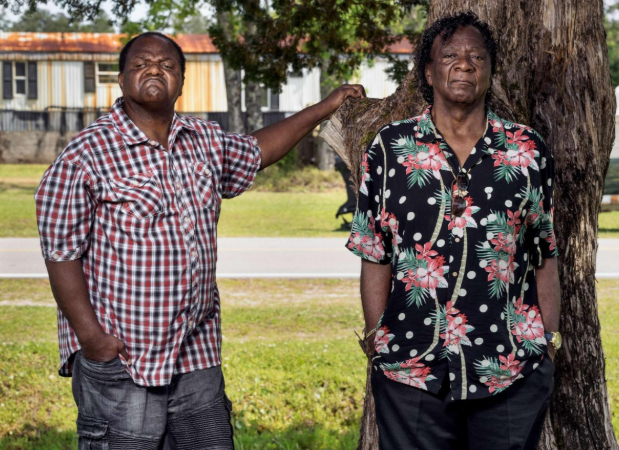
Melvin Davis and Licurtis Reels weren’t convicted of robbery, assault or any other crime when they were taken from a North Carolina courtroom in handcuffs in 2011.
Their offense was refusing to leave land their Black family had called home for roughly a century.
The brothers’ great-grandfather purchased 65 acres along Silver Dollar Road in Carteret County one generation removed from slavery. Their family farmed there, raised livestock, caught shrimp and built homes along the waterfront. During segregation, the property even contained the county’s only beach welcoming Black families.

But the family’s decision to hold the property as heirs’ property, land inherited collectively by descendants without a conventional divided title, eventually exposed it to a complicated legal battle. A relative obtained control of approximately 13 waterfront acres through North Carolina’s Torrens system and later sold the property to developers. The Reels family maintained that they had never knowingly surrendered their rights to the waterfront.
Melvin and Licurtis refused to leave.
In 2011, a judge found the brothers in civil contempt for violating a court order requiring them to stay off the disputed property. They had not been criminally charged and received no jury trial. Nevertheless, they remained incarcerated for eight years, becoming, according to ProPublica, two of America’s longest-serving inmates for civil contempt.
Their ordeal represents something much larger than one family’s property dispute.

ProPublica reported that heirs’ property was estimated to account for more than one-third of Southern Black-owned land, approximately 3.5 million acres worth more than $28 billion. The USDA has described heirs’ property as a leading cause of involuntary Black land loss.
Between 1910 and 1997, Black Americans lost roughly 90 percent of their farmland, according to research cited by ProPublica. Legal loopholes, partition sales, unclear titles, discriminatory practices and economic pressure have all contributed to families losing land accumulated after emancipation.
The Reels brothers understood what was at stake.
This wasn’t simply dirt beside a river.
It was land purchased by a Black family emerging from slavery, cultivated across generations and transformed into a place where their descendants could live with something their ancestors had been denied: ownership.
Melvin and Licurtis ultimately sacrificed eight years of freedom rather than voluntarily surrender what they believed belonged to their family.
Their story is a brutal reminder that Black land loss didn’t always require someone arriving with a torch or a gun.
Sometimes all it required was paperwork, a courtroom and a family without enough legal power to stop the machinery.
—Barrington Williams, B1Daily



Leave a comment