—Barrington Williams, B1Daily
President Donald Trump stood before the Republican Midterm Convention in Dallas and turned reparations for Black Americans into an applause line.
“They want to steal your money for reparations,” Trump told the crowd on September 9. He characterized reparations as punishing contemporary Americans for crimes committed “hundreds of years ago,” before declaring that the idea was “going nowhere.”

Trump did not specifically say “Freedmen” or limit his remarks to lineage-based reparations for descendants of people enslaved in the United States. His attack was aimed broadly at reparations.
Still, for Freedmen advocates seeking compensation for the descendants of America’s enslaved population, the political message was impossible to miss.
The president publicly dismissed one of their central demands.
And the national Democratic Party has not answered that attack with anything approaching the same volume.
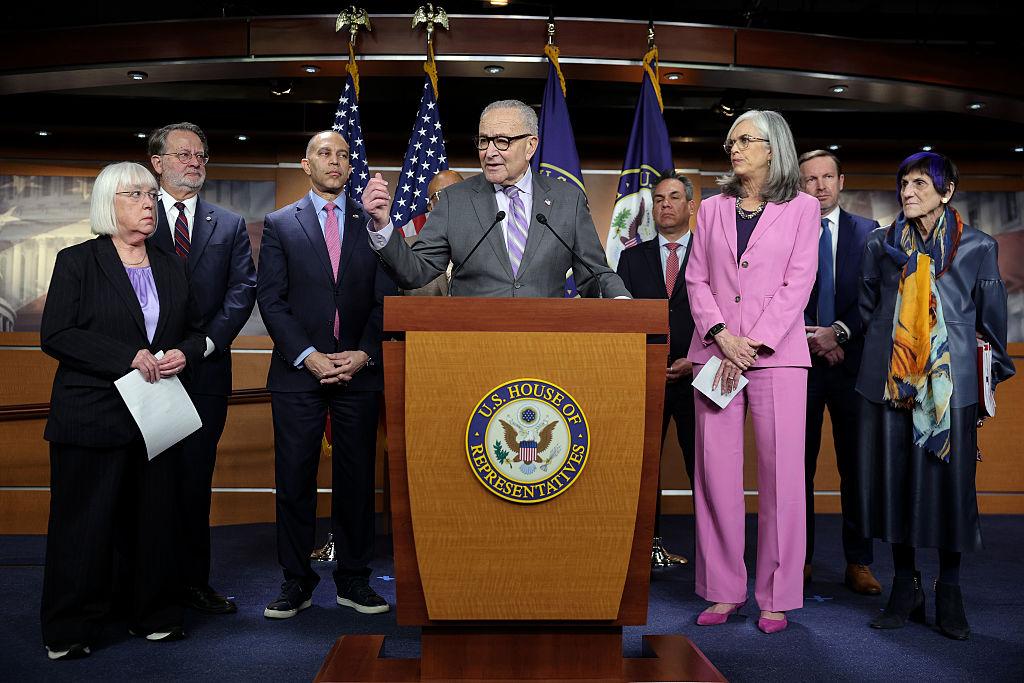
Democrats Have Reparations Supporters, But Where Is the Party?
There are Democrats who have spoken forcefully about reparations.
Rep. Ayanna Pressley is the House lead for H.R. 40, legislation that would establish a federal commission to study slavery, subsequent discrimination and potential remedies. Pressley and other lawmakers held a reparative-justice event in June calling on Congress to act. The Congressional Black Caucus also convened lawmakers and advocates this year to develop a federal reparative-justice strategy.
So claiming that every Democrat is silent would be inaccurate.
But individual Black lawmakers advocating reparations is not the same thing as the Democratic Party making reparations a national priority.
H.R. 40 has been introduced repeatedly for decades. The current version was introduced in January 2025, and the proposal still seeks something considerably more preliminary than cutting reparations checks: creating a commission to study the issue and recommend remedies.
That distinction makes the political hesitation even more conspicuous.
Black Americans aren’t watching Congress fight over the size of a reparations payment.
Congress hasn’t even enacted the commission.
Democrats Want Black Voters. Black Voters Want Their Issues Heard.
This is where Democrats face a larger problem.
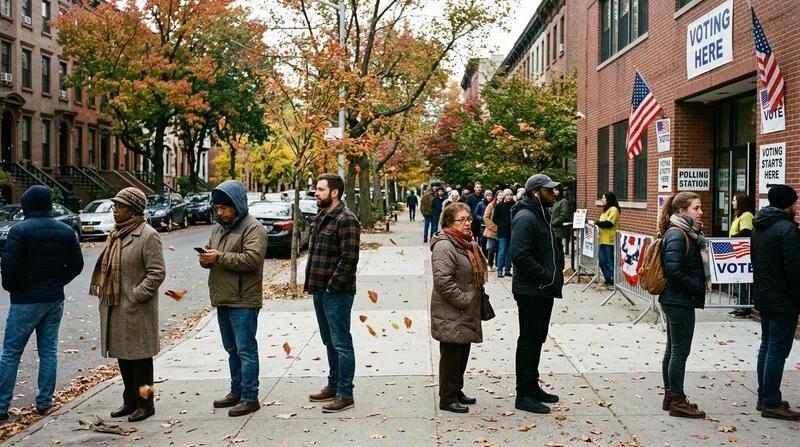
Black voters remain one of the Democratic Party’s strongest constituencies. In Pew Research Center’s July 2026 survey, 68 percent of Black registered voters preferred the Democratic congressional candidate, compared with 8 percent preferring the Republican candidate.
But 25 percent either preferred another candidate or weren’t sure.

Party identification has also shifted.
Pew found 73 percent of Black adults identified with or leaned toward Democrats in 2026, compared with 81 percent in 2020. The Republican share remained essentially unchanged at 14 percent, while the share identifying with neither side or declining to lean increased from 5 percent to 13 percent.
That doesn’t prove reparations caused the change.
It does show something important: Democratic loyalty among Black Americans cannot simply be treated as politically automatic.
Even Democrats are acknowledging the problem. At the Texas Democratic convention this summer, Democratic Senate nominee James Talarico explicitly referred to his party’s history of taking Black voters for granted.

Reuters has likewise reported complaints from Black voters, organizers and Democratic strategists that the party too often appears in Black communities when it needs votes rather than maintaining continuous engagement with their priorities.
That criticism becomes particularly potent when reparations enters the conversation.
Black Voters Are Expected to Carry Everybody Else’s Emergency
This is the frustration increasingly expressed by some Black political activists.
Black voters are constantly told about the stakes surrounding abortion rights.
Immigration.
LGBTQ rights.
Climate change.
Labor rights.
Democracy.
Foreign policy.
Student debt.
All of those constituencies are entitled to advocate vigorously for their interests.
But Black Americans are equally entitled to ask a brutally simple question:
When does our specific agenda become urgent?
When politicians want Black voters to defend another constituency, Black political participation is described as essential.
When Freedmen descendants raise a claim directly connected to centuries of government-sanctioned slavery and subsequent discrimination, suddenly the conversation becomes politically inconvenient.
That perceived imbalance helps explain why some Black voters say neither political party adequately represents their priorities.
Reparations Is Not Simply About Blaming Somebody’s Great-Great-Grandfather
Trump’s convention argument framed reparations as taking money from Americans who personally committed no historical crime.
That is one argument against reparations.
Freedmen reparations advocates make a fundamentally different argument: the claim is against the government and institutions, not individual white Americans alive today.
The federal government legally recognized and protected slavery. After emancipation, Black Americans experienced legally enforced segregation and discrimination at federal, state and local levels.
H.R. 40 itself explicitly addresses slavery and subsequent de jure and de facto racial and economic discrimination and asks a commission to recommend appropriate remedies.
That argument can be debated.
But it deserves an actual debate.
Reducing the entire question to somebody “stealing your money” sidesteps the historical and policy argument reparations advocates are making.
Black Voters Don’t Owe Any Party Permanent Loyalty
This may be the lesson Democrats most need to understand.
Black voters supporting Democrats by overwhelming margins historically does not constitute a lifetime contract.
Political support is transactional in the healthiest meaning of the word. Citizens identify problems, politicians offer solutions, voters evaluate those solutions and politicians are held accountable for what happens afterward.
No constituency should be expected to provide votes indefinitely without demanding results on issues it considers important.
That doesn’t mean Black Americans will suddenly become Republicans. Current polling clearly shows they remain much more Democratic than Republican.
But independence doesn’t necessarily mean switching parties.
It can mean withholding automatic loyalty.
It can mean demanding answers during primaries.
It can mean refusing to accept symbolic representation as a substitute for policy.
And it can mean asking Democrats why Black voters are routinely expected to mobilize around everybody else’s political priorities while distinctly Black American demands struggle to reach the front of the national agenda.
If Democrats Want Trust, They Have to Earn It
Democrats cannot control what Trump says about reparations.
They control how they respond.
The party can oppose reparations.
Support reparations.
Support studying reparations.
Support lineage-based programs without direct cash payments.
Or propose something entirely different.
But avoiding the subject while expecting Black Americans to remain the backbone of the Democratic electoral coalition leaves an obvious political contradiction.
There are Democrats fighting for reparative justice. They deserve acknowledgment.
The larger question is why they so often appear to be fighting without the full weight of their party behind them.
Trump has made his position unmistakable: as long as Republicans hold power, he said, reparations are “going nowhere.”
Black voters are entitled to ask Democratic leaders for an equally unmistakable answer about what they intend to do.
Because a political party cannot continually ask a constituency to fight for everyone else while treating that constituency’s own demands as something to discuss after the next election.
Eventually, voters start asking what exactly their loyalty is buying.
—Barrington Williams, B1Daily
 B1Daily
Leave a comment