—Matt Gwinta, B1Daily
Jamaica has spent decades experimenting with privatization, but electricity provides perhaps the clearest warning about what happens when an essential public service becomes overwhelmingly controlled by private investors.
The Jamaican government divested 80 percent of the Jamaica Public Service Company (JPS) in 2001. Today, JPS says Japan’s Marubeni Corporation and Korea East-West Power jointly control 80 percent of the company, while the Jamaican government retains 19.9 percent. JPS remains Jamaica’s sole electricity distributor.
That arrangement raises an uncomfortable question: Why should something as fundamental as electricity be overwhelmingly controlled by private corporations when Jamaican households have no realistic choice about whether they need it?
From Public Utility to Private Control
Jamaica’s privatization drive stretches back to the 1980s. Telecommunications, electricity and numerous other state assets were eventually transferred wholly or partly into private hands. Supporters argued that private investment could bring capital, efficiency and modernization that cash-strapped governments struggled to provide.
Electricity, however, demonstrates the central problem with privatizing a natural monopoly.
You can choose between restaurants. You can choose between clothing stores. You cannot simply decide that JPS is too expensive and have another electric grid run a wire to your house.
Even Jamaica’s government now acknowledges serious problems with the existing arrangement. In formally announcing that the current JPS licence would not simply continue under its existing terms, Energy Minister Daryl Vaz said Jamaicans had “NOT been served well” by the existing system and cited electricity prices among the highest in the region.
That is a remarkable admission.
The government helped create a privatized electricity structure, and decades later the government itself says the arrangement needs major reform.
And Then There Was Water
Electricity hasn’t been the only target.
In 2016, Jamaica’s government announced plans to move toward privatizing the National Water Commission through a stock-market listing. Officials argued that Jamaicans themselves could obtain direct ownership stakes in major national assets.
There is an important distinction here: the NWC was not ultimately sold off in the same manner as JPS, so it would be inaccurate to claim Jamaica has already privatized its national water utility.
But even entertaining privatization of essential water infrastructure illustrates how deeply the privatization philosophy became embedded in Jamaican policymaking.
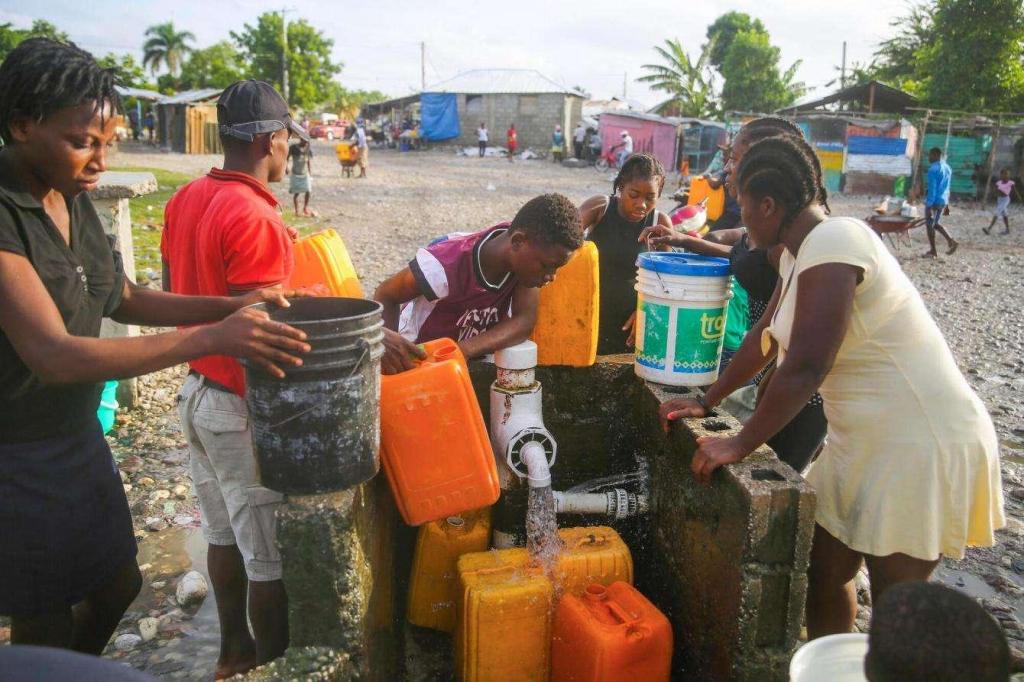
Water and electricity aren’t luxury products. They are the plumbing and bloodstream of modern civilization.
The Government Is Finally Pushing Back, But Questions Remain
There is another side to the current story.
The Holness government is now negotiating a replacement for the JPS licence, which expires in July 2027. It says the new arrangement should produce lower costs, stronger regulation, greater renewable-energy use and better consumer protections. The government has even indicated that if negotiations with JPS fail, it could seek alternative operators.
That complicates the argument that Jamaica’s government is simply refusing to stand up for citizens. Right now, it is publicly challenging aspects of the existing system.
But Jamaicans are entitled to ask why such aggressive protection wasn’t built into the arrangement from the beginning.
And there is another bitter irony. After Hurricane Melissa, the government approved a US$150 million loan to privately controlled JPS to accelerate restoration work. The government argued that the loan prevented customers from absorbing restoration costs through higher bills and avoided automatically extending the existing licence.
Still, the optics are extraordinary: the public sector providing enormous financial assistance to an overwhelmingly privately owned monopoly responsible for providing an essential public service.
Privatization is often sold with a seductive promise: corporations provide the efficiency while taxpayers escape the burden.
Reality can be considerably messier.
When essential infrastructure fails, governments cannot simply shrug and tell citizens to complain to the shareholders. The government ultimately remains responsible for ensuring people have electricity, water and other necessities.
That leaves Jamaica facing the question it should have asked decades ago:
If the public ultimately carries the consequences when an essential utility fails, how much control over that utility should ever have been surrendered in the first place?
Jamaica’s coming electricity negotiations offer an opportunity to answer that question differently. Whatever ownership model emerges after 2027, affordability, reliability, transparency and Jamaican public accountability should be treated as requirements rather than corporate bargaining chips.
Because electricity may appear on a company’s balance sheet.
But keeping the lights on is still a public necessity.
—Matt Gwinta, B1Daily




Leave a comment