—Barrington Williams, B1Daily
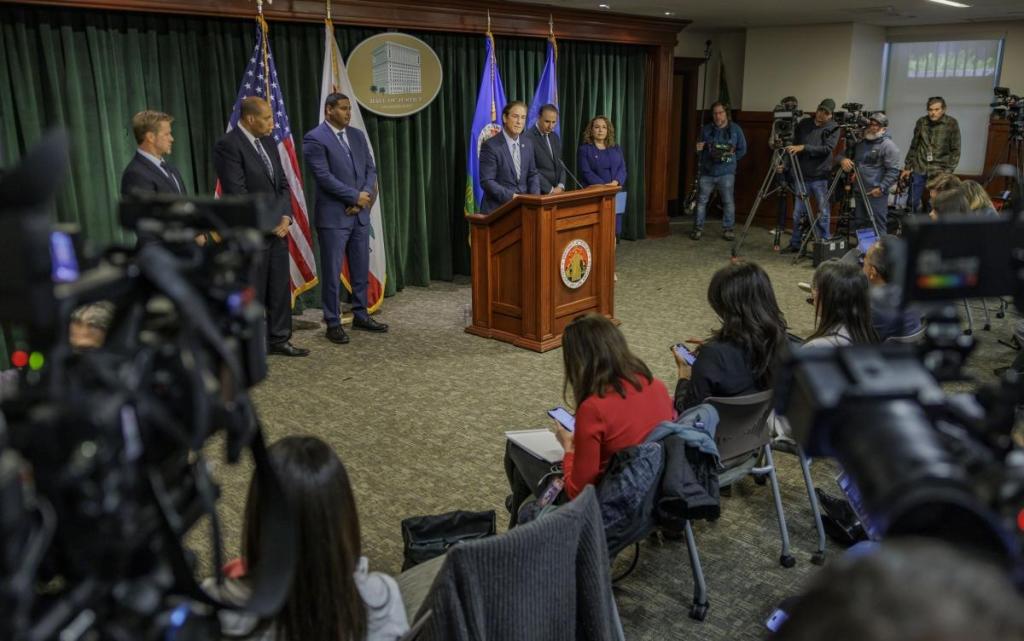
Americans obsess over presidential elections, congressional races and Supreme Court nominations. Yet one of the most powerful officials in the criminal justice system may be sitting in a county office a few miles away, making decisions capable of changing someone’s life before a jury ever hears the case.
America has more than 2,400 elected local prosecutors, commonly called district attorneys, state’s attorneys, county attorneys or prosecuting attorneys depending on the jurisdiction.
And despite their enormous authority, many Americans probably couldn’t name theirs.
The Prosecutor Has a Giant Menu of Choices
Police generally investigate and make arrests. Judges oversee cases and impose sentences within the law. But between those institutions stands the prosecutor, armed with an extraordinary amount of discretion.
Prosecutors decide whether an arrest becomes a criminal case. They determine which charges to file, whether charges should be dismissed, what plea agreement to offer, whether diversion is appropriate and what punishment their office will request.
Consider two people accused of similar conduct.
One prosecutor might offer probation or diversion. Another might file several charges and seek incarceration. Both decisions could potentially fall within the discretion granted by their respective state laws.
That means geography can dramatically affect how the criminal justice system operates.
Cross a county line and you may encounter an entirely different philosophy of prosecution.
Most Criminal Cases Never Reach a Jury
Television has trained Americans to imagine criminal justice as twelve jurors sitting in a courtroom while lawyers dramatically argue over evidence.
Reality is considerably less cinematic.
The overwhelming majority of criminal convictions are obtained through guilty pleas rather than jury trials.
That makes plea bargaining enormously important. Prosecutors can sometimes choose among multiple legally available charges carrying very different potential punishments. Those charging decisions can consequently give prosecutors substantial leverage when negotiating pleas.
The courthouse may have a judge sitting above everyone else.
But enormous portions of the case can be shaped long before sentencing.
Elections Are Supposed to Provide Accountability
Most chief local prosecutors are elected, which theoretically provides a straightforward accountability mechanism.
Don’t like the prosecutor’s policies?
Vote for somebody else.
The problem is that prosecutor elections historically receive far less public attention than presidential, gubernatorial or congressional contests. Many voters may know almost nothing about charging policies, plea-bargaining practices, dismissal rates or sentencing recommendations inside their local prosecutor’s office.
And evaluating prosecutors isn’t necessarily simple.
A high conviction rate could indicate strong cases, but treating convictions as the primary measure of success could also encourage prosecutors to prioritize winning rather than justice.
A declining prosecution rate might represent sensible diversion of minor cases, or critics might interpret it as insufficient enforcement.
Crime rates aren’t a perfect scorecard either because policing, economic conditions, demographics, courts, corrections policies and numerous other factors influence crime.
There isn’t a tidy little scoreboard hanging over the courthouse.
Transparency Could Change the Equation
One potential solution isn’t telling prosecutors whom they must prosecute.
It is giving the public more information about what their offices actually do.
Imagine every prosecutor’s office regularly publishing easily understandable statistics showing charges filed, cases declined, dismissals, plea agreements, diversion programs, sentencing recommendations, pretrial detention requests and outcomes broken down by relevant demographic information.
Residents could compare promises made during campaigns with what actually happened after Election Day.
Researchers could identify unusual disparities.
Journalists could spot patterns.
Defense attorneys and community organizations could ask better questions.
And prosecutors themselves could demonstrate when policies are producing results.
Transparency doesn’t automatically prove misconduct or eliminate legitimate prosecutorial discretion. Different cases involve different evidence, criminal histories and circumstances. Raw statistics require context.
But sunlight makes discretion easier to examine.
Black Communities Have Particular Reason to Pay Attention
For Black Americans, prosecutorial accountability carries additional historical weight.
Black communities have experienced racial disparities throughout multiple stages of the criminal justice system, including arrests, pretrial detention, charging, plea negotiations and sentencing.
That doesn’t mean every disparity demonstrates discrimination by prosecutors. Differences can emerge from numerous stages of the system and require careful analysis.
But it makes transparency particularly important.
If two similarly situated groups consistently receive different outcomes, the public should be able to examine where those differences emerge rather than being asked to simply trust a system operating behind courthouse doors.
Prosecutors Need Discretion, But Discretion Needs Scrutiny
There is also a legitimate reason prosecutors possess discretion.
No legislature can write a criminal code capable of anticipating every circumstance. Evidence varies. Witnesses disappear. Victims have different wishes. Defendants have different histories. Some cases demand severe punishment while others may be better handled through treatment, restitution or diversion.
Turning prosecutors into robots following mandatory formulas could create injustices of its own.
The better question is therefore not whether prosecutors should have discretion.
It is how much transparency and accountability should accompany that discretion.
America spends enormous energy debating presidents, governors, police chiefs and judges.
Meanwhile, thousands of locally elected prosecutors make decisions every day about who gets charged, what charges they face, what plea bargains are offered and what punishment the government will seek.
Maybe Americans shouldn’t wait until a controversial case explodes across social media before asking what their prosecutor is doing.
The district attorney’s office might not generate presidential-election fireworks.
But for the person standing inside a courtroom facing the power of the state, few elected officials matter more.
—Barrington Williams, B1Daily


Leave a comment