—Barrington Williams, B1Daily
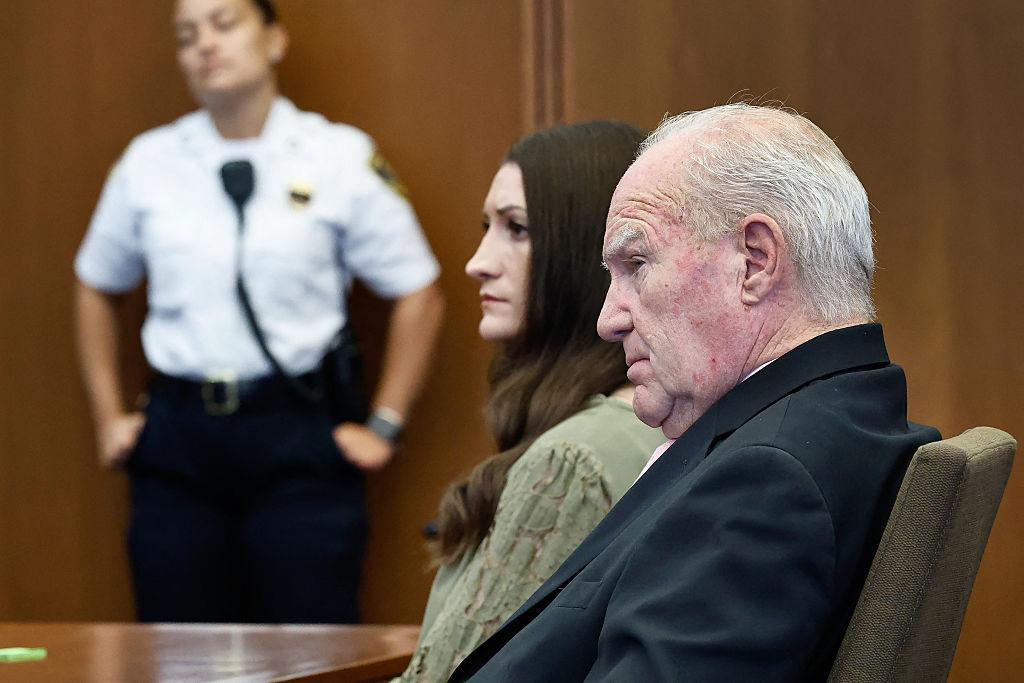
The courtroom debate was supposed to be about Lindsay Clancy.
Instead, increasingly, it is becoming about the one juror who refused to give her the result her defense wanted.
Clancy was charged with murdering her three children, 5-year-old Cora, 3-year-old Dawson and 8-month-old Callan, who died from strangulation in January 2023. Her trial centered largely on criminal responsibility: the defense argued that postpartum psychosis left her unable to be held criminally responsible, while prosecutors argued that she understood what she was doing.
After seven days of deliberations, the jury couldn’t reach a unanimous verdict.
Eleven jurors reportedly favored finding Clancy not guilty by reason of insanity.
One did not.
That produced a mistrial.
Now Clancy’s defense wants the court to investigate that holdout juror.
And that should make everyone who cares about the independence of juries uncomfortable.
Imagine If the Situation Were Reversed
Here’s the obvious question.
What if eleven jurors wanted to convict Lindsay Clancy of murder, but one juror believed the prosecution hadn’t proved its case beyond a reasonable doubt?
Would people be comfortable with prosecutors responding:
Let’s investigate that juror.
Let’s examine his questionnaire.
Let’s examine his phone records.
Let’s question him under oath.
Let’s investigate whether something in his background should have prevented him from serving.
The civil-liberties alarms would be deafening.
And they should be.
A holdout juror standing between a defendant and conviction is practically an American courtroom archetype.
But apparently a holdout becomes considerably less romantic when he’s standing between a defendant and acquittal.
A Juror Isn’t Required to Follow the Crowd
Clancy’s defense argues there are legitimate questions about whether the holdout followed the court’s instructions and whether he was truthful during jury selection.
Those allegations deserve to be handled according to the law.
If evidence demonstrates actual juror misconduct, that’s a legal issue for the judge.
But disagreement itself cannot become misconduct.
The holdout juror, Michael Péguy Desronvil, has publicly disputed claims that he possessed reasonable doubt but refused to acquit anyway. He says he did not have doubts and believed the evidence demonstrated Clancy knew what she was doing.
Other jurors have described events differently.
That’s precisely why courts must be extraordinarily cautious about transforming disagreements inside the jury room into post-trial investigations.
Jurors are supposed to deliberate independently.
The entire purpose of requiring unanimity is that eleven votes do not magically become twelve.
Eleven to One Is Still Not Unanimous
This seems to have gotten lost.
The defense persuaded eleven jurors.
That’s impressive.
But criminal juries don’t operate under majority rule.
Eleven votes don’t produce an acquittal.
Neither do eleven votes produce a conviction.
The twelfth juror matters just as much as the first.
If one juror sincerely believes the prosecution met its burden, that juror isn’t obligated to surrender his judgment because everyone else wants to go home.
Otherwise, why bother having twelve jurors?
Just appoint a foreperson and let everyone else clap.
And Now the Defense’s Argument Is Changing
The situation became even stranger at a September 29 hearing.
Clancy’s lawyer Kevin Reddington argued that prosecutors hadn’t sufficiently proved that Clancy killed the children.
That’s a remarkable development because the trial defense had centered on whether Clancy was criminally responsible when she killed them, with the defense arguing postpartum psychosis prevented criminal responsibility.
Now the defense is challenging whether prosecutors adequately established that she caused their deaths at all.
A defense lawyer is allowed to pursue every lawful argument available to a client.
That’s the job.
But the public is equally entitled to notice when the argument moves.
First the central battle was essentially:
She did it, but she wasn’t criminally responsible.
Now another argument is:
You didn’t sufficiently prove she did it.
And simultaneously:
Investigate the juror who wouldn’t acquit her.
That’s quite a collection of escape hatches.
The Children Are Disappearing From Their Own Case
This is perhaps the ugliest part of the entire spectacle.
Cora.
Dawson.
Callan.
Three children died.
Yet increasingly, the public conversation revolves around postpartum psychosis, jury questionnaires, cellphones, double jeopardy, juror interviews, mistrial procedure and whether prosecutors should attempt another trial.
Those legal questions matter.
But three dead children aren’t background scenery in Lindsay Clancy’s legal drama.
They are the reason there is a courtroom.
Mental illness can be relevant to criminal responsibility. Postpartum psychosis is real and potentially catastrophic. A defendant suffering severe mental illness is still entitled to every constitutional protection available under American law.
But compassion for mental illness doesn’t require erasing the victims.
And constitutional protections for defendants shouldn’t somehow become weaker constitutional protections for jurors who refuse to deliver the preferred result.
The Holdout Juror’s Lawyer Has a Point Worth Considering
Desronvil’s attorney has raised a provocative hypothetical.
Imagine prosecutors investigating a lone holdout juror who prevented a conviction.
Would defense lawyers tolerate that precedent?
Would civil-rights organizations?
Would criminal-defense advocates?
Probably not quietly.
That’s what makes this controversy larger than Lindsay Clancy.
Jurors need to know that they can enter a deliberation room, examine the evidence and reach their own conclusions without wondering whether the losing side will start digging through their lives afterward.
There are exceptions, of course.
Actual misconduct matters.
Dishonesty during jury selection matters.
Improper outside communications matter.
Ignoring a judge’s legal instructions matters.
But those require evidence and judicial findings.
Being stubborn isn’t enough.
Being unpopular isn’t enough.
And being one against eleven certainly isn’t enough.
Put Lindsay Clancy Back at the Center of the Lindsay Clancy Case
There is nothing improper about Clancy’s attorneys mounting an aggressive defense.
They’re defense attorneys.
Aggressive defense is quite literally the assignment.
But everyone else should resist allowing the case to become a referendum on whether one juror had the audacity to disagree with eleven others.
The central questions remain painfully straightforward.
What happened to Cora, Dawson and Callan?
What evidence establishes who caused their deaths?
What was Lindsay Clancy’s mental condition at the time?
Did she possess the criminal responsibility required under Massachusetts law?
Those questions should be determined by evidence and law.
Not by whether one juror irritated eleven other jurors.
Not by whether the public sympathizes with the defendant.
And certainly not by the bizarre implication that a juror becomes suspicious simply because he refuses to join the majority.
The justice system asks jurors to exercise independent judgment.
It shouldn’t punish them when they actually do.
If evidence proves this juror committed misconduct, address the misconduct.
But if his great offense was simply looking at the same evidence as eleven other people and reaching a different conclusion?
Then congratulations.
That’s not a broken jury system.
That’s the jury system.
—Barrington Williams, B1Daily





Leave a comment