
—Kerry Hill, B1Daily
America has scholarships for almost everything imaginable.
There are scholarships based on academic achievement, income, geography, military service, career choice, athletics, community involvement, corporate affiliation and family background.
Yet search for a large national scholarship program specifically designed for American Freedmen, descendants of people enslaved in the United States, and suddenly the scholarship universe becomes remarkably thin.
That doesn’t mean such programs don’t exist. A handful do, and those exceptions make the larger question even harder to ignore:
If America can identify descendants of particular enslaved communities and provide them educational assistance, why hasn’t anyone built a major national scholarship system for Freedmen descendants?
Freedmen Understood the Power of Education Immediately
The historical irony is almost painful.
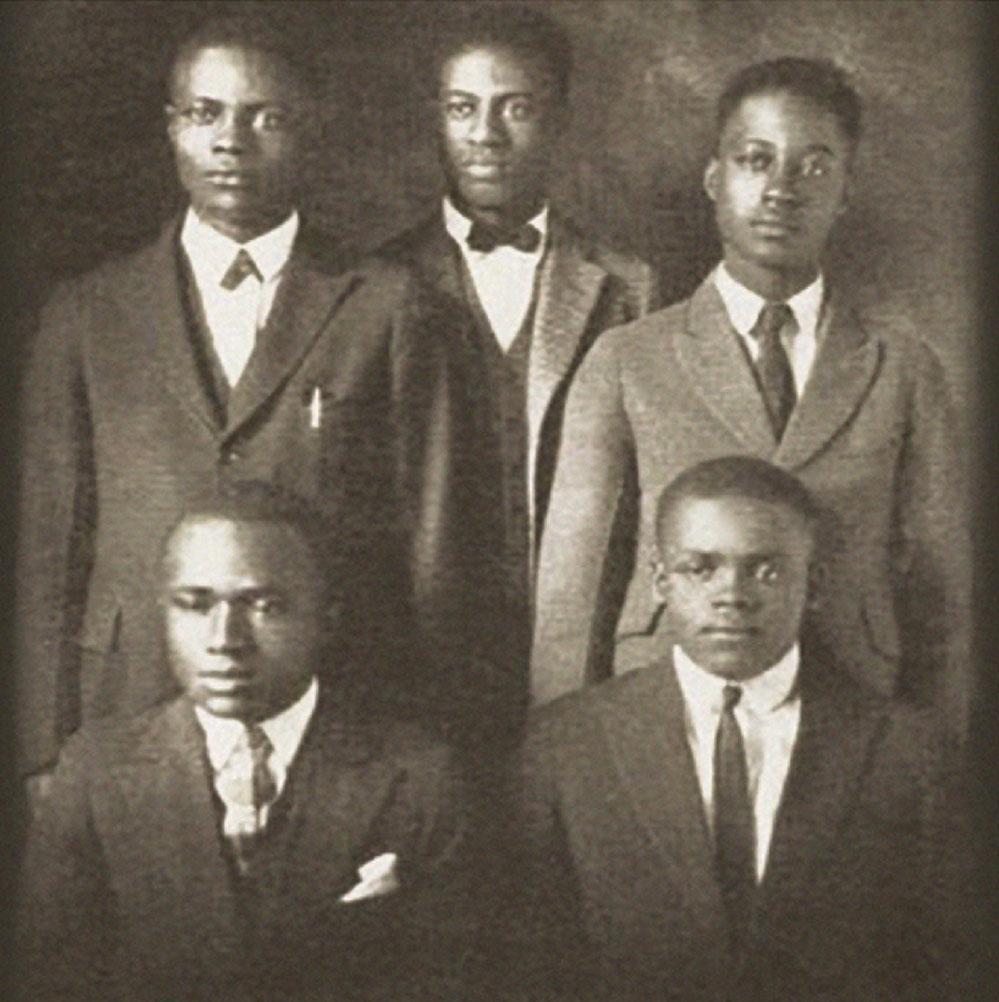
After emancipation, formerly enslaved Black Americans pursued education with extraordinary determination. Freedmen and their communities established and supported schools during Reconstruction, while the Freedmen’s Bureau and missionary organizations also participated in expanding educational opportunities.
People who had lived under a system where literacy could be deliberately suppressed understood exactly what education represented.
Freedom wasn’t merely removing chains.
Freedom meant being able to read a contract.
Own property.
Operate a business.
Become a teacher.
Enter a profession.
Understand the law.
Build institutions.
Educate your children.
Education was one of the foundations upon which post-emancipation Black America attempted to build independence.
More than 160 years later, their descendants face college tuition bills that can stretch into tens of thousands of dollars.
So where is the Freedmen scholarship infrastructure?
Yes, Descendant Scholarships Actually Exist
Here’s where the argument becomes particularly interesting.
The idea isn’t hypothetical.
The Descendants Truth & Reconciliation Foundation, working with the Thurgood Marshall College Fund, provides need-based scholarships of up to $10,000 annually for certified descendants of people enslaved by the Jesuits in the United States. The foundation says it has awarded more than $579,000 to more than 40 students. Descendants
That program requires applicants to establish their descendant connection through a certification process.
Think about what that demonstrates.
Lineage-based educational assistance can actually be administered.
Then look at Virginia.
The University of Virginia has an Enslaved Ancestors College Access Scholarship Program intended to provide educational benefits to qualifying students with historical connections to slavery. Separately, the Descendants of Enslaved Communities of Virginia advertises scholarships for graduating students descended from enslaved African Americans in Virginia or Virginia residents with known enslaved African American ancestry. DEC at UVA
So the question isn’t whether descendant scholarships are possible.
They’re already happening.
The real question is why they remain comparatively small, localized and attached to particular institutions or enslaved communities rather than existing on a massive national scale.
Where Is the National Freedmen Scholarship Fund?
Imagine something considerably larger.
A privately funded National Freedmen Scholars Fund open to Americans who can document descent from people enslaved in the United States.
Not $1,000 here.
Not one university there.
Not one graduating class in one state.
A serious national institution.
Imagine $10,000 undergraduate scholarships.
Full scholarships for exceptional students.
Trade-school grants.
Graduate fellowships.
Medical-school scholarships.
Law-school scholarships.
STEM grants.
Teacher-training scholarships.
Entrepreneurship programs.
Study-abroad grants.
And because documenting ancestry can itself be expensive and complicated, the organization could provide genealogy assistance to families trying to establish their lineage.
That last component would be particularly powerful.
The scholarship wouldn’t merely finance someone’s future.
It could help reconnect families with their past.
HBCUs Could Be at the Center
Historically Black colleges and universities would be natural partners.
Imagine Howard, Morehouse, Spelman, Hampton, Tuskegee, Florida A&M, North Carolina A&T and other HBCUs working alongside philanthropic organizations to establish Freedmen descendant scholarships.
These institutions already occupy an extraordinary place in Black American educational history.
A national program could allow students to take their scholarship to participating HBCUs or other accredited institutions.
Corporations could contribute.
Black-owned businesses could contribute.
Black celebrities could contribute.
Churches could contribute.
Athletes could contribute.
Foundations could contribute.
Ordinary Black Americans could contribute.
And suddenly this doesn’t require waiting for Congress to do anything.
Black Philanthropy Could Build It
This may be the most provocative part of the conversation.
Black America doesn’t necessarily need permission from Washington to create a Freedmen scholarship institution.
Suppose 500,000 people contributed just $10 per month.
That’s $5 million every month.
That’s $60 million per year.
At an average award of $10,000, that represents the equivalent of funding 6,000 scholarship awards annually, before administrative costs and assuming all contributions were used for scholarships.
Now imagine corporate matching contributions, philanthropic endowments and wealthy donors joining the project.
The fund could eventually build an endowment large enough to survive generations.
That’s institution-building.
Instead of merely discussing the Black wealth gap, Black America could construct an institution specifically designed to transfer educational opportunity from one generation to another.
But Who Counts as a Freedman Descendant?
This is where any serious proposal has to leave slogans behind and enter the wonderfully unglamorous world of paperwork.
Eligibility would need rules.
A Freedmen scholarship couldn’t simply mean “anyone who identifies as Black.”
If its purpose were specifically to benefit descendants of people enslaved in the United States, applicants would need some method of demonstrating that lineage.
Existing descendant organizations already offer possible models.
The Descendants Truth & Reconciliation Foundation requires certification before descendants can access its programs. UVA descendant organizations similarly use historical records, genealogy and other evidence to establish connections with enslaved communities. Descendants
A national program could develop comparable standards using census records, Freedmen’s Bureau records, birth and death certificates, plantation records, wills, probate documents, military records and family genealogy.
And applicants unable to establish lineage immediately shouldn’t necessarily be locked out forever.
Give them genealogical assistance.
Build a national Freedmen genealogy database.
Partner with historians and genealogists.
Turn verification into another form of historical preservation.
This Wouldn’t Replace Existing Black Scholarships
A Freedmen scholarship wouldn’t require eliminating scholarships available to Black students generally.
Keep them.
HBCU scholarships?
Keep them.
Need-based scholarships?
Keep them.
First-generation scholarships?
Keep them.
STEM programs?
Keep them.
A Freedmen scholarship would simply recognize something those programs aren’t designed to address:
a specific historical lineage connecting living Americans to people enslaved inside the United States.
That is a different criterion.
And the existing descendant scholarship programs demonstrate that institutions can recognize that distinction.
Scholarships Could Become a Form of Generational Repair
The most compelling argument isn’t simply that college is expensive.
It’s that education represents one of the clearest ways of converting historical recognition into future opportunity.
Imagine a student discovering that her great-great-great-grandfather was born enslaved in Georgia.
Six generations later, that documented history helps finance her engineering degree.
Imagine another student tracing his family through Reconstruction records and receiving funding for medical school.
Another becomes an electrician.
Another becomes a lawyer.
Another becomes a teacher.
Another launches a company.
The scholarship doesn’t erase slavery.
Nothing can.
But it converts ancestry from something America traditionally discusses only through suffering into something capable of producing opportunity.
That’s an intriguing form of repair.
Stop Waiting for Somebody Else to Build It
Perhaps that’s the larger lesson.
There should absolutely be a conversation about universities, corporations, foundations and other institutions financing scholarships for descendants of American slavery.
But Black America shouldn’t have to sit around waiting for somebody else to discover the idea.
Build the fund.
Create the board.
Hire the genealogists.
Establish transparent eligibility requirements.
Partner with HBCUs.
Recruit corporate donors.
Create an endowment.
Award scholarships.
Publish annual financial reports.
Track graduation rates.
Help recipients become mentors.
Ask successful alumni to contribute when they’re financially established.
Then repeat the process for generations.
That is how institutions become permanent.
The children of Freedmen entered classrooms after emancipation because their parents understood something slavery’s architects understood too:
Education creates power.
Their descendants shouldn’t have to rediscover that lesson.
America already has small examples proving descendant-specific scholarships can work.
Maybe the question isn’t simply “Where are the Freedmen scholarships?”
Maybe the better question is:
Why isn’t there a Freedmen scholarship fund big enough that every Black American family knows its name?
—Kerry Hill, B1Daily


Leave a comment