—Travis Luyindama, B1Daily
SpaceX has accomplished extraordinary things.
That doesn’t mean the federal government should keep handing it an increasingly central role in America’s space program.
There is a difference between rewarding technological success and allowing the United States to become dangerously dependent on one private company. Washington appears increasingly comfortable dancing across that line.
SpaceX’s Falcon 9 and Crew Dragon have become workhorses. Crew Dragon was certified for human spaceflight in 2020 and has repeatedly carried astronauts to the International Space Station. NASA recently awarded SpaceX three additional ISS crew missions, bringing its contracted total to 17.
SpaceX earned much of that business.
But government procurement isn’t supposed to be a lifetime-achievement award.
The question should always be:
Who provides the best combination of capability, reliability, competition and protection against catastrophic dependency going forward?
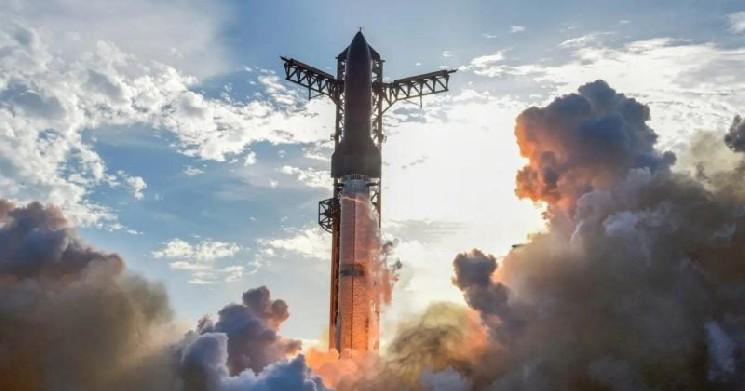
And Starship should make Washington considerably less comfortable with putting too many eggs inside Elon Musk’s stainless-steel basket.
How Many Mishaps Before Washington Starts Diversifying?
Starship is ambitious almost beyond comprehension.
It is also still developmental.
NASA’s inspector general reported this year that three of five early flights involving the second version of Starship ended with loss of the vehicle. The watchdog estimated individual mishaps could add one to three months to the Human Landing System schedule.
Then came Flight 12.
The FAA classified that May 2026 mission as a mishap after problems involving the Super Heavy booster. The investigation eventually identified heat effects on propulsion components and incorrect engine-alarm settings among the probable causes.
SpaceX made corrective changes and returned to flight.
That’s how experimental aerospace development works.
But then, during Starship’s 14th test flight this week, another Raptor engine malfunctioned. Starship nevertheless achieved a historic milestone by reaching orbit and deploying satellites, but the engine problem forced changes to the planned mission and is now being investigated. The implications matter because Starship technology is central to NASA’s lunar ambitions.
Testing rockets means occasionally losing rockets.
Nobody should pretend otherwise.
But taxpayers are entitled to notice when the experimental rocket they are helping finance becomes simultaneously indispensable to America’s lunar strategy.
NASA Isn’t SpaceX’s Venture-Capital Department
NASA’s relationship with private companies has produced spectacular successes.
Commercial Crew is perhaps the strongest example.
NASA funded competing systems from Boeing and SpaceX rather than building everything internally. SpaceX succeeded brilliantly. Boeing stumbled badly.
The lesson shouldn’t be:
Give everything to SpaceX.
The lesson should be:
Competition works.
NASA originally wanted redundant transportation capabilities precisely because depending on one spacecraft creates vulnerability.
Ironically, Boeing’s Starliner problems have demonstrated what happens when that redundancy fails. SpaceX became NASA’s dependable alternative.
NASA’s inspector general now explicitly says multiple affordable low-Earth-orbit transportation options are necessary for safety, redundancy and competitive pricing.
That principle shouldn’t disappear simply because SpaceX happens to be winning.
Musk’s Swagger Shouldn’t Become Government Procurement Policy
Then there is Elon Musk.
Musk’s audacity is inseparable from SpaceX’s success.
This is a CEO who built a company around reusable orbital rockets when much of the aerospace establishment considered the idea wildly ambitious. SpaceX embarrassed incumbents, lowered launch costs and forced an industry famous for moving at geological speed to accelerate.
Credit where it’s due.
But the same swagger that can inspire engineers shouldn’t become the philosophy governing federal contracting.
Government needs boring things.
Redundancy.
Predictability.
Institutional accountability.
Multiple suppliers.
Backup plans.
Competitive bidding.
A federal space program cannot be built around the assumption that one billionaire entrepreneur will always deliver whatever timetable he announces.
SpaceX itself provides the evidence.
NASA’s inspector general reported in March that development of the Artemis III Starship had already been delayed by at least two years, with additional delays expected.
Bold promises are wonderful.
Milestones are better.
Give the Other Rocket Companies Some Oxygen
America has other space companies.
Blue Origin is developing its Blue Moon lunar lander under NASA contract.
Rocket Lab has developed Electron and is building the larger Neutron rocket.
United Launch Alliance operates Vulcan.
Firefly Aerospace has been expanding its launch and lunar capabilities.
Then there are dozens of smaller companies attempting to develop spacecraft, propulsion systems, lunar infrastructure and launch vehicles.
Not every one will succeed.
Good.
That’s what competition looks like.
NASA shouldn’t artificially rescue incompetent companies simply to create competitors. Boeing’s difficulties demonstrate why writing checks to an established aerospace name doesn’t guarantee results.
But federal procurement should deliberately avoid creating a system where one contractor becomes so essential that replacing it becomes practically impossible.
Once that happens, the negotiating relationship changes.
The government stops behaving like a customer.
It starts behaving like a dependent.
SpaceX Isn’t Technically a Monopoly, But Dependency Is the Real Problem
Calling SpaceX a literal NASA monopoly would be inaccurate.
NASA has awarded Human Landing System work to both SpaceX and Blue Origin. The Pentagon has also distributed major launch contracts among SpaceX, Blue Origin and United Launch Alliance.
That competition matters.
But SpaceX’s extraordinary success has created something almost as strategically important as monopoly power:
indispensability.
NASA learned this lesson painfully when Boeing’s Starliner failed to become a dependable second crew system on schedule.
When one provider becomes the reliable answer every time another provider stumbles, eventually the “backup” becomes the infrastructure.
That’s dangerous regardless of who owns the company.
Imagine America’s airline system depending overwhelmingly on one aircraft manufacturer.
Imagine the military purchasing almost every important weapons system from one defense contractor.
Imagine the federal government storing nearly all critical information with one cloud provider.
Engineers have a wonderfully unromantic word for that arrangement:
a vulnerability.
The Moon Shouldn’t Belong to One Contractor
NASA’s lunar program should become the proving ground for a different philosophy.
Let SpaceX compete.
Let Blue Origin compete.
Let emerging companies compete when technically capable.
Fund milestones rather than mythology.
Reward companies that actually deliver.
Cancel programs that chronically fail.
And wherever practical, maintain at least two viable systems for strategically critical capabilities.
If SpaceX produces the safest, cheapest and most capable lunar lander, it should win missions.
If Blue Origin beats it, Blue Origin should fly.
If another company eventually beats both, hand that company the keys.
The federal government shouldn’t have a favorite rocket company.
It should have requirements.
SpaceX Doesn’t Need Protection From Competition
Perhaps the strangest part of this debate is that genuine competition would probably make SpaceX better.
SpaceX became SpaceX precisely because the old aerospace establishment had become slow, expensive and comfortable.
It was the insurgent.
Now it increasingly risks becoming the establishment.
That’s how industrial cycles work.
Yesterday’s disruptive startup becomes tomorrow’s entrenched contractor.
The answer isn’t punishing SpaceX for succeeding.
It’s refusing to let success calcify into entitlement.
NASA should remember what produced the commercial-space revolution in the first place:
Competition.
SpaceX deserves enormous credit for transforming American spaceflight.
It deserves contracts when it wins them fairly and performs.
It deserves payment for milestones it completes.
But it doesn’t deserve America’s space program by default.
No corporation does.
Starship’s turbulent development should be the flashing dashboard light reminding Washington why.
NASA’s future shouldn’t depend on whether Elon Musk’s next enormous promise lands upright.
America needs SpaceX. It just shouldn’t need only SpaceX.
—Travis Luyindama, B1Daily






Leave a comment