—Travis Luyindama, B1Daily
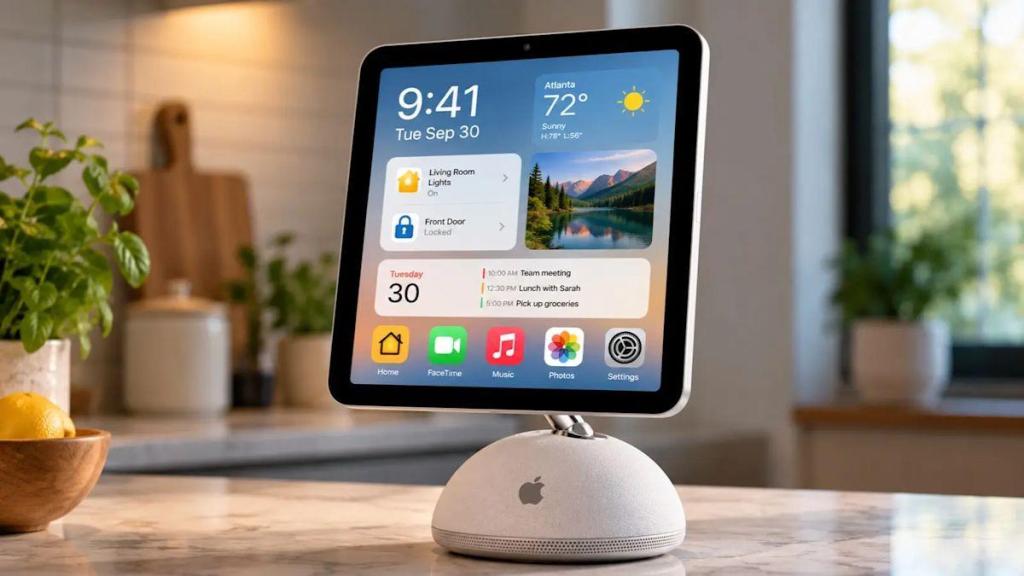
Apple may be preparing to sell consumers something they already own, just with a shinier screen, a premium price tag, and an Apple logo slapped on the back.
The company’s rumored smart-home display, sometimes informally called the “iHome,” promises to bring household controls, video calling, entertainment, and digital assistance into one centralized device. Sounds futuristic, right? Until you realize your smartphone, television, smart speaker, tablet, and even your refrigerator may already handle most of those tasks.
Welcome to the latest chapter of Silicon Valley’s favorite business model: reinventing the wheel, giving it Wi-Fi, and charging extra for the privilege.
Congratulations, Your Wall Has an iPad Now
The rumored Apple home hub is expected to function as a central command station for connected household devices. Think smart lighting, thermostats, security cameras, reminders, calendars, and FaceTime calls.
There’s just one tiny technological inconvenience: these functions already exist.
Your iPhone can control HomeKit accessories. Your iPad can display calendars, stream entertainment, and make video calls. Your Apple Watch can operate smart-home devices from your wrist, while existing smart speakers can handle voice commands without demanding another screen on your kitchen counter.
So what exactly is this new device solving?
Apparently, the inconvenience of reaching into your pocket.
Another Screen Nobody Asked For
Modern households are already drowning in displays. Smartphones, laptops, televisions, tablets, gaming consoles, and smart appliances compete for attention throughout the day.
Adding a dedicated smart-home display risks introducing yet another device that requires electricity, software updates, Wi-Fi connectivity, and eventual replacement.
And let’s not forget Apple’s ecosystem. A device that works best with other Apple products could become another incentive to purchase compatible accessories and remain within the company’s tightly integrated hardware environment.
For households already equipped with smartphones and smart speakers, the practical improvement may be considerably smaller than the marketing presentation suggests.
Siri Better Have Learned Something New
The strongest argument for a dedicated Apple home hub would be a substantially improved digital assistant capable of understanding complex requests and automating household routines.
Imagine telling your home to adjust the lighting, check security cameras, prepare the thermostat, and coordinate your evening schedule without opening multiple applications.
That could be genuinely useful.
But much of that functionality is already available through existing smart-home platforms, including Apple Home, Google Home, and Amazon Alexa.
Unless Apple introduces significantly better automation, contextual intelligence, or device interoperability, a new screen alone won’t represent much of a technological breakthrough.
It’s a remote control with ambitions.
The One Feature That Might Actually Matter
To be fair, a dedicated household display could offer some advantages.
A shared screen mounted in a kitchen or hallway could provide quick access to security cameras, family calendars, intercom functions, and smart-home controls without requiring anyone to unlock a personal phone.
That convenience might appeal to households with numerous connected devices, children, or family members who prefer a stationary control panel.
But convenience and necessity are two very different things.
For many consumers, the difference between using an existing iPad and purchasing a dedicated home hub may come down to whether Apple can deliver meaningful improvements in software, automation, and ease of use.
Apple’s Greatest Innovation Might Be Selling Us Redundancy
Apple has a remarkable history of turning familiar technologies into polished, commercially successful products. The iPod didn’t invent digital music players, and the iPhone didn’t invent smartphones.
What made those devices successful was the experience they delivered.
The same standard should apply to Apple’s rumored home hub.
If the device merely combines functions already available across products consumers own, it risks becoming an expensive convenience rather than a meaningful innovation.
Apple doesn’t need to invent another screen for the house. It needs to demonstrate why that screen deserves to exist.
Until then, the smartest home upgrade might be keeping your money in your wallet and asking the iPhone you already purchased to turn off the lights.
—Travis Luyindama, B1Daily





Leave a Reply