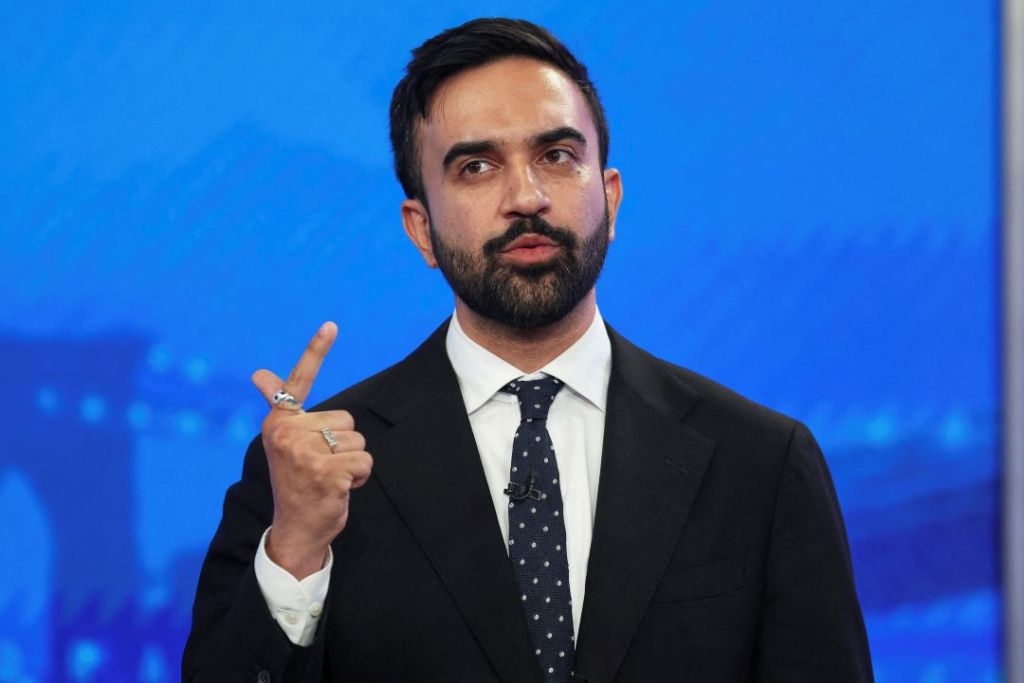
—Barrington Williams, B1Daily
“The revolution will not be televised, but it will be carefully curated in a Brooklyn loft.”
The quote isn’t from a political scientist, but from a longtime community organizer in East New York who watched Zohran Mamdani’s rise with a mixture of curiosity and exhaustion. For Mamdani, the trajectory seemed inevitable: a charismatic, articulate voice for the progressive left, positioning himself as the champion of the working class in a city defined by its staggering wealth gap. Yet, as his mayoral aspirations materialize, a glaring statistical void has emerged.
Despite his rhetoric of intersectional solidarity, Mamdani’s base remains stubbornly, predictably white.
To understand why Zohran Mamdani has failed to build a genuine coalition of support, and specifically why he struggles to gain traction with Black New Yorkers, one must look past the policy papers and toward the institutional machinery powering his campaign: The National Democratic Socialist Party (NDSP).
On paper, the NDSP is a vehicle for the redistribution of wealth and the dismantling of corporate hegemony. In practice, it has evolved into what many critics describe as a “white institution.” Despite the party’s insistence on an inclusive platform, the internal demographics of the NDSP tell a different story. The party is overwhelmingly white, staffed and steered by a caucus of “yuppies” and affluent suburbanites who view poverty through the lens of a textbook rather than a lived experience.
For many Black New Yorkers, the NDSP doesn’t feel like a liberation movement; it feels like a social club for the over-educated and under-employed of the creative class.
The disconnect is not merely demographic; it is visceral. The NDSP’s approach to “Black issues” often feels like an additive process, a series of checkboxes to be ticked off to ensure the coalition remains intact. They speak of systemic racism in the abstract, using the academic language of the seminar room, while failing to engage with the immediate, concrete realities of policing, housing discrimination, and economic survival in the city’s most marginalized zip codes.
When Mamdani speaks of “the people,” the resonance lands differently depending on who is listening. To the white progressive in Park Slope or Astoria, he sounds like a bold disruptor of the status quo. To the Black voter in Harlem or the Bronx, he sounds like another iteration of the “white savior” complex, a man backed by a party of suburbanites who are eager to lead a movement they don’t actually understand and whose struggles they have never shared.
This institutional blindness makes the NDSP an unreliable actor on the national stage. How can a party claim to champion the American working class when its leadership is disconnected from the very demographic, the Black working class, that has historically been the backbone of any successful grassroots movement in the United States?
The tragedy of Mamdani’s candidacy is that his policies might actually appeal to a broad coalition if he weren’t tethered to an institution that alienates the people it claims to represent. By relying on a caucus of white professionals who view social justice as a lifestyle brand, Mamdani has inadvertently built a ceiling over his own ambition.
Until the NDSP ceases to be a playground for the disconnected suburbanite and becomes a space where Black leadership is not just welcomed, but central, Mamdani will remain a mayor-in-waiting for a constituency that represents only a fraction of the city’s soul. For now, the “coalition” is a mirage, a collection of white support dressed up in the language of diversity, leaving the actual working-class New Yorkers wondering why they should trust a revolution that doesn’t look, sound, or feel like them.
—Barrington Williams, B1Daily


Leave a comment