—Michael Lyles, B1Daily
Apparently, helping Black Americans become homeowners is now enough to attract a federal investigation.
On October 7, the Trump administration’s Department of Housing and Urban Development (HUD) launched an investigation into Wells Fargo over programs designed to expand Black homeownership. Federal officials are examining whether the bank violated the Fair Housing Act by offering mortgage assistance and lending opportunities intended to address longstanding racial disparities.
The investigation raises a fundamental question: When did addressing documented discrimination in housing become grounds for suspecting discrimination itself?
A $60 Billion Commitment Under Federal Scrutiny
In 2017, Wells Fargo announced a $60 billion mortgage lending commitment intended to help create at least 250,000 Black homeowners by 2027. In 2022, the bank expanded its efforts with a $210 million initiative, including $150 million to help eligible Black homeowners reduce mortgage rates and refinancing costs.
These commitments emerged against a troubling financial backdrop. Black Americans have historically faced discriminatory lending, redlining, unequal access to credit, and barriers to building generational wealth through property ownership.
The racial homeownership gap remains substantial. In the second quarter of 2026, approximately 45% of Black households owned their homes, compared with roughly 75% of non-Hispanic white households.
Yet HUD is now scrutinizing whether Wells Fargo’s efforts to address those disparities crossed the line into unlawful discrimination.
Did Wells Fargo Actually Break the Law?
That question has not been resolved.
The Fair Housing Act prohibits discrimination in mortgage lending, including discriminatory terms based on race. However, federal law has also permitted qualifying Special Purpose Credit Programs designed to expand access to credit among economically disadvantaged groups.
In fact, federal regulators previously encouraged properly structured programs addressing documented lending disparities.
The Trump administration has since changed federal regulatory policy governing the use of race in such programs. HUD argues that racial equity objectives cannot justify discriminatory lending practices, while fair housing advocates contend that appropriately designed assistance programs can comply with federal law.
There is an important distinction between announcing a goal of increasing Black homeownership and unlawfully denying another applicant a mortgage because of race.
A commitment to closing a racial wealth gap is not, by itself, proof that fair housing laws were violated.
Whether Wells Fargo’s specific eligibility requirements and lending practices complied with the law must be established through evidence, not political disagreement over diversity initiatives.
The Irony of Investigating Wells Fargo
What makes this controversy particularly striking is Wells Fargo’s own history.
The financial institution has previously faced serious allegations of discriminatory mortgage practices involving Black borrowers. A Bloomberg investigation found that Wells Fargo rejected approximately half of Black applicants seeking mortgage refinancing in 2020.
Those findings helped intensify scrutiny of racial disparities in the bank’s lending operations.
Wells Fargo’s subsequent racial equity commitments were presented as efforts to address barriers that had historically prevented Black households from obtaining affordable mortgage financing.
Now, the federal government is investigating whether those corrective efforts themselves violated civil rights protections.
That reversal illustrates a larger debate about whether government enforcement should focus exclusively on identical treatment of applicants or also recognize programs designed to address documented disadvantages.
Why Critics See Anti-Black Bias
The investigation arrives amid the Trump administration’s broader campaign against diversity, equity, and inclusion initiatives across government and corporate America.
Critics argue that targeting programs intended to expand Black homeownership, particularly without an established finding of unlawful discrimination, risks discouraging financial institutions from addressing racial disparities.
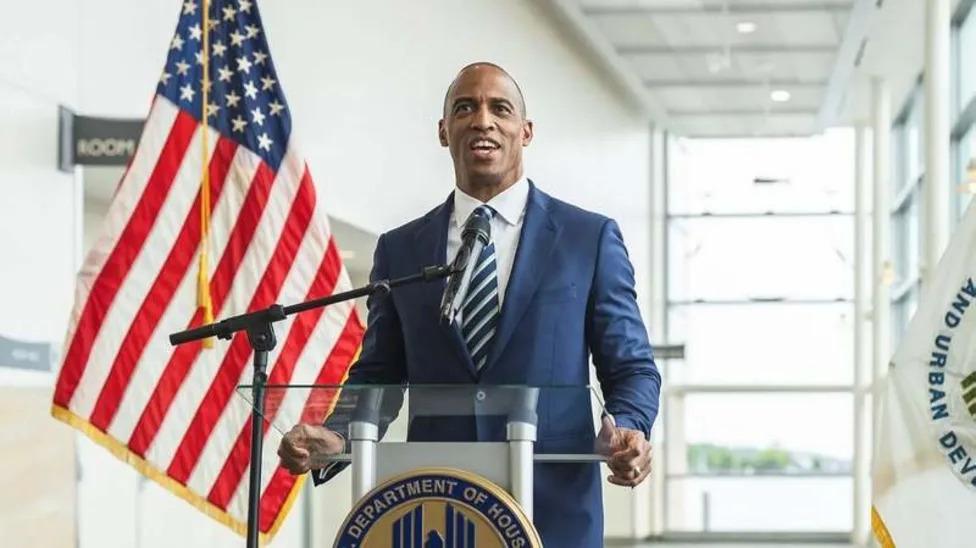
HUD Secretary Scott Turner has defended the investigation, arguing that lenders must not use race to determine mortgage opportunities or terms. His position reflects the administration’s interpretation of fair housing enforcement.
But fair housing advocates counter that programs addressing documented barriers to credit should not automatically be treated as discriminatory simply because they recognize racial inequality.
The financial consequences could extend beyond Wells Fargo. If banks conclude that targeted assistance programs expose them to significant regulatory scrutiny, they may become reluctant to develop similar initiatives.
That possibility matters in communities where homeownership remains one of the principal ways families accumulate and transfer wealth.
The Real Question Is Who Gets Access to Wealth
The Wells Fargo investigation is about more than a single bank’s mortgage products. It concerns how American financial institutions can address longstanding disparities without violating laws intended to guarantee equal treatment.
The Trump administration has the authority to investigate credible allegations of unlawful lending discrimination. But an investigation is not proof of wrongdoing, and the existence of a racial equity initiative does not automatically establish a Fair Housing Act violation.
For Black American Freedmen, whose families endured generations of discriminatory housing policies, the distinction is especially consequential.
The central issue should be whether Wells Fargo actually violated borrowers’ rights, not whether expanding Black homeownership is politically unpopular.
Fair housing enforcement should protect Americans from discrimination while allowing lawful efforts to remove documented barriers to homeownership. The evidence, rather than the politics surrounding racial equity, must determine whether Wells Fargo crossed that line.
—Michael Lyles, B1Daily




Leave a Reply