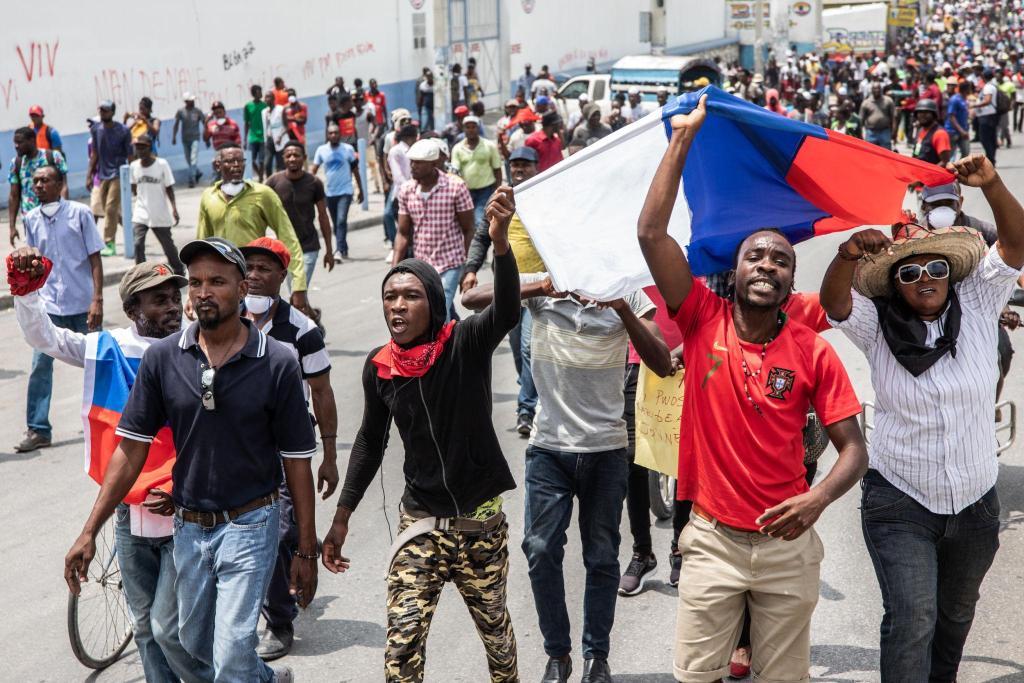
—Pierre Marion, B1Daily
Haiti has every reason to remember its history. But remembering history and allowing history to become a permanent explanation for every national failure are two entirely different things.
The Caribbean nation has endured foreign interference, economic exploitation, political instability, and devastating natural disasters. Its independence came at an extraordinary cost, including the crushing indemnity imposed by France in 1825. These injustices are historical facts, not imaginary grievances.
But Haiti is not the only nation that has suffered foreign domination, economic exploitation, or international betrayal. Across Africa, Asia, Latin America, and the Caribbean, countries have confronted colonialism, foreign intervention, and political upheaval while struggling to establish stable institutions.
Haiti’s past explains many of its obstacles. It cannot become an excuse for abandoning responsibility for its future.
History Matters, But So Does Accountability
International powers have undeniably contributed to Haiti’s difficulties. France extracted enormous payments from the young republic, the United States occupied Haiti from 1915 to 1934, and subsequent foreign interventions have repeatedly shaped the country’s political development.
However, Haiti’s modern problems cannot be explained entirely by decisions made in Paris, Washington, or international financial institutions.
Domestic political corruption, ineffective governance, elite rivalries, weak public institutions, and armed criminal organizations have also devastated the country.
Political leaders who steal public resources, manipulate institutions, or tolerate criminal networks cannot escape accountability simply because foreign governments have committed injustices of their own.
The Haitian people deserve better than a political class that invokes national sovereignty while failing to provide security, functioning infrastructure, and basic public services.
Haiti Is Not the Only Country That Has Been Exploited
Haiti’s historical suffering is distinctive, but foreign exploitation is hardly unique to Haiti.
Vietnam endured colonial rule and devastating wars. Rwanda survived genocide. Liberia experienced brutal civil conflicts. Numerous African nations inherited economies and borders shaped by colonial interests.
Their experiences are not interchangeable, and none offers a simple blueprint for Haiti. Nevertheless, they demonstrate that historical devastation does not eliminate the possibility of rebuilding institutions and pursuing national development.
Haiti’s international grievances deserve recognition, including legitimate debates about reparations and restitution. But foreign accountability and domestic reform must proceed together.
Demanding justice from other countries cannot substitute for demanding competence from one’s own government.
Haiti’s Greatest Resource Is Its People
The Haitian population is not inherently divided, incapable, or responsible for the violence inflicted upon it. Millions of Haitians have demonstrated extraordinary resilience, entrepreneurial ability, and civic commitment, both at home and throughout the diaspora.
The problem is that those strengths have too often been undermined by political instability, insecurity, and institutions that fail to protect ordinary citizens.
National unity cannot simply mean asking people to endure more suffering. It must involve building a political consensus around public safety, transparent government, education, infrastructure, and economic opportunity.
Business leaders, civic organizations, religious institutions, political factions, and diaspora communities must find ways to cooperate without demanding ideological uniformity.
And Haiti’s political elite must recognize that personal power is worthless if the country itself becomes ungovernable.
Stop Waiting for Foreign Saviors
One of Haiti’s most damaging political cycles involves depending on foreign governments and international organizations to manage crises that require durable Haitian leadership.
Outside assistance may be necessary during humanitarian emergencies and security breakdowns. But international intervention cannot permanently replace legitimate domestic institutions.
Haiti needs accountable leadership, a functioning justice system, professional public security institutions, investment in agriculture and infrastructure, and opportunities that allow young people to build futures without fleeing their homeland.
None of these goals will be achieved through historical grievances alone.
Nor will they be achieved by pretending foreign interference has disappeared.
The challenge is to recognize external responsibility without allowing it to overshadow the urgent need for internal political reform.
The Future Cannot Be Built on Grievance Alone
Haiti’s revolution remains one of history’s most consequential struggles for freedom. The nation that defeated colonial slavery demonstrated an extraordinary capacity for collective action.
That legacy should inspire political renewal rather than become a monument to permanent victimhood.
Haitians do not need to forget what France, the United States, or other international actors have done. They have every right to demand historical accountability.
But Haiti’s future also depends on confronting corruption, rejecting political violence, strengthening institutions, and creating a shared national vision.
A country can be a victim of historical injustice without allowing victimhood to define its national identity forever.
Haiti has already shown the world that it can fight for freedom. The challenge now is building a political order capable of protecting that freedom for future generations.
—Pierre Marion, B1Daily



Leave a Reply