—Vanessa Edwards, B1Daily
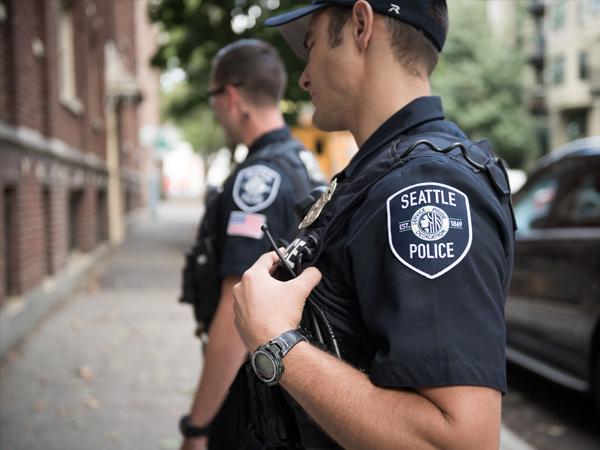
A 47-year-old Black man reportedly suffered a serious head injury, was restrained face down by four Seattle police officers, and became unresponsive before medical personnel arrived. Now, the death of Keenan Charles Pearson is raising disturbing questions about police restraint, medical emergencies, and whether officers entrusted with protecting the public failed to recognize a man in desperate need of medical assistance.
According to accounts of the incident, Pearson had been removed from a bar following an altercation in which he was reportedly struck in the head with a nine-pound hammer. Bleeding from his head and struggling to maintain his balance, Pearson encountered officers who restrained him on the pavement.
What happened next deserves close scrutiny.
Four Officers, Three Minutes, and a Fatal Outcome
Accounts of the encounter describe four officers applying their body weight to Pearson while he lay face down on the pavement for approximately three minutes. One officer reportedly positioned a knee on or near Pearson’s neck.
Officers allegedly justified the restraint as necessary to prevent Pearson from rolling into the street. However, reports that the roadway had already been closed to vehicle traffic for a fall festival raise questions about the immediate danger officers were attempting to prevent.
If the street was closed, what specific threat required four officers to hold an injured, handcuffed man against the pavement?
That question becomes particularly significant because prolonged prone restraint, especially when pressure is applied to the torso or neck, can interfere with breathing and increase the danger of a medical emergency.
By the time emergency medical personnel arrived, Pearson was reportedly unresponsive and without a detectable pulse.
The precise cause of his death has not been established in the information available for this article. A medical examiner’s findings, complete body-camera footage, and independent investigation will be essential to determining what role the reported head injury, physical restraint, or other medical factors may have played.
Was This a Medical Emergency Treated as a Police Problem?
Pearson’s reported condition before the restraint is central to understanding the encounter. A man bleeding from a significant head injury, struggling to remain upright, and displaying unusual movements may be experiencing neurological trauma or another serious medical emergency.
Those circumstances require careful assessment rather than an automatic assumption that unusual behavior represents deliberate resistance.
Officers sometimes must restrain individuals to prevent immediate injury. But any such restraint must be proportionate to the actual threat, continually reassessed, and accompanied by prompt medical intervention when warning signs appear.
The presence of four officers applying pressure to an already injured individual raises questions about whether alternative methods could have reduced the danger.
Disability, Mental Health, and Police Training
The case also invites examination of how police respond to individuals who may have cognitive, developmental, or psychiatric disabilities.
The Diagnostic and Statistical Manual of Mental Disorders, Fifth Edition, commonly called the DSM-5, is a clinical reference used to classify mental disorders. Intellectual disability is a developmental condition involving significant limitations in intellectual functioning and adaptive behavior.
Neither a psychiatric diagnosis nor an intellectual disability can be established merely by observing someone struggling, appearing confused, or failing to follow police instructions. A serious head injury can produce similar outward symptoms.
There is insufficient verified information here to establish that Pearson had an intellectual disability or any particular psychiatric diagnosis.
Nevertheless, the broader principle remains important: officers should be trained to recognize that apparent noncompliance can result from disability, disorientation, trauma, or medical distress rather than intentional defiance.
A Family Deserves Answers
Pearson’s sister, Nicole Pearson, has reportedly organized a GoFundMe fundraiser with a $10,000 goal following her brother’s death.
For his family, the unanswered questions extend beyond police procedure. They concern the final moments of a loved one’s life and whether appropriate medical care could have changed the outcome.
A transparent investigation should establish why Pearson was restrained, whether officers recognized signs of medical distress, when emergency services were requested, and what happened during the approximately three minutes he was reportedly held face down.
It should also examine whether officers followed department policies concerning positional asphyxia, head injuries, neck restraints, and monitoring a restrained person’s breathing and responsiveness.
Accountability Begins With the Evidence
The circumstances described in Pearson’s death are alarming, but determining legal responsibility requires more than disturbing footage or eyewitness accounts. Investigators must establish the sequence of events, the medical cause of death, and whether officers’ actions complied with the law and department policy.
Keenan Charles Pearson entered this encounter reportedly injured and bleeding. He left police custody unresponsive. His family and the public deserve a complete explanation of what happened between those two moments.
If the restraint contributed to his death, that finding must be confronted directly. If other injuries or medical conditions were responsible, those conclusions must likewise be supported by transparent evidence.
What cannot be acceptable is allowing the circumstances of another death in police custody to disappear into bureaucratic uncertainty.
—Vanessa Edwards, B1Daily




Leave a Reply