—Matt Gwinta, B1Daily
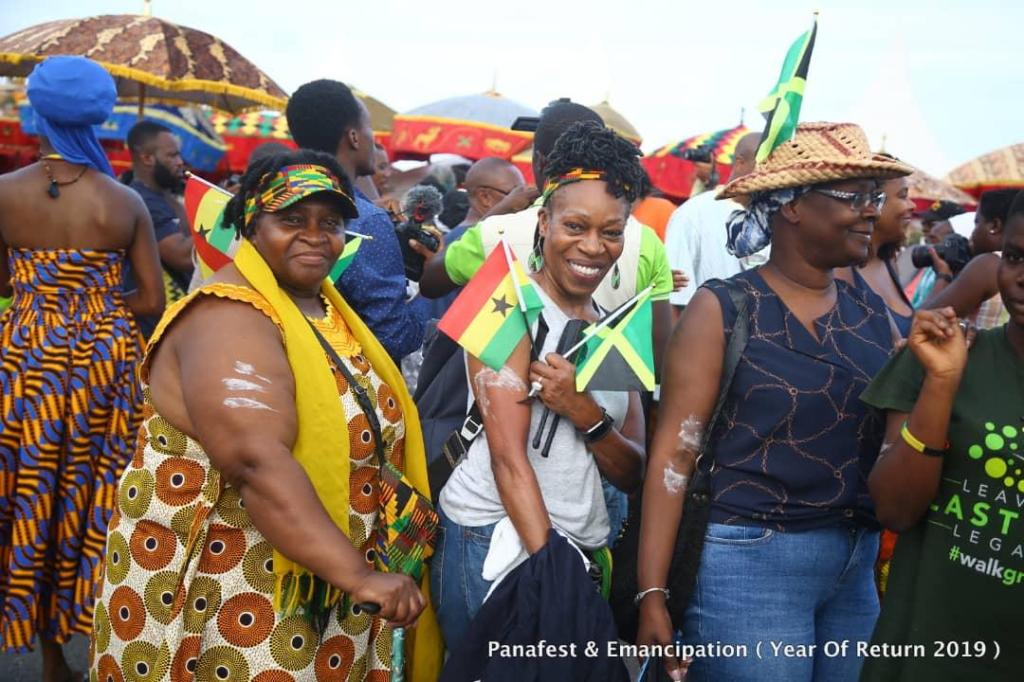
The African diaspora is frequently portrayed as one enormous global family, united by ancestry, racial identity, and a shared history of oppression. Politicians preach solidarity, activists promote Pan-Africanism, and cultural organizations celebrate the idea that Black people worldwide are fundamentally one people.
But beneath the inspirational speeches and colorful celebrations lies a far more complicated reality.
Black Americans, continental Africans, and Caribbean communities do not always share the same cultural identities, political priorities, or historical grievances. In some cases, their interests directly conflict.
And perhaps the greatest obstacle to genuine diaspora unity is the persistent refusal to acknowledge those differences.
Shared Skin Color Does Not Mean Shared Ethnicity
One of the most controversial assumptions surrounding Pan-Africanism is that racial identity should automatically produce cultural and political unity.
But race and ethnicity are not interchangeable.
Black American Freedmen developed a distinct ethnic identity through centuries of American slavery, segregation, resistance, and cultural innovation. Their history includes Reconstruction, Jim Crow, the Great Migration, the Civil Rights Movement, and an ongoing struggle for reparations.
Continental Africans possess their own diverse ethnic identities, languages, national histories, and political traditions. Nigerians, Ethiopians, Ghanaians, and South Africans cannot reasonably be reduced to a single cultural experience.
Caribbean populations likewise possess distinct histories shaped by European colonialism, plantation slavery, emancipation, migration, and struggles for national independence.
These histories overlap, but they are not identical.
A Jamaican immigrant and a Black American descendant of slavery may encounter similar racial discrimination in the United States, but their ancestral relationships to American institutions differ.
Recognizing that distinction is not inherently divisive.
The problem begins when people demand political unity while refusing to respect ethnic individuality.
The Uncomfortable Question of Reparations
Few issues expose tensions within diaspora politics more clearly than reparations.
For Black American Freedmen, reparations are frequently framed as a specific historical claim against the United States government for slavery and subsequent state-sanctioned discrimination.
That claim is fundamentally different from demands for compensation involving European colonialism in Africa or slavery in the Caribbean.
All may warrant serious consideration, but they involve different governments, historical injuries, and potentially different eligible populations.
Controversy emerges when discussions about reparations blur these distinctions.
Should compensation specifically addressing American slavery extend to every Black person residing in the United States? Or should eligibility be connected to documented descent from individuals subjected to American slavery and its aftermath?
These are legitimate policy questions, not automatic expressions of hostility toward immigrants.
Likewise, African and Caribbean communities have every right to pursue reparations for injustices committed against their own ancestors.
Solidarity should not require one population to surrender the specificity of its historical claims.
The Divisions Are More Than Anecdotal
Research suggests that these differences are not merely arguments occurring on social media.
A Pew Research Center survey found that only 17% of Black adults in the United States believed they had everything or most things in common with Black immigrants.
Meanwhile, 43% reported having few things or nothing in common with them.
Among foreign-born Black adults, only 26% believed they had everything or most things in common with U.S.-born Black people.
These findings do not prove widespread hostility. They do, however, challenge the assumption that racial identity automatically produces a strong sense of shared experience. Pew Research Center
Cultural Stereotypes Are Poisoning Relationships
Another uncomfortable reality involves the stereotypes that sometimes circulate between diaspora communities.
Some Black Americans report encountering dismissive attitudes toward their culture or historical struggles. Some African and Caribbean immigrants, meanwhile, describe experiences of being stereotyped, excluded, or treated as outsiders by American-born Black people.
Arguments about education, family structure, accents, cultural authenticity, and economic achievement can become particularly inflammatory.
But none of these stereotypes accurately represents entire populations.
The greater problem is that individuals sometimes transform personal grievances into sweeping judgments about millions of people.
When that happens, legitimate conversations about historical differences become competitions over which community is supposedly more successful, authentic, or deserving.
That accomplishes very little beyond deepening resentment.
Does Pan-Africanism Ignore Political Reality?
Pan-Africanism has played an important historical role in confronting colonialism, racial discrimination, and political oppression.
But modern diaspora politics presents a difficult challenge.
Black American Freedmen seeking federal reparations are primarily confronting American institutions. Caribbean governments pursuing reparatory justice from former European colonial powers are addressing a different set of historical responsibilities.
In July 2026, the Caribbean Community approved a revised Ten-Point Plan for Reparatory Justice focused on redress for the transatlantic slave trade and colonial atrocities.
That effort demonstrates how different diaspora communities can pursue distinct political objectives while still recognizing overlapping histories. CARICOM
There is nothing inherently wrong with these differences.
The mistake is assuming that genuine solidarity requires identical political priorities.
Perhaps the Diaspora Doesn’t Need to Be One People
The African diaspora does not need to function as a single ethnic community to cooperate effectively.
Black Americans can advocate for lineage-based reparations. Caribbean nations can pursue compensation for colonial exploitation. African countries can prioritize economic development, sovereignty, and their own national interests.
These objectives need not compete.
Cooperation becomes more meaningful when it is based on mutual respect, clearly defined interests, and tangible benefits rather than expectations of unconditional loyalty.
Black American Freedmen should not have to dilute their historical identity to participate in international solidarity. Likewise, African and Caribbean communities should not be expected to abandon their national identities in pursuit of a vaguely defined global unity.
The African diaspora may share ancestral connections, but ancestry alone cannot manufacture political agreement.
Perhaps the most productive path forward is acknowledging that Black Americans, Africans, and Caribbean peoples are distinct communities capable of forming alliances without pretending their histories are interchangeable.
Because genuine unity is not the absence of differences.
It is the ability to recognize those differences without allowing them to become permanent divisions.
—Matt Gwinta, B1Daily


Leave a Reply