—Barrington Williams, B1Daily
Imagine spending 20 years in prison for a crime you never committed. Your family grows older without you. Your children become adults. Your career disappears, your reputation is destroyed, and your freedom is stolen by the very government sworn to protect your constitutional rights.
Then, after decades of fighting, DNA evidence or previously concealed information finally proves your innocence.
You walk out of prison with whatever remains of your life.
But what happens to the prosecutor responsible for your wrongful conviction?
In far too many cases, absolutely nothing.
America has constructed a criminal justice system capable of punishing innocent people while making it extraordinarily difficult to hold the government attorneys responsible for their convictions personally accountable.
And the legal doctrine protecting those prosecutors has a name: absolute prosecutorial immunity.
Absolute Immunity: The Prosecutor’s Legal Shield
In 1976, the United States Supreme Court established a sweeping protection for prosecutors in Imbler v. Pachtman, ruling that prosecutors generally enjoy absolute immunity from civil damages lawsuits for conduct intimately associated with the judicial phase of criminal proceedings.
That protection can extend even to serious misconduct committed while performing prosecutorial functions.
Consider the implications.
A prosecutor who knowingly withholds evidence favorable to a defendant may violate the constitutional disclosure obligations established under Brady v. Maryland. Yet absolute immunity can still prevent the wrongfully convicted person from recovering personal civil damages from that prosecutor for conduct undertaken in the protected prosecutorial role.
The distinction is important: immunity does not make misconduct lawful, and it does not prevent every form of accountability. Prosecutors can still face criminal charges, professional discipline, or other consequences.
But the practical barriers are enormous.
The Supreme Court has justified prosecutorial immunity partly through concerns that personal lawsuits could discourage prosecutors from performing their duties independently.
That raises an uncomfortable question: Why should protecting prosecutors from litigation take precedence over providing effective remedies to people whose constitutional rights were violated?
When Prosecutors Hide Evidence, Innocent People Pay the Price
One of the most troubling causes of wrongful convictions is the suppression of evidence that could help establish a defendant’s innocence.
Under Brady v. Maryland, prosecutors must disclose material evidence favorable to the accused. Nevertheless, violations continue to appear in wrongful conviction cases.
The consequences can be devastating.
A withheld witness statement, an undisclosed forensic report, or evidence pointing toward another suspect can mean the difference between freedom and decades behind bars.
And when that misconduct is eventually uncovered, the prosecutor responsible may have retired, entered private practice, or advanced to another prestigious legal position.
Meanwhile, the wrongfully convicted person must somehow rebuild a life that cannot be restored.
The imbalance is staggering.
The Prosecutor Who Sent an Innocent Man to Prison for 25 Years
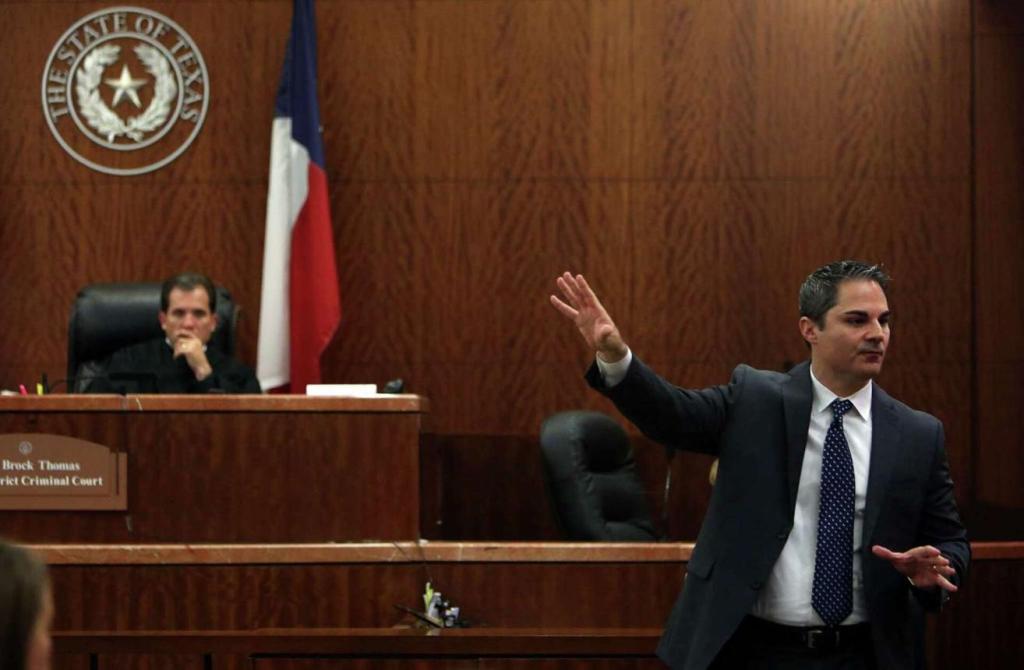
Consider the case of Michael Morton, a Texas man wrongfully convicted of murdering his wife in 1987.
Morton spent nearly 25 years imprisoned before DNA evidence established his innocence. Investigations subsequently revealed that prosecutor Ken Anderson had concealed evidence favorable to Morton’s defense.
Anderson eventually pleaded guilty to criminal contempt of court and received a 10-day jail sentence, serving five days.
Think about that.
An innocent man lost nearly 25 years of freedom. The prosecutor responsible for concealing evidence served five days in jail.
Anderson’s prosecution was extraordinarily unusual. In 2020, the Innocence Project identified him as the only prosecutor known to have served jail time for misconduct leading to a wrongful conviction. Innocence Project
The Accountability System Is Almost Completely Toothless
The problem extends beyond prosecutorial immunity.
State bar associations possess authority to investigate and discipline attorneys who violate professional standards. Judges can sanction misconduct, and prosecutors can theoretically face criminal prosecution for intentionally violating constitutional rights.
Yet these mechanisms rarely produce meaningful consequences.
An investigation examining 660 cases involving judicial findings of prosecutorial misconduct found that only one prosecutor was disciplined.
In 527 of those cases, convictions remained intact because courts determined that the misconduct did not warrant reversal.
Such findings do not necessarily establish that every defendant was innocent or that every violation was intentional. Nevertheless, the extraordinary gap between documented misconduct and professional discipline raises serious questions about the effectiveness of prosecutorial oversight. Innocence Project
Black Americans Have Particular Reasons to Demand Accountability
The consequences of official misconduct have fallen especially heavily on Black defendants.
Research examining death-row exonerations found that official misconduct contributed to 79% of wrongful capital convictions involving Black exonerees, compared with 58% involving white exonerees.
Those figures encompass misconduct by police, prosecutors, and other government officials, rather than prosecutors alone.
Still, the disparity exposes a troubling reality: Black Americans have substantial reasons to demand stronger protections against abuses of government power. Death Penalty Information Center
For Black American communities with long histories of discriminatory policing, unequal prosecution, and wrongful imprisonment, accountability is not an abstract legal debate.
It can determine whether an innocent person returns home or spends decades behind prison walls.
Should Prosecutors Face Criminal Charges?
Absolutely, when the evidence establishes that they knowingly committed criminal acts.
There is an important distinction between an honest prosecutorial mistake and deliberately concealing evidence, fabricating testimony, or obstructing justice.
Not every wrongful conviction results from prosecutorial misconduct, and not every instance of misconduct constitutes a crime.
However, prosecutors who intentionally violate criminal laws should not receive preferential treatment simply because they hold government positions.
Congress and state legislatures should consider stronger independent oversight, mandatory reporting of serious misconduct, meaningful professional sanctions, and carefully defined avenues for civil accountability.
Criminal investigations involving prosecutors should also be conducted independently whenever conflicts of interest threaten public confidence.
The goal should not be punishing prosecutors for losing cases. It should be ensuring that deliberate violations of the law carry consequences.
Justice Cannot Exist Without Accountability
America demands accountability from ordinary citizens who violate the law. It should demand at least as much from government officials entrusted with enforcing it.
Prosecutors wield extraordinary power. They decide what charges to pursue, what evidence to present, and whether to seek punishments that can permanently alter someone’s life.
That authority requires extraordinary responsibility.
Yet our legal system continues to maintain protections that can leave victims of serious prosecutorial misconduct without effective remedies.
A justice system that can imprison an innocent person for decades but struggles to punish an official who deliberately helped put them there has a profound accountability problem.
The solution is not to abolish prosecutorial independence. It is to stop confusing independence with impunity.
Because when prosecutors knowingly break the law and escape meaningful consequences, the public has every reason to question whether justice is being administered or merely claimed.
—Barrington Williams, B1Daily




Leave a Reply