—Michael Lyles, B1Daily
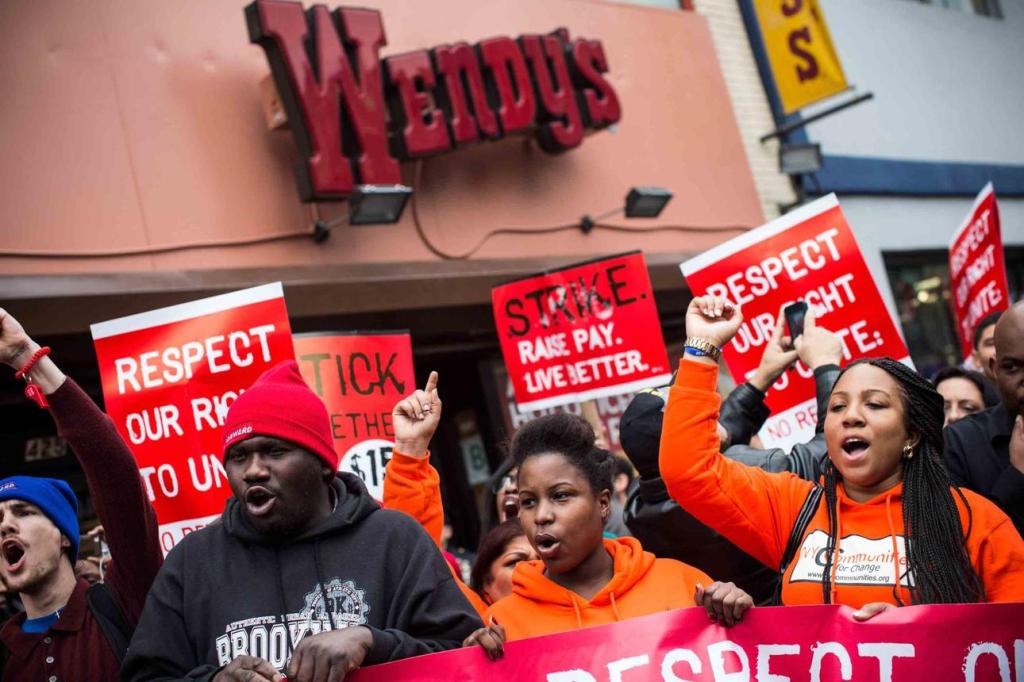
America has developed a rather remarkable economic arrangement: corporations can generate billions in revenue, compensate executives handsomely, reward shareholders, and still employ workers who cannot afford basic necessities without government assistance.
And who helps bridge the gap between those workers’ wages and the cost of living? The American taxpayer.
Programs such as Medicaid, the Supplemental Nutrition Assistance Program (SNAP), and housing assistance provide essential support to millions of Americans, including employed people whose earnings are insufficient to meet their families’ needs.
There is nothing inherently wrong with helping struggling workers. The controversy is that some enormously profitable businesses operate with compensation structures that leave employees dependent on public assistance.
Why should taxpayers help sustain a workforce that some of America’s wealthiest corporations refuse to compensate adequately?
The question exposes an uncomfortable contradiction in American capitalism: businesses celebrate free markets while frequently benefiting from public subsidies, tax incentives, and government-supported safety nets.
And the workers creating their profits are often the last people to share meaningfully in that prosperity.
Millions of Working Americans Still Need Government Assistance
A June 2026 report from the U.S. Government Accountability Office revealed just how deeply low-wage employment and public assistance remain connected.
According to the report, approximately 13.8 million working-age Medicaid recipients and 10.6 million adults in SNAP households worked at some point during 2024. Roughly two-thirds of these working adults worked full-time schedules.
Even more revealing, 88% of the wage earners receiving these benefits worked in the private sector.
These weren’t simply people refusing to work. Millions were participating in the labor market while still needing assistance with food or healthcare.
The findings raise an obvious question: If employment is supposed to provide economic independence, why are millions of employed Americans still struggling to meet basic needs? GAO
Corporate Welfare With a Side of Food Stamps
The contradiction becomes especially glaring when examining some of America’s largest employers.
A 2026 congressional examination highlighted findings showing that major employers, including Walmart, Amazon, and McDonald’s, had thousands of workers receiving Medicaid or SNAP benefits across selected states.
In nine states examined, Walmart employed 15,515 SNAP recipients, Amazon employed 12,346, and McDonald’s employed 6,709.
These figures do not establish that every employee was underpaid or that each corporation directly received the value of those benefits. Household size, medical expenses, working hours, and other factors influence eligibility.
Nevertheless, the numbers demonstrate that employment at a major corporation does not necessarily guarantee financial security. sanders.senate.gov
Meanwhile, corporations can receive separate government assistance through tax abatements, development grants, infrastructure investments, and other economic incentives.
The public is effectively asked to support business expansion while also helping employees survive financially.
That’s a remarkable arrangement for an economy supposedly built around private enterprise.
Corporate Subsidies Without Corporate Responsibility
State and local governments routinely compete to attract large employers by offering tax incentives and other financial benefits.
The justification is familiar: corporations create jobs, stimulate economic activity, and expand the tax base.
But creating jobs should not be the only measurement of economic success.
A company that receives millions in public incentives while creating jobs that leave employees dependent on public assistance deserves greater scrutiny.
Research compiled by Good Jobs First estimates that state and local economic development subsidies cost governments tens of billions of dollars annually.
Some subsidies may generate legitimate economic benefits. Others may reward investments that companies would have made regardless of public assistance.
If taxpayers are financing corporate expansion, shouldn’t they demand jobs that actually support the communities providing that money? subsidytracker.goodjobsfirst.org
Black American Workers Have a Particular Stake in This Debate
For Black American workers, particularly those in communities historically excluded from wealth-building opportunities, the relationship between low wages and public assistance carries additional consequences.
Employment alone does not necessarily produce economic mobility when wages cannot support housing, healthcare, transportation, savings, and retirement.
A worker who spends nearly every paycheck surviving has little opportunity to accumulate assets or establish financial security for future generations.
This is particularly troubling when corporations publicly celebrate diversity and economic opportunity while failing to provide sufficient pathways toward higher earnings.
Corporate commitments to racial equity mean considerably less when employees cannot afford to live near the communities where they work.
For Black American Freedmen confronting persistent racial wealth disparities, wages and benefits are not merely workplace concerns. They are central to the broader struggle for economic independence.
Should America Stop Subsidizing Low-Wage Corporations?
Congress and state governments should seriously reconsider how public subsidies are distributed.
Corporations receiving substantial economic development incentives should face enforceable wage standards, transparent reporting requirements, and consequences when they fail to deliver promised benefits.
A living wage should reflect local economic conditions rather than relying exclusively on an outdated national minimum.
However, policymakers must also recognize that abruptly raising labor costs can create difficulties for smaller businesses and potentially affect hiring, prices, or working hours.
The objective should be carefully designed policies that improve worker compensation without unnecessarily destroying employment opportunities.
Public assistance should remain available to eligible families. Punishing workers by eliminating benefits would only make the problem worse.
The real question is whether taxpayers should continue providing generous economic incentives to corporations that make little effort to improve employee financial security.
America Must Stop Socializing Corporate Costs While Privatizing Corporate Profits
Corporate America frequently warns against government interference in the free market.
Yet when opportunities arise to obtain public financing, tax breaks, infrastructure assistance, or development incentives, those objections often become remarkably flexible.
There is nothing inherently wrong with governments supporting economic development. But public investment should produce measurable public benefits.
And those benefits should extend beyond executive compensation and shareholder returns.
If a corporation is wealthy enough to reward investors, expand operations, and compensate executives generously, taxpayers have every right to question why its workers still need government assistance to survive.
America does not need to abandon capitalism to demand better wages and greater corporate accountability.
It simply needs to stop treating corporate profitability as the only measure of economic success.
Because an economy that creates enormous wealth while leaving millions of working people struggling to survive is not delivering prosperity equally.
And taxpayers should not be expected to finance that contradiction indefinitely.
—Michael Lyles, B1Daily





Leave a Reply