—Barrington Williams, B1Daily
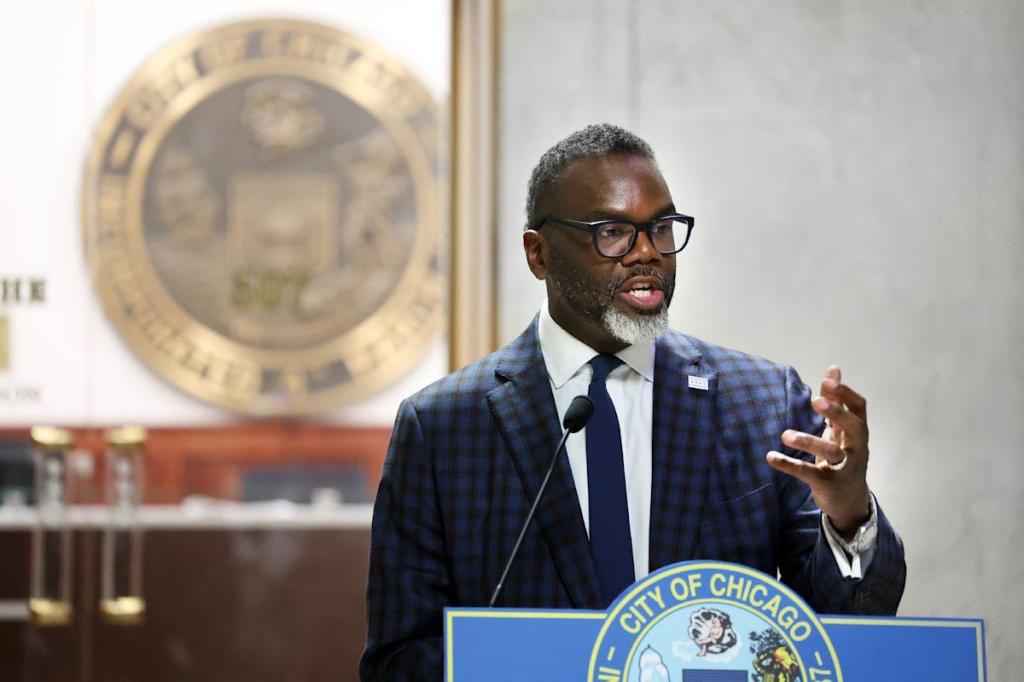
Chicago Mayor Brandon Johnson has managed to accomplish something that once seemed politically unthinkable: alienating portions of the very Black electorate that helped put him in office, while giving some frustrated residents a reason to reconsider their loyalty to the Democratic Party.
For decades, Black Chicagoans have demanded better schools, safer neighborhoods, affordable housing, employment opportunities, and meaningful investment in communities devastated by economic abandonment.
Yet when tens of thousands of migrants arrived in Chicago, City Hall suddenly demonstrated an extraordinary ability to mobilize money, emergency housing, personnel, and government resources.
The contrast has infuriated residents who have spent their entire lives waiting for similar urgency.
For some Black Chicagoans, the question is no longer whether Brandon Johnson understands their frustration. It is whether he intends to do anything meaningful about it.
Nearly $640 Million for Migrants, While Black Neighborhoods Wait
According to a July 2026 report from Chicago’s inspector general, the city spent approximately $639.6 million responding to the migrant crisis, providing services to more than 46,000 new arrivals.
Approximately 42% of that spending came from Chicago’s corporate fund, with the remainder supported by other funding sources.
The inspector general found that the city generally followed its procurement and payment procedures. The controversy, therefore, is not proof that the money was stolen or illegally distributed.
It is a question of political priorities.
Chicago’s South and West Sides have endured decades of disinvestment, vacant properties, struggling schools, and limited economic opportunities.
Residents have repeatedly demanded comprehensive solutions, only to encounter familiar explanations about budget limitations and competing priorities.
Then came the migrant crisis, and hundreds of millions of dollars were mobilized.
That contrast has become a political liability for Johnson.
In April 2024, Alderman Desmon Yancy criticized the administration’s request for an additional $70 million in migrant assistance, arguing that Black communities were once again being neglected.
Ten members of the City Council’s Black Caucus voted against the funding.
The message was difficult to misunderstand: Black Chicagoans wanted City Hall to demonstrate the same urgency toward their communities that it had shown toward newly arrived migrants.
Some Black Voters Are Threatening to Abandon the Democrats
The political backlash has moved beyond ordinary complaints.
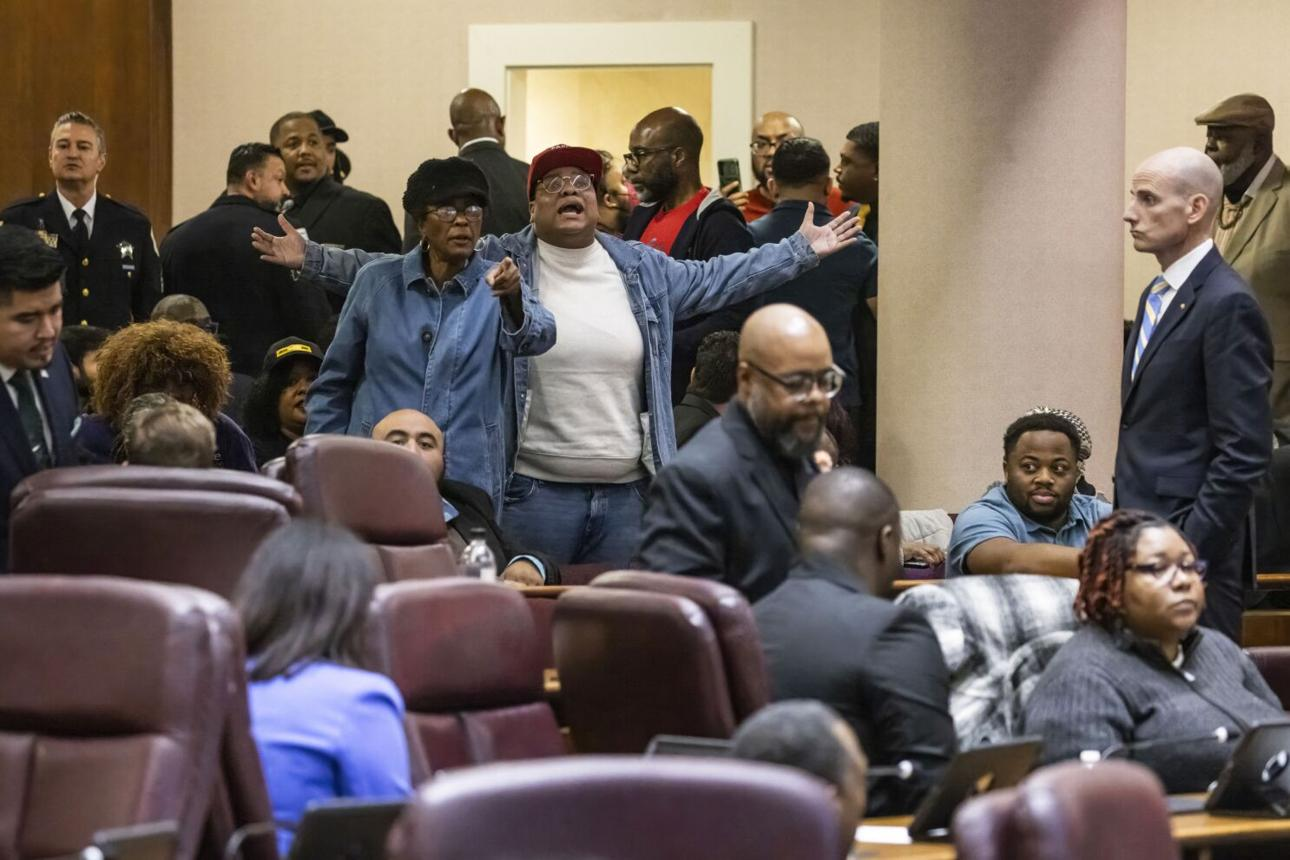
During heated City Council meetings in 2024, Black residents openly threatened to vote against Democratic officials who continued supporting additional migrant spending.
Some protesters appeared wearing Republican-themed clothing, including shirts encouraging residents to abandon the Democratic Party.
One woman warned aldermen that supporting additional migrant funding could cost them their seats.
By November 2025, the political organization Chicago Flips Red was publicly supporting tougher immigration enforcement, reflecting a small but vocal movement of Black residents dissatisfied with the city’s Democratic leadership.
These developments do not establish that Black Chicagoans are collectively becoming Republicans. Available evidence does not support such a sweeping conclusion.
But the anger is real, and Democrats would be foolish to dismiss it.
When lifelong Democratic voters begin entertaining the opposition party, even as a protest, political leaders should recognize that something has gone seriously wrong.
For some residents, the issue is not ideological conversion. It is political leverage.
They want elected officials to understand that Black votes are not unconditional political property.
A Black Mayor Who Understands the Problem but Hasn’t Solved It
Perhaps the most frustrating aspect of Johnson’s administration is that the mayor himself has acknowledged the legitimacy of these complaints.
In July 2026, Johnson admitted that Black Chicagoans had watched government resources become available almost immediately during the migrant crisis while their own neighborhoods had endured decades of neglect.
That acknowledgment matters, but understanding a problem is not the same as fixing it.
Johnson has promoted affordable housing investments, youth employment initiatives, and violence prevention programs. Chicago also recorded its lowest summer homicide total since 1965 during June through August 2026, an improvement that deserves recognition.
Nevertheless, declining violence does not automatically translate into economic prosperity, functioning neighborhood schools, or restored confidence in City Hall.
The mayor’s political standing has suffered considerably. Reporting in September indicated that his approval among Black voters had fallen to 28% in early 2024, although internal polling subsequently suggested a recovery to approximately 48% to 52%.
That recovery demonstrates that Black Chicago is not politically united against Johnson. Still, it hardly guarantees him another term.
Immigration Policy Cannot Become an Excuse for Neglecting Citizens
Johnson’s defenders argue that Chicago faced a humanitarian emergency involving asylum seekers, many of whom were transported to the city from Texas.
That is true.
It is also important to distinguish undocumented immigrants from asylum seekers and other migrants who may be legally present while their immigration cases proceed. Not everyone receiving emergency assistance was unlawfully residing in the country.
But those distinctions do not eliminate the central political question.
Why should longtime residents accept indefinite economic neglect simply because another emergency has captured the government’s attention?
Chicago’s government has responsibilities to all its residents, including vulnerable migrants. However, its obligation to protect newcomers should not become an excuse for failing communities that have endured generations of poverty and underinvestment.
The city should be capable of providing emergency humanitarian assistance while simultaneously delivering measurable improvements in Black neighborhoods.
If it cannot accomplish both, elected officials owe taxpayers a transparent explanation of their spending priorities.
Democrats Should Stop Treating Black Votes as Guaranteed
The greatest political danger for Johnson may not be the Republican Party itself.
It may be voter disillusionment.
Black Chicagoans have historically formed a critical part of the Democratic coalition. Johnson benefited from that support when he won every majority-Black ward in the 2023 mayoral runoff.
But political loyalty is supposed to produce representation, not entitlement.
A party that assumes it will receive overwhelming Black support regardless of its performance risks creating resentment among the very constituents it depends upon.
The emergence of groups encouraging Black voters to consider Republican alternatives should therefore be treated as a warning, not dismissed as political theater.
Republicans, however, must also demonstrate what they would actually deliver.
Opposing migrant spending is not a comprehensive economic development strategy. Black neighborhoods need affordable housing, functioning schools, business investment, improved infrastructure, and employment opportunities.
Neither political party deserves automatic support without a credible plan to address those concerns.
Brandon Johnson’s Reelection Could Become a Referendum on Black Political Loyalty
With Johnson pursuing reelection in 2027, the mayor faces an uncomfortable political reality.
He cannot campaign indefinitely on progressive promises while asking dissatisfied residents to overlook the shortcomings of his administration.
Nor can he rely exclusively on arguments about immigration, Donald Trump, or Republican opposition to explain away local governance failures.
Chicago’s Black communities deserve concrete results.
They deserve transparent budgets, serious economic investment, improved public services, and political leadership that treats their concerns as urgent rather than inconvenient.
Brandon Johnson was elected to govern Chicago, not merely to defend an ideology.
If his administration cannot demonstrate meaningful improvements in historically neglected Black neighborhoods, residents have every right to reconsider their political options.
That does not mean voting Republican is necessarily the answer. It means elected officials should have to earn their constituents’ support.
The mayor still has an opportunity to rebuild trust. But that will require more than speeches about solidarity.
It will require results.
Black Chicago does not owe Brandon Johnson another term simply because he is Black, progressive, or a Democrat.
Political representation without accountability is not empowerment.
And if City Hall continues struggling to deliver on its promises, the next election may demonstrate just how expensive taking Black voters for granted can become.
—Barrington Williams, B1Daily




Leave a Reply