—Matt Gwinta, B1Daily
Pan-Africanism has spent more than a century promoting the idea that people of African descent share a collective responsibility to support one another politically, economically, and culturally.
It is an appealing philosophy, particularly for Black Americans seeking historical connections to the continent from which their ancestors were forcibly taken.
But beneath the speeches about unity, ancestral homelands, and global Black solidarity lies an increasingly uncomfortable question.
Is Pan-Africanism becoming a relationship in which African governments receive Black American money, investment, tourism, and political support while offering comparatively little in return?
For Foundational Black Americans, also known as American Freedmen, the answer deserves serious examination.
Ghana’s Year of Return: Cultural Homecoming or Economic Strategy?
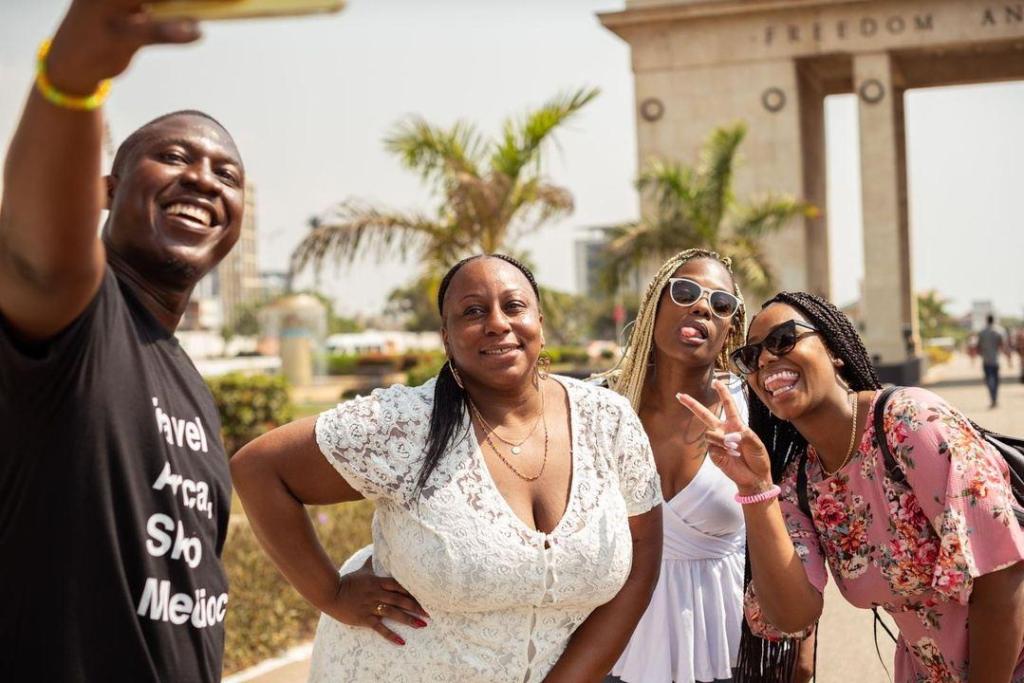
Ghana’s celebrated 2019 Year of Return initiative provides perhaps the clearest example of how African governments have successfully marketed ancestral connections to Black Americans.
The campaign encouraged descendants of enslaved Africans to visit Ghana, reconnect with their heritage, and explore opportunities for investment and relocation.
It was enormously successful in attracting international attention.
Ghana’s tourism authorities reported substantial growth in visitor arrivals, while the country’s tourism and travel sector generated billions of dollars in economic activity during 2019.
Hotels, restaurants, transportation companies, entertainment venues, and tourism operators benefited from the increased interest.
For many Black Americans, visiting historic slave-trading sites and experiencing Ghanaian culture provided meaningful personal connections.
However, the campaign also exposed an important distinction between emotional belonging and actual economic or political rights.
Being welcomed as a tourist is not the same as being recognized as a citizen, property owner, or equal participant in a country’s political future.
Black American Dollars Are Welcome. But What About Black American Interests?
African governments have increasingly recognized the economic potential of attracting wealthy diaspora communities.
Black American travelers represent an attractive market for tourism, real estate, entertainment, and business development.
Some governments have introduced investment programs, residency opportunities, and initiatives encouraging members of the diaspora to relocate.
These efforts can create legitimate opportunities for both African citizens and Black Americans.
But the relationship becomes questionable when cultural solidarity is emphasized more heavily than practical benefits.
What protections exist for Black American investors?
How easily can descendants of American slavery obtain citizenship or permanent residency?
Are diaspora entrepreneurs receiving meaningful access to local markets, or are they primarily being encouraged to spend money?
And perhaps most importantly, what commitments are African governments making to support the distinct political and economic interests of Black Americans in the United States?
These questions should not be interpreted as hostility toward African nations.
They are basic questions about reciprocity.
The African Union Recognizes the Diaspora, but Recognition Has Limits
The African Union formally recognizes the importance of the African diaspora and encourages its participation in continental development.
Its definition of the diaspora includes people of African origin living outside Africa who wish to contribute to the continent’s progress.
The organization has also developed institutional mechanisms for diaspora engagement.
That recognition is meaningful, but it does not automatically grant Black Americans citizenship, voting rights, unrestricted residency, or guaranteed economic opportunities across African nations.
Those rights generally remain subject to individual countries’ laws.
Ghana, for example, offers a Right of Abode pathway for eligible people of African descent, allowing approved applicants to reside and work permanently in the country.
However, approval is not automatic, and applicants must satisfy administrative requirements.
These arrangements demonstrate that practical opportunities exist, but they also reveal the distance between Pan-Africanist rhetoric and enforceable rights.
Symbolic inclusion is valuable. Legal recognition and economic opportunity are considerably more valuable.
Black Americans Have Their Own Unfinished Political Struggles
One of the greatest criticisms of modern Pan-Africanism concerns its tendency to emphasize continental African development while giving comparatively limited attention to the specific historical grievances of American Freedmen.
Black Americans continue confronting the consequences of slavery, segregation, discriminatory housing policies, and persistent wealth inequality.
The movement for lineage-based reparations seeks remedies for those distinct historical injuries.
Yet many Pan-Africanist conversations prioritize African political unity, foreign investment, and continental development over the domestic policy priorities of descendants of American slavery.
There is nothing inherently wrong with supporting African development.
However, Black Americans should not be expected to subordinate their own political interests to an international movement simply because they share distant ancestral connections with other populations.
Black Americans possess their own history, cultural institutions, political traditions, and national identity.
Their contributions to civil rights, music, literature, technology, and political thought deserve recognition independently of continental African identity.
Solidarity should never require a people to abandon their own interests.
African Governments Are Not Obligated to Represent Black Americans
There is another reality that Pan-Africanist rhetoric sometimes overlooks.
African governments are primarily responsible for the citizens of their respective countries.
Ghanaian leaders are elected to represent Ghanaians. Nigerian officials are responsible for Nigerians. South African policymakers must answer to South African voters.
Expecting these governments to prioritize American Freedmen over their own citizens would be politically unrealistic.
But the reverse is equally true.
Black Americans are not obligated to finance African development, support foreign governments, or embrace international political movements at the expense of their own communities.
Cooperation should emerge from shared interests and voluntary partnerships rather than expectations based solely on ancestry.
Pan-Africanism Has Produced Real Benefits
Despite these criticisms, dismissing Pan-Africanism entirely would ignore its historical accomplishments.
Black American intellectuals and activists helped influence anticolonial movements, international civil rights advocacy, and efforts to challenge racial oppression.
Figures such as W.E.B. Du Bois and Marcus Garvey contributed to political conversations that extended far beyond American borders.
Contemporary diaspora relationships can also create opportunities for education, entrepreneurship, cultural exchange, and international business.
Ghana’s citizenship and residency initiatives demonstrate that some African governments have taken concrete steps toward strengthening diaspora connections.
The problem is not cooperation itself.
The problem arises when cultural enthusiasm replaces serious evaluation of who benefits and how.
A successful international partnership should produce measurable advantages for everyone involved.
The Future Must Be Built on Reciprocity, Not Sentimentality
If Pan-Africanism intends to remain relevant to Black Americans, its advocates must move beyond romanticized discussions of ancestral unity.
African governments seeking diaspora investment should provide transparent business regulations, reliable property protections, and clearly defined residency opportunities.
Organizations promoting international solidarity should explain how their initiatives benefit Black American communities economically and politically.
Likewise, Black American investors and activists should approach African partnerships with realistic expectations rather than assuming shared ancestry guarantees shared interests.
Cooperation between African nations and American Freedmen can be productive without pretending that their political priorities are identical.
Black American Solidarity Should Never Be a Blank Check
Pan-Africanism does not have to disappear, but it does need a serious reassessment.
A relationship built primarily on tourism revenue, investment appeals, and emotional appeals to ancestral identity will eventually face questions about its fairness.
Black Americans have legitimate reasons to support African development, just as African governments have legitimate reasons to cultivate relationships with diaspora communities.
But neither side should confuse cultural connection with an unlimited obligation.
If African governments want Black American investment, they should offer meaningful opportunities. If Pan-Africanist organizations want Black American political solidarity, they should demonstrate how that solidarity benefits American Freedmen.
And if those benefits cannot be clearly identified, Black Americans have every right to prioritize their own communities.
The future of Pan-Africanism should not be measured by how much money Black Americans spend visiting Africa or how frequently political leaders invoke the language of brotherhood.
It should be measured by the practical opportunities, protections, and mutually beneficial relationships it creates.
Because genuine solidarity is a partnership.
Not a fundraising strategy dressed in ancestral clothing.
—Matt Gwinta, B1Daily





Leave a Reply