—Barrington Williams, B1Daily
Michigan Democrats have officially entered political meltdown territory.
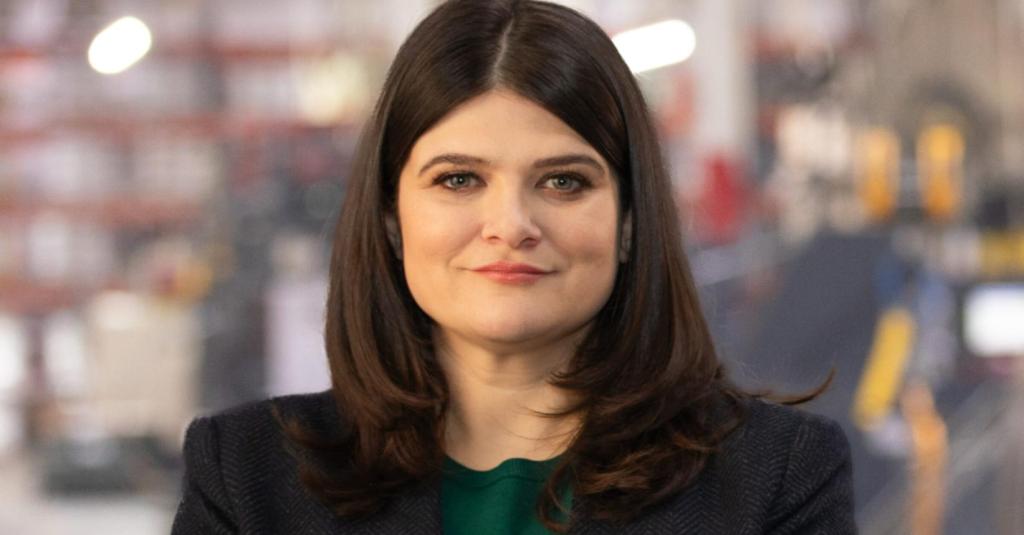
With just two days remaining before the November 3 election, Democratic Rep. Haley Stevens stunned her own party Sunday by endorsing Republican Senate candidate Mike Rogers over Abdul El-Sayed, the progressive Democrat who defeated her in August’s bitter Senate primary.
The extraordinary defection followed months of hostility between the two Democrats, largely fueled by disagreements over Israel, political donations, and the future direction of the Democratic Party.
Stevens, a staunch supporter of Israel, had repeatedly criticized El-Sayed’s opposition to American military assistance to the Israeli government. El-Sayed, meanwhile, accused Stevens of being too closely aligned with corporate donors and the American Israel Public Affairs Committee, whose affiliated political operation supported her primary campaign.
Their rivalry exploded again last week when Stevens demanded that El-Sayed condemn a controversial advertisement produced by Rebellion PAC, an independent political group. The advertisement connected American financial support for Israel with economic hardships facing American families.
Stevens characterized the messaging as antisemitic and demanded an apology. El-Sayed’s campaign emphasized that it had no involvement with the advertisement, and the candidate publicly rejected its contents.
But the dispute had already become political dynamite.
The two Democrats were expected to appear together Sunday at a Detroit church alongside influential South Carolina Democrat Jim Clyburn in an effort to demonstrate party unity.
Instead, Stevens was removed from the planned appearance and showed up at another Detroit church alongside Rogers, President Donald Trump’s preferred candidate.
Shortly afterward, she announced her endorsement of the Republican.
The reaction was immediate.
Senate Democratic leader Chuck Schumer condemned Stevens’ decision as a betrayal, while Michigan Democratic Party Chair Curtis Hertel publicly denounced her actions. Stevens’ longtime chief of staff also resigned amid the controversy.
El-Sayed appeared largely uninterested in continuing the feud, telling reporters he was focused on the economic concerns of Michigan voters rather than his former opponent.
The timing could hardly be worse for Democrats.
Michigan’s Senate contest is among the country’s most consequential races, with control of the chamber potentially hanging in the balance. The seat is currently held by retiring Democratic Sen. Gary Peters.
The controversy also exposes a larger ideological fracture within the Democratic Party.
Progressives increasingly question unconditional American support for Israel, while establishment Democrats remain divided over how aggressively the party should challenge the Israeli government.
For Stevens, the dispute became serious enough to justify endorsing a Republican. For El-Sayed’s supporters, her decision represents an extraordinary refusal to accept the results of a Democratic primary.
And for Rogers, the spectacle amounts to an unexpected political gift.
Michigan Democrats were supposed to be fighting Republicans for control of the Senate. Instead, one of their most prominent members has crossed party lines to help elect one.
Whether Stevens’ endorsement changes enough votes to affect Tuesday’s outcome remains uncertain.
But one thing is already clear: Michigan’s Democratic civil war has become one of the most remarkable political stories of the 2026 midterms.
—Barrington Williams, B1Daily



Leave a Reply