—Kerry Hill, B1Daily
The Democratic socialist movement has found something it spent years searching for: political momentum.
New York Mayor Zohran Mamdani demonstrated that a politician openly embracing democratic socialism could win America’s largest city. Democratic socialist and progressive candidates have since scored victories from New York to Washington and Michigan. Younger voters increasingly appear willing to challenge the Democratic establishment.

Yet one of the strangest contradictions of the socialist surge remains unresolved.
The movement promising some of America’s most aggressive solutions to economic inequality has repeatedly struggled with the voters who have experienced some of America’s deepest economic inequality: Black Americans.
The explanation isn’t that Black voters uniformly reject progressive economics. They don’t. Nor is the Black electorate politically monolithic.
The deeper problem may be that democratic socialists sometimes mistake agreement with individual policies for identification with an ideological movement.
Black Voters Can Like the Policies Without Buying the Label
There is an important distinction between supporting affordable housing, stronger unions, higher wages or expanded healthcare and deciding to identify politically as a socialist.
A recent Washington Post-Ipsos poll illustrates the problem. Black Americans were actually more open than white and Hispanic Americans to voting for a democratic socialist candidate. Yet among Democrats, white voters were roughly twice as likely as Black Democrats to say they liked politicians identifying themselves as democratic socialists: 42% compared with 22%.
That’s an enormous branding problem.
A candidate can therefore walk into a Black neighborhood advocating cheaper housing, better healthcare and higher wages and discover substantial agreement.
Then the candidate says, “This is democratic socialism.”
And the conversation changes.

For many voters, the policy may be more attractive than the political identity attached to it.
Bernie Sanders Discovered the Wall
The modern warning came in South Carolina in 2020.
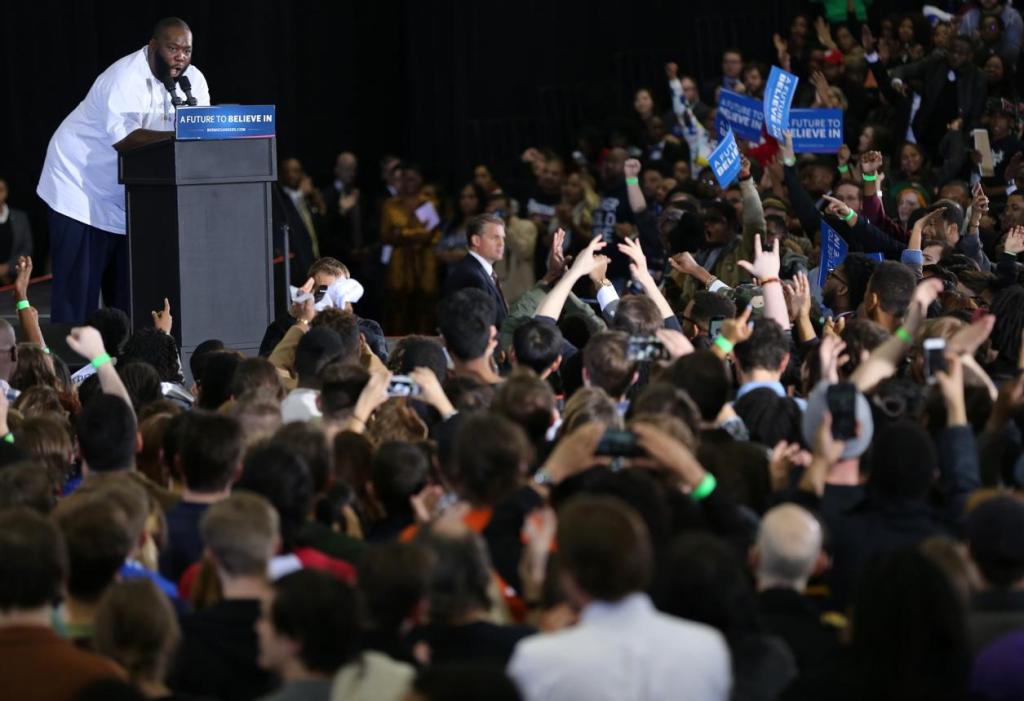
Bernie Sanders had built a massive progressive movement and dominated among many younger voters. But when the presidential primary reached a state where Black voters represented 56% of the Democratic electorate, Joe Biden crushed him.
Biden received about 60% of the Black vote. Sanders received 17%. Among Black voters older than 45, Biden’s support reached 69%.
The defeat helped resurrect Biden’s struggling campaign and demonstrated something progressives have repeatedly rediscovered:
Black Democratic voters, particularly older Black voters, are often highly pragmatic.
Electability matters. Relationships matter. Familiarity matters. Political institutions matter.
And ideology isn’t necessarily the first thing determining the vote.
Then Mamdani Complicated the Story
Zohran Mamdani initially appeared to reinforce the old pattern.
During his 2025 New York Democratic mayoral primary, he performed significantly better in younger, wealthier and more highly educated areas while Andrew Cuomo dominated many predominantly Black neighborhoods.
But then something important happened.
Mamdani expanded his coalition.
By the general election, he won more than 60% of Black New Yorkers, according to subsequent reporting. And younger Black voters were particularly important to his coalition.
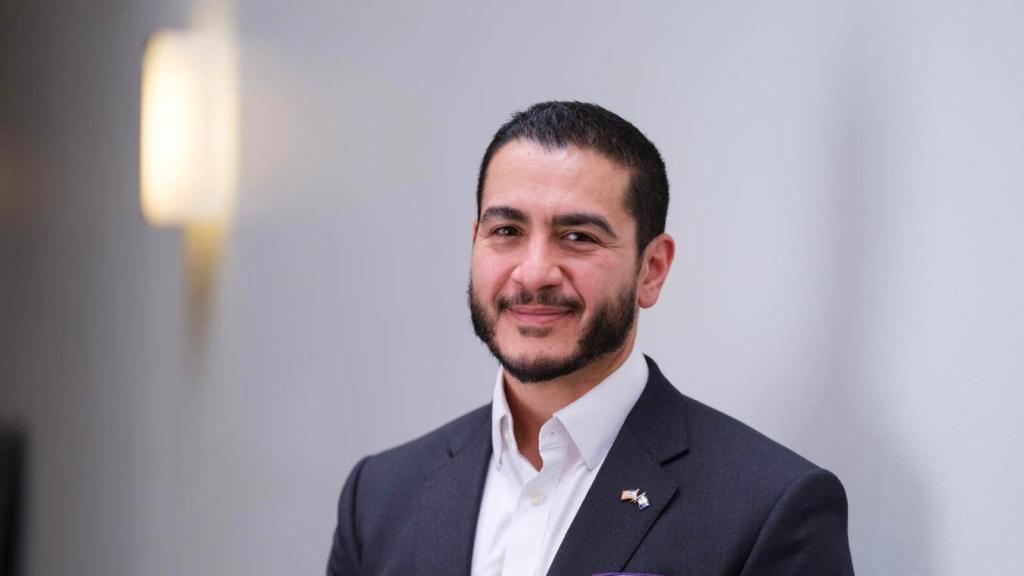
Other recent races have produced similar complications. Democratic socialist Janeese Lewis George won Black voters in Washington’s mayoral primary, while Donavan McKinney won a congressional primary in heavily Black Detroit. Meanwhile, progressive Abdul El-Sayed won Michigan’s Democratic Senate primary while still losing areas containing much of the state’s Black electorate.
There isn’t one Black verdict on democratic socialism.
There are several.
The Movement Has a Cultural Problem
Part of the tension comes from who is perceived to constitute the socialist movement itself.
Democratic socialism’s strongest modern infrastructure has often developed in young, highly educated urban communities. Recent reporting on DSA’s New York successes found its strongest support concentrated in whiter, highly educated neighborhoods experiencing rapid gentrification, even as socialist candidates increasingly expanded into Black and Latino constituencies.
That creates an awkward visual problem.
A political movement can advocate racial equality while still appearing culturally distant from the people it wants to represent.
And politics is about more than policy documents.
Black political life has historically included churches, civil-rights organizations, labor unions, neighborhood organizations, historically Black institutions and political relationships built over decades.
A movement cannot simply arrive with the economically correct spreadsheet and expect those networks to disappear.
It has to build trust inside them.
Race and Class Cannot Simply Be Collapsed Into Each Other
There is another philosophical tension.
Traditional socialist politics places enormous emphasis on class.
But Black American politics has repeatedly demonstrated that class politics alone cannot explain racial inequality.
A Black homeowner can still encounter housing discrimination.
A Black professional can still encounter employment discrimination.
A Black entrepreneur can have difficulty obtaining capital.
A wealthy Black neighborhood can still confront political or institutional discrimination.
That history helps explain why many Black voters evaluate candidates through both economic and racial lenses.
If democratic socialists communicate as though solving class inequality automatically solves racial inequality, they risk misunderstanding the electorate they are trying to persuade.
There Is Also a Generational Revolution Underway
The biggest opportunity for democratic socialists may be younger Black voters.
Recent reporting shows younger Black voters increasingly breaking with the Democratic establishment and becoming more willing to support progressive insurgents. Millennials now represent an increasingly important share of the Black electorate, while younger voters appear less attached to the political relationships that shaped their parents’ and grandparents’ voting habits.
That doesn’t necessarily mean young Black Americans are becoming socialists.
It may mean something more politically dangerous for the Democratic establishment:
They’re becoming available.
Available to progressives.
Available to independents.
And in some cases, available to Republicans.
The loyalty that Democrats once treated almost as political infrastructure can no longer be taken for granted.
Stop Trying to Sell Socialism. Sell Results.
The lesson for democratic socialists may ultimately be remarkably simple.
Black voters don’t need an ideological lecture.
They need evidence.
Can you lower housing costs?
Can you create good jobs?
Can you increase Black homeownership?
Can you protect voting rights?
Can you improve schools?
Can you reduce healthcare costs?
Can you make neighborhoods safer without abandoning civil liberties?
Can Black businesses actually participate in the prosperity you’re promising?
Answer those questions convincingly and the ideological label may become considerably less important.
Democratic socialists sometimes approach Black voters as though economic hardship should naturally produce socialist politics.
American history says otherwise.
Black voters have survived slavery, segregation, exclusion from unions, housing discrimination, unequal schools, discriminatory lending and repeated political betrayal. That history has produced an electorate that can be economically progressive while remaining politically pragmatic.
The socialist movement doesn’t necessarily have a Black voter rejection problem.
It has a trust problem, a branding problem and, in some places, a cultural translation problem.
Mamdani and the emerging generation of progressive candidates have demonstrated that those barriers can be broken.
But they won’t be broken by assuming Black voters ought to support democratic socialism because a political theory says their economic circumstances should make them natural allies.
They will be broken when candidates prove that their politics can produce something Black voters have heard promised countless times:
results.
—Kerry Hill, B1Daily




Leave a Reply