—Terrence Dorner, B1Daily
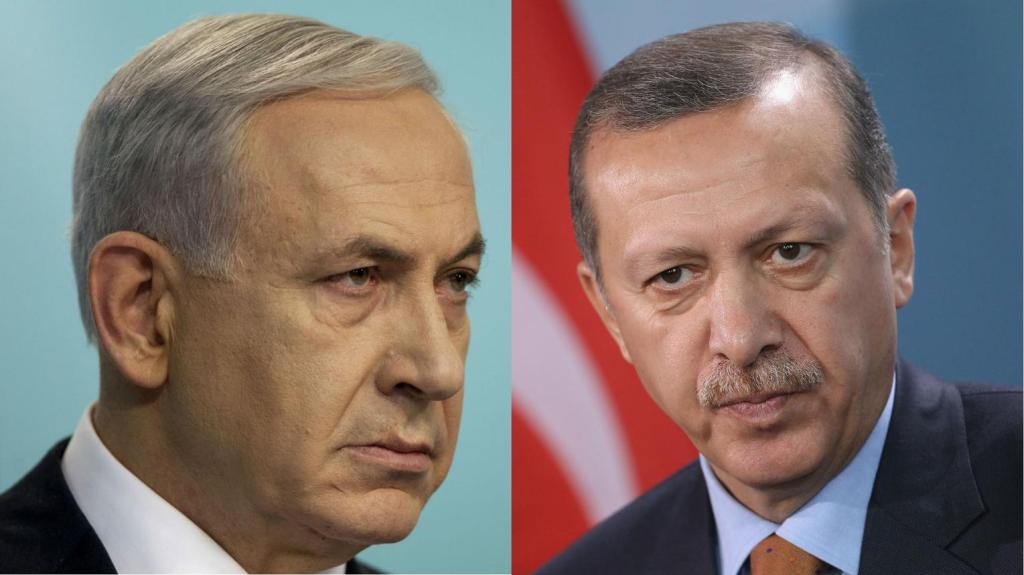
Israel’s regional security environment is undergoing a significant transformation. While its military establishment has traditionally concentrated on threats originating from Iran, Hezbollah, Hamas, and other non-state armed organizations, emerging geopolitical tensions are introducing a different category of potential adversary.
Turkey and Egypt represent established conventional military powers possessing integrated air-defense networks, modern combat aircraft, armored formations, naval assets, and substantial mobilization capabilities.
Neither government has demonstrated a confirmed intention to initiate direct hostilities against Israel. Nevertheless, deteriorating diplomatic relationships and competing strategic objectives warrant examination from a military planning perspective.
The principal concern is not an imminent declaration of war, but the possibility of an operational incident escalating beyond the political leadership’s ability to contain it.
Threat Assessment: Elevated regional friction. Direct conventional conflict remains a lower-probability, high-consequence scenario.
Theater One: Turkey and the Syrian Battlespace
Turkey currently represents one of Israel’s most consequential emerging regional military competitors.
Ankara maintains NATO’s second-largest armed forces by active personnel, possesses an expanding indigenous defense industry, and has demonstrated considerable operational experience through military deployments in Syria and other regional theaters.
Israel’s principal concern involves the potential establishment of Turkish military infrastructure inside Syria, particularly facilities capable of supporting combat aviation, surveillance operations, and integrated air-defense systems.
Such deployments could complicate Israeli air operations and introduce additional risks of military confrontation.
Turkish Military Capabilities
Turkey’s armed forces maintain several operational advantages:
- Airpower: A substantial fleet of F-16 multirole combat aircraft, supported by airborne early-warning platforms and aerial refueling capabilities.
- Unmanned systems: An established combat drone industry producing reconnaissance and strike platforms.
- Ground forces: Large mechanized and armored formations supported by extensive artillery capabilities.
- Naval forces: Frigates, submarines, amphibious platforms, and an expanding indigenous shipbuilding program.
- Defense production: Domestic manufacturing capabilities that could support prolonged operations.
Israel retains important advantages in advanced combat aviation, intelligence collection, electronic warfare, and precision-strike capabilities.
However, Turkish military involvement in Syria would introduce a substantially different operational environment from engagements involving non-state armed groups.
The principal escalation scenario involves an Israeli strike against a Syrian military installation containing Turkish personnel or equipment.
A significant Turkish casualty event could trigger retaliatory military action and rapidly expand the confrontation.
Operational Assessment: Syria remains the most plausible geographical flashpoint for an unintended Israeli-Turkish military engagement.
Theater Two: Egypt and the Sinai Security Corridor
Egypt presents a separate strategic challenge.
Unlike Turkey, Egypt maintains a longstanding peace treaty with Israel and possesses established military coordination mechanisms intended to prevent incidents along their shared border.
Nevertheless, instability in Gaza and disagreements over Palestinian displacement have increased diplomatic friction.
Egypt’s military establishment operates one of the largest conventional force structures in Africa and the Middle East.
Its geographic proximity to Israel gives any deterioration in bilateral security relations considerable strategic significance.
Egyptian Military Capabilities
Egypt maintains a substantial combined-arms force structure, including:
- Airpower: F-16, Rafale, and MiG-29 combat aircraft.
- Armored forces: Large inventories of main battle tanks, including M1A1 Abrams platforms.
- Air defense: Layered surface-to-air missile systems and associated surveillance networks.
- Naval forces: Modern frigates, submarines, and Mistral-class amphibious assault ships.
- Ground formations: Mechanized infantry, artillery, and extensive conventional force reserves.
A hypothetical Israeli-Egyptian conflict would differ fundamentally from operations in Gaza or southern Lebanon.
The Egyptian military possesses the organizational depth, logistical infrastructure, and conventional capabilities necessary to conduct sustained large-scale military operations.
However, Egypt would also face serious economic, operational, and diplomatic consequences from any decision to abandon the peace framework.
Operational Assessment: A deliberate Egyptian offensive against Israel remains unlikely under current conditions. A severe deterioration in Gaza or a major border incident presents a more credible escalation pathway.
Regional Force Balance: Israel Against Two Conventional Powers
A hypothetical confrontation involving both Turkey and Egypt would create substantial operational challenges for Israeli defense planners.
Israel maintains significant qualitative advantages in advanced aerospace systems, intelligence integration, precision weapons, and missile defense.
However, the combined military resources of Turkey and Egypt would introduce complications involving force distribution, logistical endurance, maritime security, and simultaneous operational commitments.
Israel would face the challenge of maintaining defensive readiness while protecting critical infrastructure, civilian population centers, air bases, and strategic transportation networks.
Turkey’s position in the northeastern Mediterranean and Syria could generate operational pressure along Israel’s northern approaches.
Egypt’s proximity to the Sinai Peninsula and Gaza would create a separate southern security concern.
The resulting environment could require Israel to allocate significant resources across geographically distinct theaters.
Critical Strategic Considerations
Air superiority: Israeli aircraft possess advanced capabilities, but sustained operations against organized national air forces and integrated air defenses would present greater risks than operations against less sophisticated adversaries.
Logistical endurance: Prolonged conventional warfare would place substantial demands on aircraft maintenance, ammunition reserves, replacement equipment, and military transportation.
Naval security: Eastern Mediterranean shipping routes, offshore energy infrastructure, and maritime access could become strategically significant.
Missile defense: Israel’s layered defensive systems would remain essential for protecting population centers and military installations.
Reserve mobilization: Extended operations could require significant reserve deployments, increasing economic disruption and domestic pressure.
Importantly, aggregate personnel and equipment inventories do not independently determine combat effectiveness. Training, readiness, command integration, logistics, geography, and political objectives would shape any actual military outcome.
NATO and American Strategic Complications
A direct military confrontation between Israel and Turkey would introduce substantial complications for Washington.
Turkey remains a NATO member, while Israel maintains extensive defense cooperation with the United States.
NATO’s collective-defense provisions would not automatically apply to every confrontation involving Turkish military personnel, particularly operations outside Turkish territory.
Nevertheless, a major Israeli-Turkish conflict could create serious political divisions within the alliance.
Washington would face competing pressures involving Israeli security assistance, NATO cohesion, regional military access, and broader Middle Eastern stability.
Egypt presents another important consideration.
American military assistance and decades of diplomatic investment have supported Egyptian-Israeli peace.
A breakdown in that relationship would undermine a major component of American regional security policy.
Strategic Assessment: The United States would possess strong incentives to prevent either confrontation from escalating into sustained conventional warfare.
Escalation Scenarios and Probability Assessment
Three principal scenarios warrant consideration.
Scenario One: Limited Israeli-Turkish Military Engagement
An incident involving Turkish personnel or military equipment in Syria produces retaliatory strikes or a limited aerial confrontation.
This scenario represents a credible escalation risk because both countries maintain competing security objectives within the Syrian theater.
Scenario Two: Egyptian-Israeli Border Crisis
A major security incident near Gaza or the Sinai Peninsula generates heightened military readiness, diplomatic confrontation, and possible limited exchanges of fire.
Existing security coordination mechanisms make a sustained conflict less likely, but severe political deterioration could weaken those safeguards.
Scenario Three: Simultaneous Regional Confrontation
Israel becomes involved in military hostilities with Turkey and Egypt during a broader regional crisis.
This scenario would carry exceptionally serious consequences but currently lacks evidence of coordinated Turkish-Egyptian preparations for offensive operations against Israel.
Overall Assessment: Limited incidents and diplomatic crises are more plausible than coordinated, full-scale conventional warfare.
Final Strategic Assessment: Deterrence, Not Inevitability
Israel’s military leadership must increasingly account for a regional environment in which potential security challenges extend beyond Iran and non-state armed organizations.
Turkey possesses the military capabilities and regional ambitions to complicate Israeli operations in Syria.
Egypt maintains the conventional force structure and geographical position to become a major strategic concern should bilateral relations deteriorate substantially.
However, neither country’s military capabilities should be mistaken for evidence of an intention to initiate hostilities.
The most dangerous development would be the gradual erosion of established diplomatic and military communication channels.
In such an environment, tactical incidents could produce strategic consequences far exceeding their original significance.
Israel’s greatest immediate risk is not a coordinated Turkish-Egyptian invasion. It is the possibility that an increasingly contested regional security environment produces a military confrontation that none of the principal actors initially intended.
—Terrence Dorner, B1Daily



Leave a Reply