—Kerry Hill, B1Daily
President Donald Trump has managed to turn three letters into a political weapon: DEI.
Under the banner of eliminating diversity, equity, and inclusion, his administration has launched a sweeping campaign against programs designed to address discrimination and unequal opportunity. What began as a promise to eliminate allegedly unfair hiring preferences has expanded into an offensive against federal workplace initiatives, university programs, government contracting practices, and longstanding civil rights enforcement policies.
And Black Americans have plenty of reasons to believe they are among the primary casualties.
When Equality Becomes the Enemy
Trump insists his anti-DEI crusade is about restoring merit. His administration argues that race-conscious preferences can discriminate against individuals and violate equal-treatment principles.
But here’s the glaring contradiction: America did not suddenly become a meritocracy because Trump signed an executive order.
Black Americans were excluded from countless employment, educational, and economic opportunities long before DEI became a corporate buzzword. Programs intended to address those disparities were not invented because Black people lacked qualifications. They emerged because qualifications alone historically did not guarantee fair treatment.
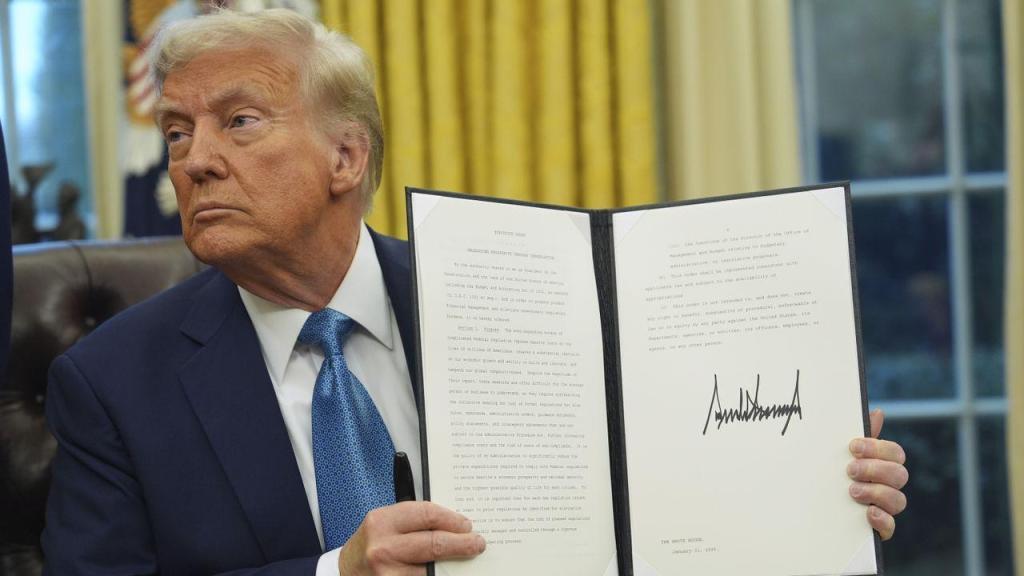
In January 2025, Trump revoked Executive Order 11246, a landmark federal contractor policy dating to President Lyndon Johnson that required affirmative action to promote equal employment opportunity.
The administration also dismantled federal DEI initiatives and directed agencies to scrutinize programs it considers discriminatory.
The message was unmistakable. Programs created to expand opportunity were now being treated as potential violations of civil rights.
Black Workers Are Paying Attention
Federal employment has historically provided Black Americans with relatively stable careers, competitive benefits, and opportunities for advancement.
That makes the administration’s broader federal workforce reductions and retreat from diversity initiatives particularly concerning.
Black women, who have long relied on public-sector employment as a pathway into the middle class, face especially serious economic risks when federal positions disappear.
The administration’s actions do not exclusively affect Black employees, and not every DEI program was effective or legally defensible. Nevertheless, dismantling protections and opportunities without addressing the discrimination that made them necessary risks reinforcing existing inequalities.
Apparently, America can eliminate diversity programs faster than it can eliminate discrimination.
The Civil Rights Rollback Nobody Should Ignore
Perhaps the most troubling development is Trump’s effort to weaken the federal government’s use of disparate-impact enforcement.
Disparate impact addresses policies that appear neutral but disproportionately disadvantage protected groups without sufficient legal justification.
In April 2025, Trump directed federal agencies to deprioritize enforcement based on that legal theory.
That matters because discrimination does not always arrive wearing a hood or announcing itself through racial slurs. Sometimes it operates through hiring tests, screening requirements, and workplace practices that disproportionately exclude qualified applicants.
The underlying statutory protections have not simply disappeared, but the administration’s change in enforcement priorities could make certain forms of discrimination harder to challenge.
A government serious about racial equality should strengthen its ability to identify discrimination, not narrow the tools available to investigate it.
The Attack Keeps Expanding
In March 2026, Trump signed another executive order targeting what his administration describes as racially discriminatory DEI activities among federal contractors and subcontractors.
The order established new compliance requirements and potential penalties, including contract suspension or termination.
Supporters argue these measures protect workers from racial preferences. Critics counter that the administration’s broad campaign may discourage employers from maintaining even lawful efforts to recruit underserved communities and identify discriminatory barriers.
The distinction matters. Prohibiting unlawful racial discrimination is one thing. Creating an atmosphere in which businesses fear discussing racial inequality is something entirely different.
This Was Never Just About Three Letters
The central question is no longer whether every corporate DEI seminar was useful. Some were superficial, expensive, and disconnected from meaningful economic progress.
The question is why the Trump administration has devoted so much political energy to dismantling diversity initiatives while offering so little comparable urgency toward confronting the racial disparities those programs were intended to address.
Black Americans do not need corporate slogans, performative workshops, or symbolic gestures masquerading as progress.
They need enforceable civil rights, fair access to employment, educational opportunities, economic mobility, and protection against discrimination.
Trump’s administration claims it is restoring equality. But equality cannot be measured solely by how many diversity offices a president closes.
If the government dismantles the machinery intended to confront discrimination while leaving discriminatory barriers standing, that is not a victory for meritocracy. It is a retreat from accountability.
And Black America has every reason to challenge it.
—Kerry Hill, B1Daily


Leave a Reply