
—Kerry Hill, B1Daily
Republicans entered the 2026 midterms hoping to defend their congressional majorities. Instead, they emerged from Election Day having lost control of both the House and Senate, while Democrats captured seats in states once considered Republican strongholds.
And hanging over the party was a scandal involving a dead financier, millions of government records, and an increasingly uncomfortable question: What exactly was Washington hiding about Jeffrey Epstein?
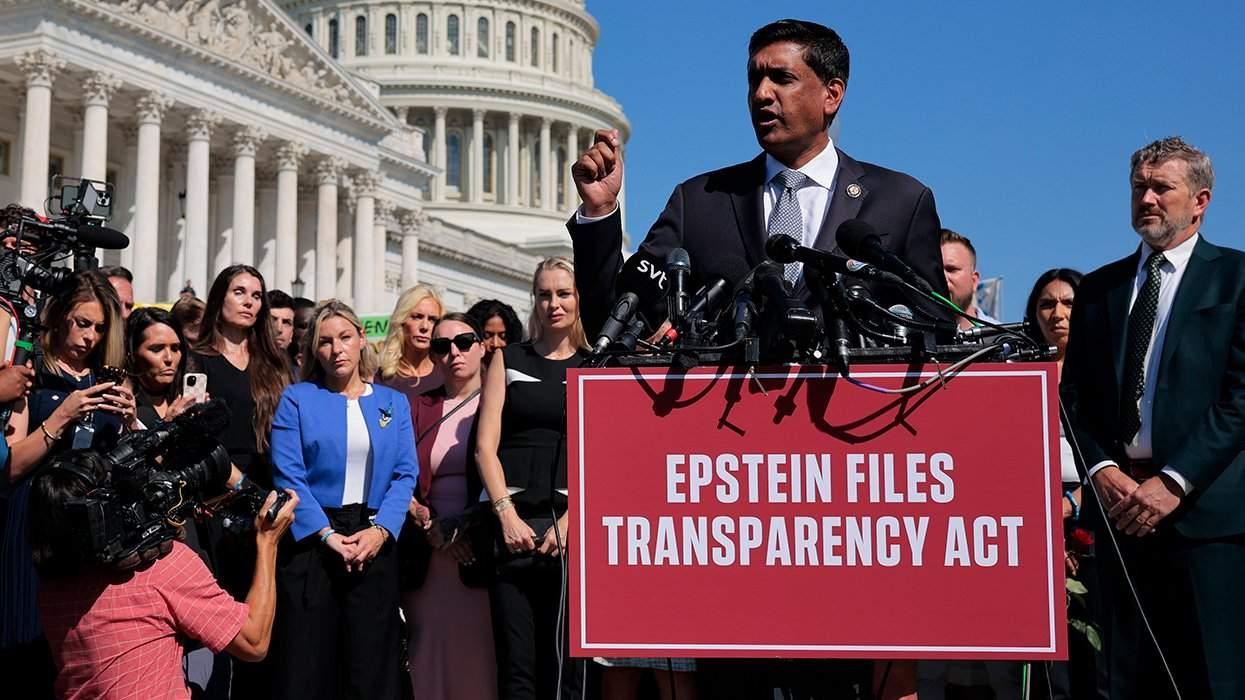
The Epstein files did not single-handedly cause the Republican defeat. Economic frustration, the Iran war, rising fuel prices, and dissatisfaction with President Donald Trump were major factors identified by election analysts and voters. But the Epstein controversy supplied Democrats with a particularly damaging political weapon: the argument that Republicans had promised transparency while protecting an establishment they once claimed to oppose. Reuters+1
The Scandal That Refused to Disappear
Jeffrey Epstein died in federal custody in 2019 while awaiting trial on sex-trafficking charges. His relationships with wealthy businessmen, politicians, and celebrities subsequently became the subject of intense public scrutiny.
During the 2024 presidential campaign, demands for greater disclosure resonated with parts of Trump’s political base. Yet the administration’s handling of the records eventually generated criticism from Democrats and Republicans alike.
When the Justice Department released heavily redacted documents in December 2025, critics questioned whether the government was complying with congressional transparency requirements. Republican lawmakers Thomas Massie and Marjorie Taylor Greene were among those publicly challenging the administration’s handling of the controversy.
The issue created an awkward contradiction for a political movement that had spent years promising to expose powerful institutions. Investing.com
Democrats Turned Epstein Into an Election Weapon
Democrats recognized the political opportunity.
By late October, Democratic campaigns had spent approximately $53 million on advertisements mentioning Epstein in competitive races, compared with about $3 million spent by Republicans, according to advertising-tracking firm AdImpact.
The attacks targeted Republican candidates over their records on releasing Epstein-related documents and, in some cases, their connections to donors associated with Epstein.
Some advertisements, however, overstated the evidence. FactCheck.org identified misleading claims about Republican senators’ voting records, while other attacks relied on associations that did not establish criminal wrongdoing.
The broader message was nevertheless unmistakable: Democrats sought to connect the Epstein controversy with public distrust of wealthy elites and political insiders. FactCheck.org+1
Americans Were Already Losing Trust
The political danger was visible months before Election Day.
A February Reuters/Ipsos survey found that 53% of American adults said the Epstein files had substantially lowered their trust in political and business leaders. Another 69% believed the documents demonstrated how rarely powerful individuals face accountability.
Perhaps most damaging for Republicans, 58% of Republican respondents agreed with that latter sentiment.
The controversy was no longer confined to partisan opponents of Trump. It had become part of a broader national argument over whether the political system protects powerful people from consequences. Ipsos
But Epstein Wasn’t the Only Problem
Republicans’ losses extended well beyond the scandal.
Democrats flipped congressional seats across traditionally Republican territory, while voters expressed frustration over inflation, the administration’s economic policies, and the continuing war with Iran.
Vice President JD Vance himself pointed to the Iran conflict as a principal explanation for Republican losses, while acknowledging concerns about affordability and foreign policy.
The Associated Press’s post-election voter analysis likewise identified economic dissatisfaction, concerns about presidential power, and doubts about Republican candidates as significant influences on the outcome. TIME+1
The available evidence therefore does not establish that Epstein was the decisive factor nationally, much less the sole cause of the Republican defeat. What it demonstrates is that the scandal became a prominent campaign issue at a time when trust in the administration was already weakening.
Now Democrats Want the Documents
With Democrats preparing to assume control of Congress in January 2027, the Epstein controversy could enter another phase.
Representative Robert Garcia, positioned to lead the House Oversight Committee, has signaled an aggressive approach to investigating the Trump administration. Democratic lawmakers have also discussed renewed scrutiny of the government’s handling of Epstein-related records.
Congressional investigations could examine whether officials complied with disclosure requirements, why certain records were withheld, and whether additional information can be released while protecting victims.
Such inquiries must distinguish between documented misconduct and mere association. Appearing in Epstein’s contact books, correspondence, or investigative files does not itself establish participation in a crime. The Guardian
The Political Cost of Broken Transparency Promises
The Epstein scandal exposed a particularly uncomfortable vulnerability for Republicans: a gap between their anti-establishment messaging and the public’s perception of how the administration handled records involving powerful individuals.
That vulnerability became one part of a much larger electoral reckoning.
The 2026 midterms demonstrated that economic dissatisfaction, foreign policy controversies, concerns about corruption, and demands for government accountability can converge into a powerful political backlash.
For Republicans, the Epstein files were not the entire story of their defeat. But they became a conspicuous symbol of the distrust that helped define the election.
And for Democrats, winning Congress means inheriting the responsibility to pursue transparency rather than merely campaigning on its absence.
—Kerry Hill, B1Daily




Leave a Reply