—Vanessa Edwards, B1Daily
The Democratic Party is celebrating its 2026 midterm victories as a historic rejection of Donald Trump and the Republican agenda. Congressional control has shifted, Black candidates have achieved major electoral breakthroughs, and Democratic leaders are preparing to exercise newfound political power.
But amid the celebrations, an uncomfortable question deserves attention: What exactly did Black Americans win beyond another Democratic victory?
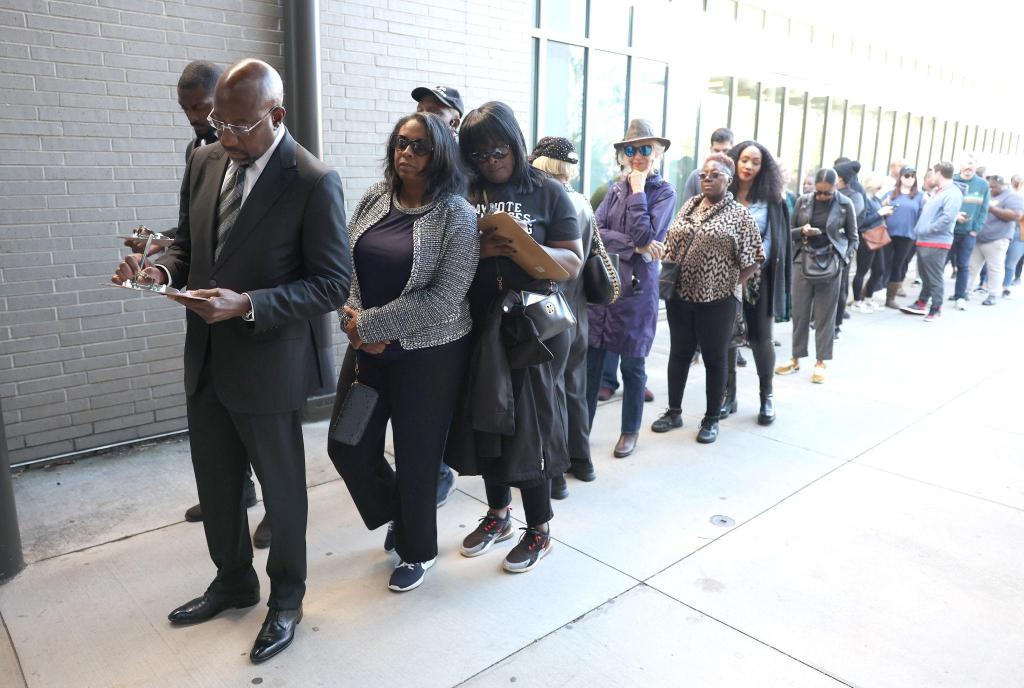
According to the Associated Press Voter Poll, approximately nine in ten Black voters supported Democratic House candidates. Black voters were especially important in Southern contests, helping Democrats achieve victories in states and districts previously considered difficult territory.
Those results demonstrate substantial Black electoral influence. They do not, by themselves, establish that the policies Black communities need will follow.
Winning an election and delivering meaningful improvements in people’s lives are two entirely different accomplishments.
Black Votes Were Essential. Their Demands Must Be More Than an Afterthought.
In Georgia, Black voters helped elect Keisha Lance Bottoms as the nation’s first Black woman governor. In Alabama, Congressman Shomari Figures survived a difficult reelection campaign after Republican lawmakers redrew his district. Across the South, Black turnout helped Democrats compete in places where the party had struggled for years.
The victories were significant, particularly amid disputes over voting rights and political representation.
But representation alone does not answer questions about wealth, housing, education, employment, or criminal justice.
Black Americans continue to face substantial disparities in household wealth, homeownership, business financing, and exposure to economic instability.
A Democratic victory does not automatically reduce those disparities.
Nor should Black voters be expected to treat the election of Black politicians as a substitute for examining what those officials intend to accomplish.
Political representation can create opportunities for policy change. Whether those opportunities produce measurable results depends on the legislation, budgets, and administrative decisions that follow.
Where Is the Clearly Articulated Black American Agenda?
Democrats have campaigned on protecting voting rights, defending civil rights, reducing healthcare costs, improving affordability, and resisting Republican efforts to eliminate diversity initiatives.
Those priorities can benefit Black Americans, and many address longstanding concerns within Black communities.
But critics argue that the party has not consistently connected those broader promises to a comprehensive, publicly accountable national program specifically addressing Black American economic and institutional disparities.
Consider the questions that remain.
What is the party’s concrete plan to narrow the racial wealth gap? How will it increase Black homeownership in neighborhoods where rising property values and investor purchases are displacing longtime residents? What measurable commitments will it make to Black-owned businesses seeking capital?
What federal policies will address the disappearance of manufacturing jobs that once supported Black working-class families? How will the party confront discriminatory lending, unequal school funding, and persistent disparities in the criminal justice system?
And where does the national Democratic leadership stand on studying or implementing reparations for descendants of American slavery?
These are not minor policy details. They concern the economic and political foundations of Black American life.
Importantly, it would be inaccurate to claim that no Black policy agenda exists. The Congressional Black Caucus Foundation and the Joint Center for Political and Economic Studies have developed Forward Together: The Black Policy Playbook for an Equitable America, addressing voting rights, economic opportunity, employment, education, healthcare, criminal justice, and technology.
The distinction is whether Democratic leaders will adopt specific recommendations, establish implementation deadlines, and publicly report results.
Black Americans Cannot Live on Symbolic Victories
The election of Black governors, legislators, and other officials represents important political progress.
But symbolism and material advancement should not be confused.
A Black governor does not automatically produce greater Black homeownership. A Black congressional leader does not independently close the racial wealth gap. A diverse cabinet does not guarantee that federal contracts will reach historically excluded businesses.
Those outcomes require deliberate policies, funding, enforcement, and institutional accountability.
This is especially important for Black American Freedmen whose families endured slavery, Jim Crow, exclusion from federal housing programs, discriminatory lending, and generations of unequal access to wealth-building opportunities.
For advocates of lineage-based reparations, general economic programs do not necessarily address those specific historical claims.
Other Black policy advocates favor broader race-conscious or universal programs designed to reduce disparities. Those approaches differ, but both deserve substantive debate rather than being reduced to campaign slogans.
The Democratic Party contains competing perspectives on these questions. Its challenge is explaining which proposals it supports and how it intends to implement them.
The Difference Between Stopping Republicans and Advancing Black Interests
Much of the Democratic campaign focused on opposing Trump’s policies, including his administration’s approach to voting rights, immigration, diversity initiatives, and federal spending.
For voters concerned about those policies, preventing further changes can itself be a meaningful political objective.
But defensive politics and affirmative policy development serve different purposes.
Stopping a harmful proposal may preserve existing protections. It does not necessarily create new economic opportunities or repair longstanding institutional disparities.
A party seeking sustained Black support must be able to explain both what it intends to prevent and what it intends to build.
That means moving beyond opposition messaging toward specific proposals with identifiable costs, legislative pathways, and measurable goals.
It also means recognizing that Black Americans are not politically uniform. They disagree over reparations, policing, immigration, economic policy, and the appropriate role of government.
A serious Black policy agenda should engage those disagreements rather than assume that a shared voting pattern reflects identical priorities.
The South Deserves More Than Election-Year Attention
The 2026 results also revived questions about how national Democrats invest in Southern states.
Former Vice President Kamala Harris argued after the election that Democrats had historically failed to devote sufficient resources to Southern communities. Stacey Abrams similarly emphasized the consequences of underinvestment.
Their concerns were reflected in several competitive races involving Black candidates.
In Louisiana, Democratic Senate candidate Jamie Davis mounted a surprisingly close campaign against Republican Julia Letlow. His campaign reported receiving no financial assistance from the Democratic National Committee or Democratic Senatorial Campaign Committee.
In Florida, Angie Nixon also came close in a race where national Democratic leaders had limited expectations.
These campaigns illustrate a broader issue: Black political participation in the South requires sustained investment, not simply last-minute appeals for turnout.
Community organizations, local candidates, and neighborhood institutions need support between elections if political engagement is to translate into durable representation and influence.
The Real Test Begins After Election Night
Democrats have an opportunity to translate their electoral victories into policy commitments.
But several questions will determine what those victories ultimately mean for Black Americans.
Will the party advance legislation specifically addressing racial wealth disparities? Will it pursue stronger protections against housing and lending discrimination? Will it support sustained investment in historically underserved Black communities?
Will congressional leaders establish meaningful benchmarks for civil rights enforcement, criminal justice reform, and Black business development?
And will Black voters have opportunities to evaluate those commitments before the next election?
Those questions cannot be answered through election-night speeches.
They require legislative proposals, public hearings, budget decisions, and measurable outcomes.
Republican policies also deserve scrutiny, particularly where they affect voting rights, civil rights enforcement, and economic opportunity. But opposition to Republican policies does not relieve Democrats of responsibility for explaining their own agenda.
Electoral Victory Is Not the Same as Black Political Progress
The 2026 midterms demonstrated that Black voters remain a major force in American politics.
They helped produce historic victories, strengthened Democratic representation, and influenced the balance of power in Washington and state governments.
Those accomplishments are real.
What remains uncertain is whether the resulting political power will produce sustained improvements in Black Americans’ material circumstances.
A meaningful assessment cannot stop at the number of Democrats elected or the racial identities of successful candidates.
It must examine whether Black families gain wealth, whether Black neighborhoods retain affordable housing, whether businesses obtain capital, and whether public institutions become more accountable.
The Democrats won the election. Whether Black Americans benefit from that victory remains a question of policy, implementation, and results.
That distinction deserves as much attention as the election results themselves.
—Vanessa Edwards, B1Daily


Leave a Reply