—Barrington Williams, B1Daily
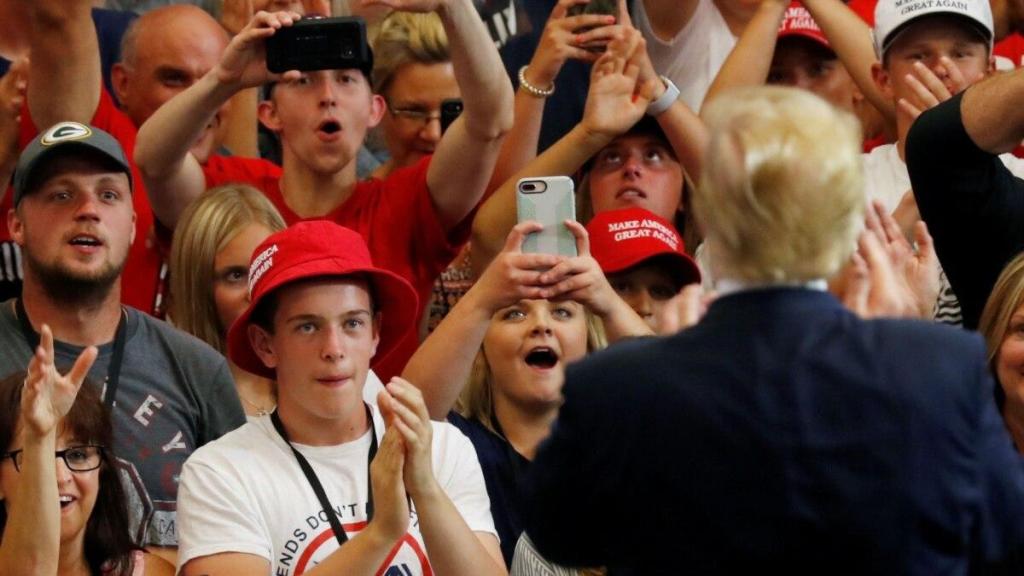
Republicans spent years telling young American men that they understood their struggles. They spoke about masculinity, opportunity, independence, and restoring an economy where working hard could produce a comfortable life.
Donald Trump’s 2024 campaign successfully reached young male voters through podcasts, social media personalities, and promises of economic renewal. The message was straightforward: America had become too expensive, traditional opportunities were disappearing, and Republican leadership could reverse the decline.
Two years later, the political conversation has returned to an uncomfortable question: What has actually become more affordable for the young men Republicans claimed to represent?
The November 2026 midterms exposed the importance of that question. According to Tufts University’s CIRCLE research center, 59% of young male voters supported Democratic House candidates, compared with 37% who backed Republicans. That represented a striking contrast with 2024, when 56% of young men supported Trump.
Those figures do not establish that every voter changed parties or that affordability alone caused the shift. But they underscore a problem for Republicans: cultural identification does not necessarily translate into lasting political loyalty when economic concerns remain unresolved. CIRCLE+1
Young Men Wanted Paychecks, Not Just Podcasts
The Republican outreach strategy recognized something that political institutions had frequently underestimated: many young men felt economically insecure, socially disconnected, and uncertain about their futures.
But understanding frustration is different from resolving it.
A September 2026 survey of 800 registered male voters ages 18 to 30 found that inflation was their leading voting concern, followed by housing affordability. Sixty-three percent wanted the federal government to do more about the problems facing young men, including 67% of Republican-leaning respondents.
The survey also found that 43% believed the country’s rules were stacked against men like themselves.
These findings complicate the notion that young male political dissatisfaction revolves primarily around culture-war controversies. For many respondents, the central concerns were practical: earning enough money, finding stable work, and establishing an independent household.
Republicans offered messages about strength, ambition, and personal responsibility. The economic question was whether those messages came with policies capable of reducing the financial barriers facing younger Americans. Symposium on Young American Men
Homeownership Is Becoming a Distant Dream
For previous generations, a steady job often represented a plausible pathway toward purchasing a modest home.
Today’s young adults confront expensive housing markets, substantial down payments, high borrowing costs, and competition for limited starter-home inventory.
Republicans have emphasized deregulation, expanded construction, and reduced government interference as ways to increase housing supply. Those proposals address genuine obstacles, particularly restrictive zoning and costly development requirements.
But deregulation alone cannot guarantee that new homes will be affordable to first-time buyers. Local land-use decisions, financing costs, labor shortages, and the types of housing developers choose to construct all affect prices.
Young men who want to purchase property, marry, or raise children cannot build those futures on political rhetoric alone.
For them, the relevant measures are monthly mortgage payments, available housing inventory, and whether their wages can support the costs of ownership.
The Cost of Becoming an Independent Adult
Housing is only one part of the affordability problem.
A young man earning $45,000 annually must still pay rent, utilities, car insurance, transportation costs, groceries, and potentially student loans. Even without dependents, those obligations can consume much of his take-home pay.
For young workers in construction, manufacturing, logistics, and service industries, the issue is not necessarily unwillingness to work. It is whether available employment provides enough income to build financial security.
Republicans have advocated tax reductions, domestic manufacturing, expanded energy production, and tariffs intended to protect American industries. Supporters argue that these policies can encourage investment and improve employment opportunities.
Critics counter that tariffs can increase consumer prices and that broad tax reductions do not necessarily deliver substantial relief to workers with modest incomes.
Neither argument eliminates the need to examine actual outcomes. The important questions are whether wages are rising faster than essential expenses, whether stable jobs are becoming more accessible, and whether younger workers can accumulate savings.
The 2026 midterm electorate remained deeply concerned about these issues. Preliminary NBC exit polling reported that 89% of voters considered the cost of living a crucial or major factor in their candidate choices. Business Insider
The Family Values Message Meets Economic Reality
Republicans frequently emphasize marriage, fatherhood, traditional families, and household stability.
Those priorities resonate with some young men who want to become husbands, fathers, and homeowners.
But establishing a family requires more than encouragement.
It requires affordable housing, dependable employment, accessible healthcare, and sufficient financial security to raise children.
The September Young American Men Survey found that one-quarter of respondents wanted to marry but did not believe it would happen for them.
That finding does not mean economic hardship is the only obstacle to marriage. Relationships, personal preferences, and social expectations also matter.
Nevertheless, affordability is a substantial part of the conversation.
A political movement that celebrates family formation must also confront the economic conditions that can make supporting a household difficult.
Culture Wars Cannot Pay the Rent
Republican messaging toward young men has often featured disputes over gender roles, diversity programs, immigration, and cultural institutions.
These issues matter to portions of the party’s electorate, and young Republican voters continue to prioritize immigration, crime, and the national debt more heavily than their Democratic counterparts.
But economic concerns cut across those divisions.
CIRCLE’s analysis of the 2026 midterms found that young men and young women identified the economy and jobs as their leading concerns at nearly identical rates. Across young voters generally, 52% named the economy and employment among the country’s three most important issues.
The findings suggest that the financial challenges facing young men cannot be reduced to a uniquely male cultural grievance.
They are also part of a broader generational affordability crisis.
A young worker struggling to afford a one-bedroom apartment does not necessarily benefit financially from another televised argument about masculinity. Neither does a young father facing expensive childcare or a recent graduate struggling to find stable employment.
Cultural issues can influence political identity, but they do not replace an economic program. CIRCLE
What the 2026 Midterms Revealed
The midterm results suggest that Republican support among younger male voters was less secure than the party’s 2024 performance initially indicated.
CIRCLE reported that 59% of young White male voters disapproved of Trump’s performance, as did 65% of young Latino male voters who participated in the election.
The organization also found that 16% of young voters who supported Trump in 2024 and voted in the 2026 midterms backed a Democratic House candidate.
Those figures should be interpreted carefully. Presidential and congressional elections involve different candidates, turnout patterns, and political circumstances.
They nevertheless demonstrate that young men’s political preferences are not permanently fixed.
Economic dissatisfaction may create opportunities for either party, but neither Republicans nor Democrats can assume that frustrated young men will automatically support them. CIRCLE
The Affordability Test Neither Party Can Escape
The broader lesson extends beyond Republicans.
Democrats also face questions about housing costs, wage growth, healthcare expenses, and the financial difficulties confronting younger generations. Many of these problems developed over decades and cannot be attributed exclusively to one administration.
Republicans entered the second Trump presidency promising economic improvement and a renewed future for American workers. Their record must be examined against those promises, including the effects of tax policy, tariffs, energy decisions, housing initiatives, and labor-market conditions.
The question is not whether young men have been sufficiently praised, understood, or represented in campaign advertising.
It is whether public policy is making independent adulthood more attainable.
Can a young worker afford an apartment without roommates? Can he purchase a reliable vehicle without overwhelming debt? Can he save for a house? Can he support children without living one emergency away from financial collapse?
Those are concrete measures of economic opportunity.
The 2026 midterms demonstrated that appeals to young men’s identities do not guarantee their continued political support. Affordability remains a central concern, and the distance between campaign promises and household finances deserves sustained scrutiny.
For any political party claiming to represent the next generation of American men, the challenge is no longer simply getting their attention.
It is delivering measurable improvements in their economic lives.
—Barrington Williams, B1Daily



Leave a Reply