—Pān Hě, B1Daily
While American politicians argue over tariffs, factory closures, and the future of manufacturing, South Korea is demonstrating just how valuable an advanced industrial economy can become.
The East Asian nation recorded an astonishing $115.28 billion in exports during October 2026, a 93.7% increase from the same month last year. The surge was driven largely by global demand for artificial intelligence infrastructure, computer equipment, and advanced semiconductors.
According to Reuters, South Korean semiconductor exports alone reached $56.44 billion, increasing more than 259% year over year. Computer exports jumped nearly 497%, reflecting enormous international demand for AI servers and related technology. The unusually large annual increases also reflected differences in working days caused by the timing of the Chuseok holiday. Reuters
For a country with roughly 52 million people, those figures illustrate the economic importance of maintaining globally competitive manufacturing industries.
South Korea Builds What the World Needs
South Korea’s industrial strength did not emerge overnight. Decades of investment in engineering, manufacturing infrastructure, education, and export-oriented industries helped establish the country as a major producer of electronics, automobiles, ships, and semiconductors.
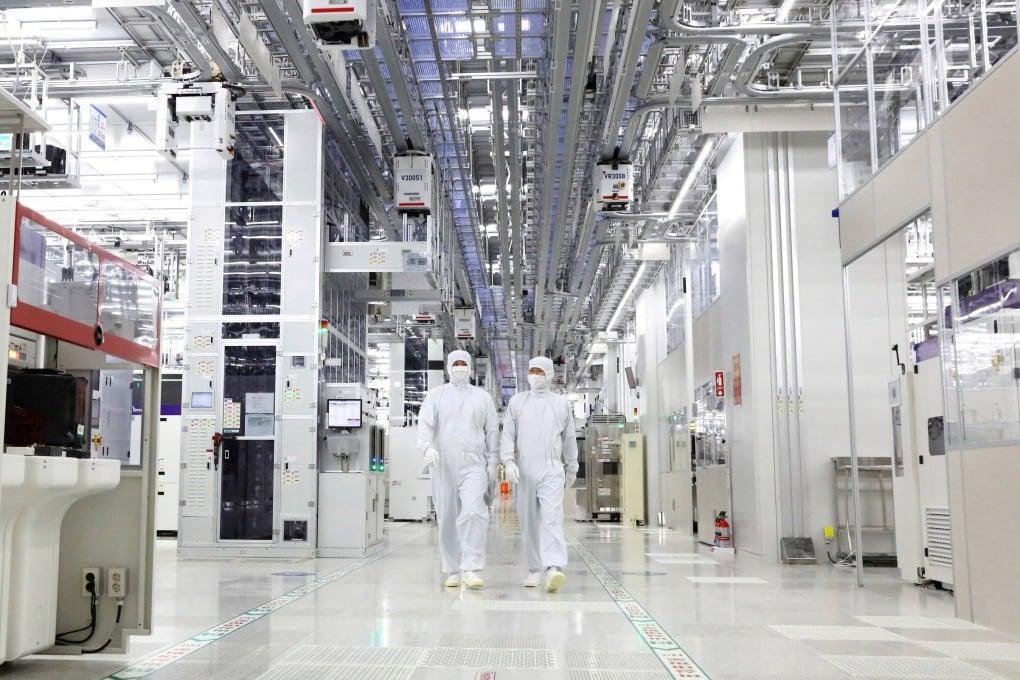
Companies such as Samsung Electronics and SK Hynix now occupy critical positions in the global technology supply chain.
Their products help power everything from smartphones and automobiles to the enormous data centers supporting artificial intelligence.
That industrial capacity has become especially valuable as technology companies race to develop increasingly sophisticated AI systems.
South Korea’s success also illustrates the importance of manufacturing goods that command substantial value in international markets.
Rather than relying exclusively on consumer spending or financial services, the country maintains a significant industrial sector capable of generating export revenue and supporting technical employment.
America’s Missing Manufacturing Middle Class
The contrast with the United States is particularly relevant to Black American economic history.
Manufacturing employment once provided millions of American workers with relatively stable wages, benefits, and opportunities to enter the middle class without obtaining four-year college degrees.
For Black workers in cities such as Detroit, Cleveland, Chicago, and Gary, industrial employment became an important pathway toward homeownership and household wealth.
Deindustrialization, automation, international competition, and changing corporate investment strategies subsequently eliminated many of those opportunities.
South Korea’s experience demonstrates that manufacturing can remain an important economic engine, although its success also depends on extensive capital investment, government policy, international trade, and technological specialization.
Rebuilding American manufacturing would require more than tariffs or promises to reopen old factories. It would demand sustained investment in infrastructure, technical education, industrial research, and domestic supply chains.
The AI Boom Comes With Risks
South Korea’s export surge does not mean its economy is immune to trouble.
Recent manufacturing surveys indicate that industrial growth has slowed across several Asian economies, including South Korea, Japan, China, and Taiwan.
Analysts have warned that high energy costs, geopolitical tensions, and uncertainty surrounding AI investment could threaten future growth.
South Korean manufacturing activity expanded at a slower pace in October, even as semiconductor exports remained exceptionally strong.
The country’s growing dependence on advanced chip demand also creates vulnerability if technology companies reduce their enormous AI spending plans. MarketScreener
An Industrial Lesson Washington Cannot Ignore
South Korea’s experience offers a useful lesson for American policymakers: countries that develop advanced manufacturing capabilities can gain substantial economic advantages in industries that shape global commerce.
But industrial success requires more than attracting corporate headquarters or celebrating stock market valuations.
It requires the ability to design, manufacture, and export valuable products.
For Black American communities still confronting the consequences of factory closures and lost industrial employment, that distinction matters enormously.
The question for the United States is not simply whether manufacturing can return. It is whether a new generation of industrial investment will create accessible, well-paying careers for the communities that suffered most from its decline.
South Korea’s remarkable export figures show what advanced manufacturing can contribute to a national economy. Whether America can translate similar investments into broad-based prosperity remains an important economic challenge.
—Pān Hě, B1Daily





Leave a Reply