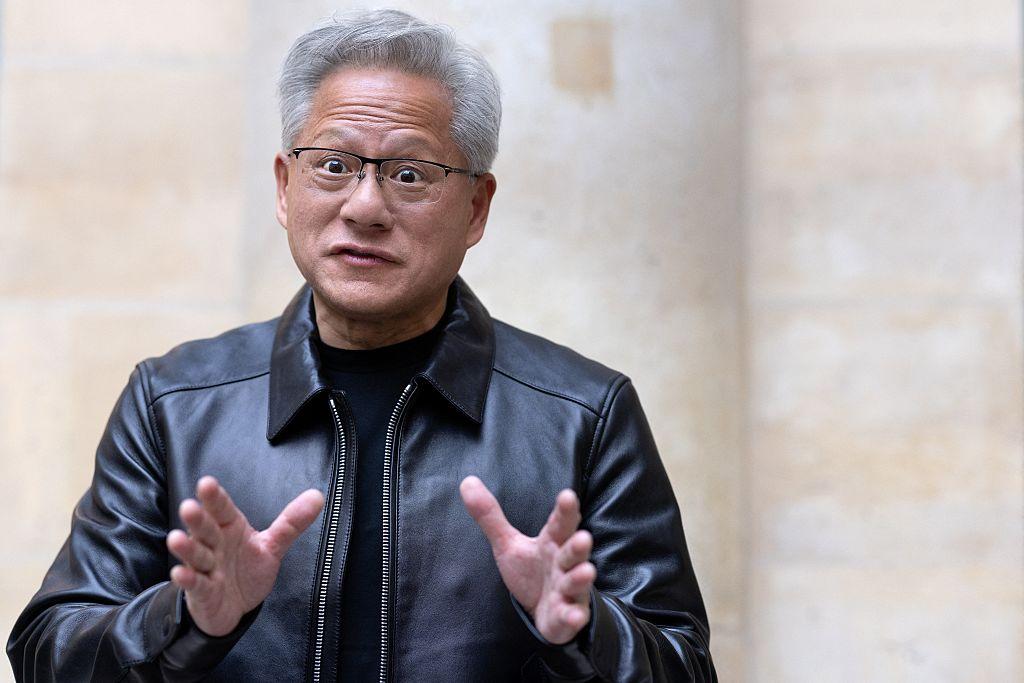
—Travis Luyindama, B1Daily
Nvidia CEO Jensen Huang, one of the most powerful executives in the global technology industry, has acknowledged an extramarital affair amid explosive allegations that his romantic relationship may have exposed him to a Chinese intelligence operation.
What began as a deeply personal scandal has rapidly escalated into a corporate and national security controversy involving advanced artificial intelligence chips, American export restrictions, and one of the world’s most valuable companies.
On November 8, Nvidia announced that its board of directors had launched an independent investigation into reports that Huang had been targeted by foreign intelligence.
The investigation follows reporting that U.S. intelligence officials suspected a woman connected to Huang of gathering information for Beijing.
The allegations remain unproven, and Nvidia has stated that it currently has no reason to believe company secrets or national security information were compromised.
The Woman at the Center of the Allegations
The controversy centers on Alice Huang, a former executive associated with Megaspeed International, a Singapore-based data center company with business connections to Nvidia.
According to reporting by The New York Times, American intelligence officials suspected that Alice Huang had links to Chinese intelligence and may have been seeking information from the Nvidia chief executive.
Megaspeed has also faced scrutiny over allegations involving the movement of restricted advanced semiconductors into China.
Those allegations have not established that Alice Huang committed espionage or that Jensen Huang knowingly participated in any intelligence activity.
Nevertheless, the reported relationship has raised serious questions because Nvidia produces some of the world’s most strategically important artificial intelligence processors.
The company’s technology sits at the center of an increasingly intense competition between Washington and Beijing over computing power, military applications, and economic leadership.
Huang Admits Infidelity and Apologizes
In a message to Nvidia employees, Huang acknowledged that he had been unfaithful to his wife, Lori Huang, and apologized to his family and colleagues.
He accepted responsibility for his conduct and acknowledged that his actions had damaged the trust placed in him.
The billionaire executive also pledged to cooperate with the company’s investigation and reaffirmed his commitment to protecting American national security interests.
His admission confirms the personal misconduct, but it does not establish the separate allegation that his relationship resulted in espionage or the disclosure of sensitive information.
That distinction is essential as investigators examine what actually occurred.
Why Washington Is Concerned
Nvidia is not an ordinary technology company.
Its advanced graphics processors are essential to training and operating many of the world’s most powerful artificial intelligence systems. The United States has imposed restrictions on the export of certain advanced chips to China because of concerns about their potential military and intelligence applications.
Huang has been a prominent advocate for maintaining access to the Chinese technology market, arguing that American companies should remain commercially competitive internationally.
Those business positions are not evidence of wrongdoing. However, they increase the importance of determining whether anyone attempted to influence the company’s leadership through a personal relationship.
Investigators will need to establish whether sensitive information was requested, whether any protected information was disclosed, and whether corporate decision-making was affected.
A relationship involving a powerful executive can create security concerns without necessarily proving that a successful intelligence operation occurred.
Nvidia’s Board Moves to Contain the Fallout
Nvidia’s board has appointed independent directors and outside legal counsel to investigate the allegations.
The company has expressed confidence in Huang’s leadership and indicated that he intends to continue serving as chief executive during the review.
Financial markets have nevertheless reacted sharply to the controversy, with Nvidia shares falling amid investor concerns about leadership stability and the possibility of additional revelations.
For shareholders, the scandal introduces a new category of uncertainty at a company already facing scrutiny over its extraordinary valuation, international sales, and dependence on continued artificial intelligence investment.
Huang is more than Nvidia’s chief executive. As its co-founder and longtime public face, he has become closely associated with the company’s extraordinary rise.
Any investigation involving his judgment, business relationships, or security practices therefore carries implications far beyond his private life.
China Rejects the Allegations
Chinese officials have rejected claims that Beijing orchestrated an intelligence operation involving Huang, characterizing the accusations as unfounded.
That denial places the controversy within the broader struggle between the United States and China over advanced technology and economic influence.
American investigators and Nvidia’s independent committee must now determine whether the allegations are supported by evidence.
Until those findings become available, claims that Huang knowingly assisted Chinese intelligence or transferred sensitive company information would be premature.
The Question Is Bigger Than Infidelity
Jensen Huang’s admitted affair is a personal matter with consequences for his family and reputation.
The potential national security implications, however, are a legitimate concern for Nvidia’s shareholders, American regulators, and the broader technology industry.
The central issue is not whether a billionaire executive was unfaithful. Huang has already acknowledged that conduct.
The issue is whether a personal relationship created an opportunity for foreign intelligence to obtain sensitive information or influence decisions involving technology of enormous strategic importance.
Nvidia’s investigation must separate established facts from speculation, identify any actual security failures, and explain whether additional safeguards are necessary.
For a company whose technology has become central to America’s artificial intelligence ambitions, that scrutiny is unavoidable.
The affair is confirmed. The espionage allegations are not. What investigators establish next will determine whether this remains a damaging personal scandal or becomes something far more consequential.
—Travis Luyindama, B1Daily




Leave a Reply