—Matt Gwinta, B1Daily
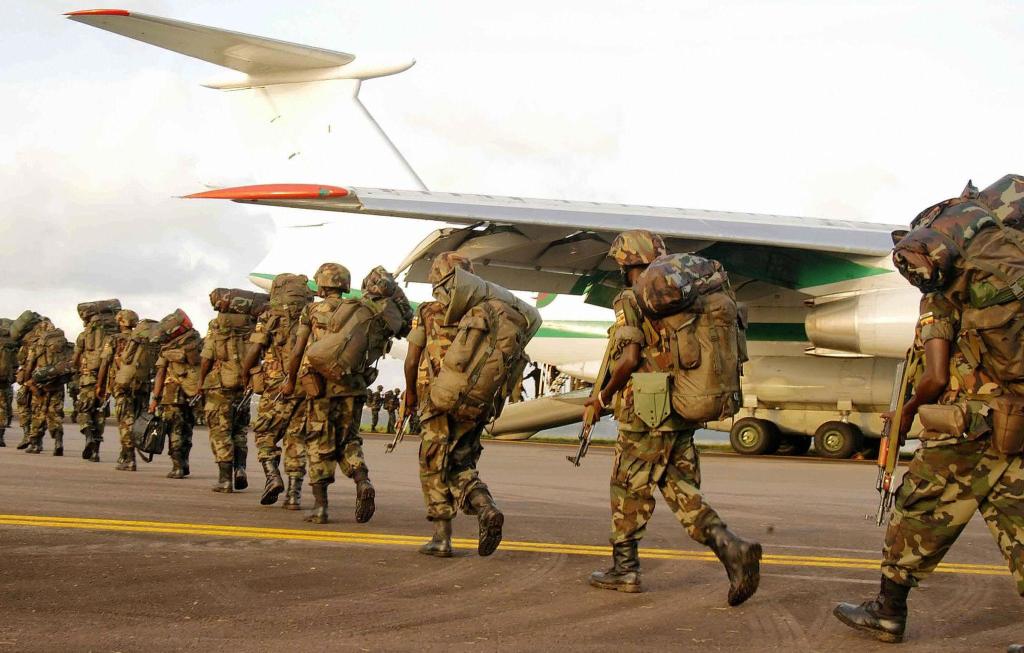
Uganda has begun withdrawing military personnel from Somalia, announcing plans to end its long-running deployment by December 2027.
The Uganda People’s Defence Forces confirmed that the first group of soldiers had already returned home as part of a phased withdrawal.
The decision affects troops deployed under a bilateral security agreement with Somalia and, eventually, Ugandan personnel serving with the African Union Support and Stabilisation Mission in Somalia.
The announcement marks a major transition in East Africa’s long-running campaign against al-Shabaab.
Nearly Two Decades of Military Involvement
Uganda has been one of the most significant contributors to African Union military operations in Somalia.
Its soldiers have participated in efforts to secure Mogadishu, protect government institutions, and confront al-Shabaab insurgents.
The deployment began during an earlier phase of African Union intervention and continued through successive international security missions.
Uganda’s involvement has carried substantial financial and human costs.
The government now intends to transfer responsibility for security operations to Somali forces as its personnel return home.
Somalia Faces a Difficult Security Transition
The withdrawal comes at a sensitive moment.
Somalia continues to experience militant attacks, political disagreements, and uncertainty surrounding its constitutional framework.
The departure of experienced foreign troops could create operational challenges if Somali security forces are not adequately prepared to assume their responsibilities.
Military transitions require coordination over intelligence, logistics, equipment, territorial control, and the protection of strategically important installations.
A poorly managed withdrawal could leave vulnerable areas exposed.
However, a successful transition could strengthen Somalia’s control over its own security institutions and reduce dependence on foreign military assistance.
Regional Security Implications
Uganda’s announcement will also affect other countries participating in African Union operations.
Regional governments must determine how to coordinate their military commitments as Somalia assumes greater responsibility for its defense.
Al-Shabaab remains capable of carrying out attacks in Somalia and neighboring Kenya.
The organization could attempt to exploit security gaps created by changes in troop deployments.
That possibility places additional importance on intelligence cooperation and careful withdrawal planning.
The Future of Somali Security
Uganda’s decision does not mean its soldiers will leave Somalia immediately.
The announced timetable extends through the end of 2027, allowing time for a phased transition.
Somalia’s government and its international partners will need to demonstrate that local forces can maintain security in areas previously protected by Ugandan personnel.
The broader challenge is building institutions capable of providing lasting security without indefinite reliance on foreign troops.
After years of international intervention, Somalia is approaching another consequential stage in that process.
Whether the transition strengthens Somali sovereignty or exposes new security weaknesses will depend heavily on the preparation and coordination of the governments involved.
—Matt Gwinta, B1Daily


Leave a Reply