—Kerry Hill, B1Daily
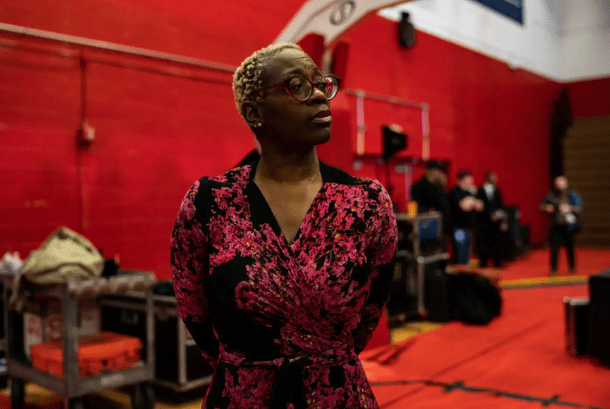
For years, Nina Turner has been treated as a supporting character in American progressive politics—a powerful voice deployed to energize crowds, defend movements, and translate outrage into hope, but rarely encouraged to lead at the highest level. That marginalization is not accidental, and it is precisely why Nina Turner needs to run for president.
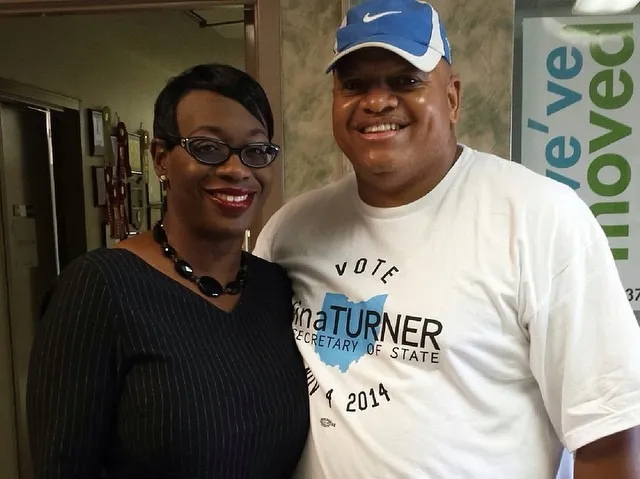
Her candidacy would do more than add another name to the ballot; it would disrupt a political culture that is comfortable with Black labor but uneasy with Black leadership. Nina Turner is unapologetically Black in a way that does not ask permission, seek approval, or soften itself for institutional comfort. That matters, because American politics has long rewarded Black candidates who mute their identity while penalizing those who center it.
Turner’s politics are grounded in lived experience and material reality. She speaks directly to the conditions Black Americans disproportionately endure: wage theft and stagnation, housing displacement, medical debt, environmental racism, voter suppression, and the carceral state. What separates Turner from many progressive candidates is her deliberate pivot over time toward explicitly naming Black suffering rather than subsuming it under vague “working-class” rhetoric. That shift was intentional. It reflected an understanding that universal language often erases the very communities it claims to uplift.
For the Black community, this pivot is not rhetorical—it is restorative. Turner does not frame Black issues as a special interest or an inconvenient footnote to broader reform. She places them at the center of economic justice, recognizing that policies capable of repairing harm to Black communities inevitably raise the floor for everyone else.
Nina Turner’s name recognition would be a real asset in a presidential run because it is rooted in credibility, not celebrity, and that matters in a crowded, skeptical political landscape.

First, her recognition comes from movement politics, not elite grooming. Many voters—especially Black voters and younger progressives—already know her as a national co-chair of Bernie Sanders’ 2020 campaign, a former Ohio state senator, and a frequent, forceful media presence. That means she would not be introducing herself from scratch. In early primary states where attention is scarce and resources matter, being immediately recognizable allows a candidate to skip the “who is this?” phase and move straight into defining the race on their terms.
Second, her name recognition is tied to moral clarity. Turner is known for speaking plainly, sometimes bluntly, about power, racism, capitalism, and hypocrisy within both parties. Even people who disagree with her tend to know what she stands for. In modern politics—where many candidates poll-test themselves into ambiguity—that kind of clarity builds trust. Voters are more likely to engage with, donate to, and volunteer for someone they believe is authentic, even if they don’t agree on every issue.
For the Black community specifically, her recognition carries symbolic and practical weight. She is already seen as an unapologetically Black political figure who does not code-switch or downplay racial realities to gain acceptance. That familiarity lowers skepticism and fatigue among voters who are used to candidates suddenly discovering Black issues every four years. It also helps with turnout: voters are more likely to show up for someone they already feel seen by.
Her visibility also translates into media efficiency. Because Turner is already a known quantity to national outlets, her campaign statements would be more likely to be covered, debated, and amplified—whether favorably or critically. That exposure is invaluable for a candidate who would likely face fundraising disadvantages compared to establishment-backed contenders. Name recognition can partially substitute for money by generating earned media and grassroots momentum.
Finally, Turner’s recognition is inseparable from her political journey, including her break from Bernie Sanders. That history gives her a narrative arc—loyalty, disillusionment, independence—that voters understand intuitively. It positions her not as a protest candidate, but as someone who has tested coalition politics, learned its limits, and chosen to lead rather than orbit.
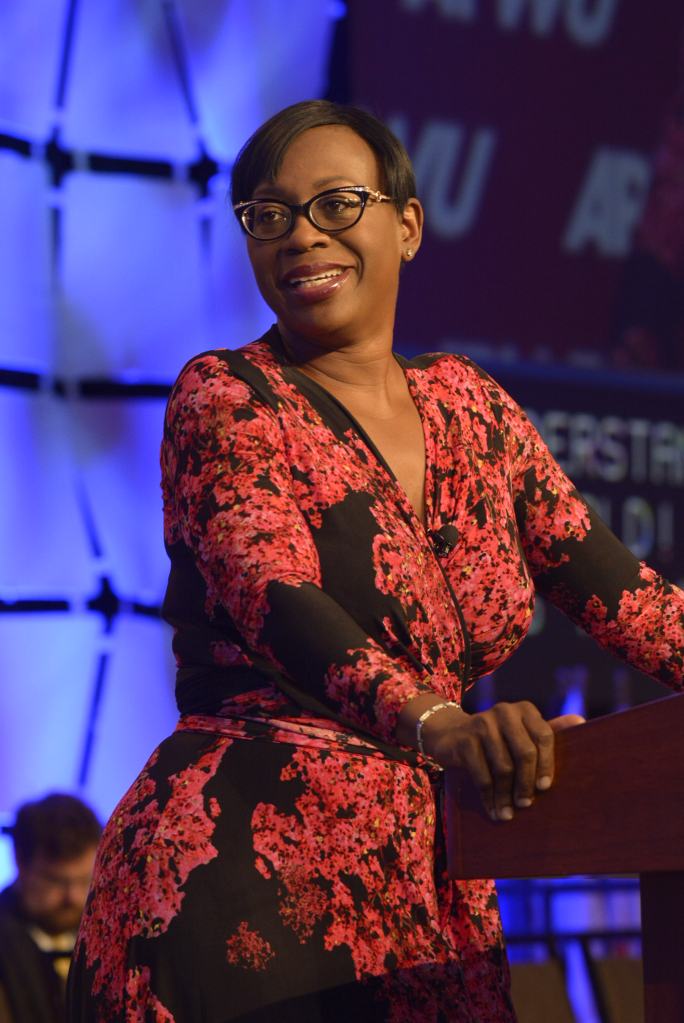
In short, Nina Turner’s name recognition wouldn’t just help people remember her—it would help them trust her, mobilize around her, and immediately understand why her candidacy exists in the first place.
Her political evolution is inseparable from her splintering from Bernie Sanders and eventual abandonment of his candidacy. As one of Sanders’ most visible and effective surrogates, Turner defended his platform with clarity and conviction. But when it became clear that progressive energy—especially energy fueled by Black organizers—was being mobilized without a corresponding willingness to fight entrenched power, Turner chose honesty over proximity.
That break was not betrayal; it was political maturity. It signaled a refusal to continue asking Black voters to lend their voices to movements that invoke solidarity but retreat when Black demands become too specific, too urgent, or too disruptive. Turner’s departure underscored a broader truth: Black political agency cannot be indefinitely subordinated to coalitions that only embrace it conditionally.
A Turner presidential run would have tangible positive effects for the Black community. It would normalize conversations about reparative justice, generational wealth extraction, maternal mortality, student debt burdens at HBCUs, and the racialized impact of austerity politics. It would inspire younger Black voters and organizers who are increasingly skeptical of electoral politics but still searching for leadership that speaks without translation.
Just as importantly, her campaign would challenge respectability politics head-on. Nina Turner does not code-switch to appear palatable, nor does she dilute her language to reassure donors or party elites. That authenticity is not a liability—it is an asset. Representation is not simply about visibility; it is about whose pain is treated as politically urgent and whose demands are deemed reasonable.
Even if victory were not immediate, a Turner campaign would permanently shift the political terrain. It would force institutions to respond, expose ideological fault lines, and make it harder for future candidates to ignore Black working-class realities. Every expansion of democracy in this country has required someone willing to be labeled “too much” before being recognized as necessary.
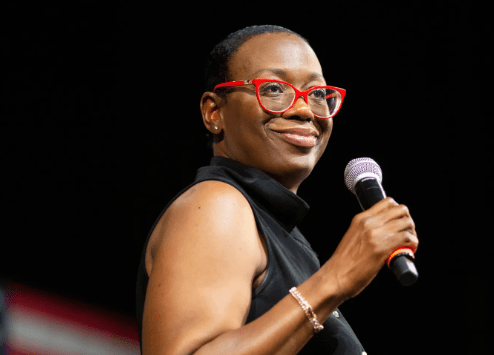
Nina Turner running for president is not about ambition for its own sake. It is about power, truth, and ownership. It is about a Black woman refusing to shrink herself to fit a system built on her exclusion—and in doing so, reminding the nation that justice has never arrived through patience, but through pressure.
If American politics is serious about transformation, then it must create space for leaders who confront the system rather than manage it. Nina Turner is one of those leaders. And her unapologetic Blackness may be exactly what this moment demands.
—Kerry Hill, B1Daily





Leave a comment