—Luân Đặng, B1Daily
Vietnam isn’t whispering its way into economic relevance. It’s manufacturing its presence like a factory floor running triple shifts, loud, relentless, and unapologetically productive.
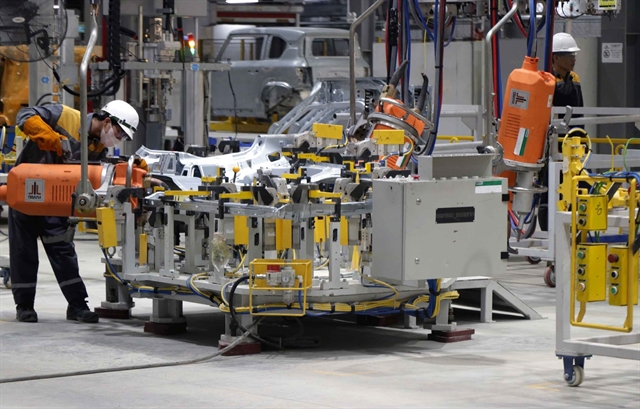
For seven straight months, the country’s manufacturing sector has expanded, driven by a surge in new orders, rising exports, and growing business confidence. The numbers tell a story of momentum that refuses to stall. Vietnam’s Purchasing Managers’ Index has stayed above the critical 50 mark, signaling continuous growth, while output, employment, and purchasing activity have all climbed in tandem. ()
This isn’t luck. It’s structure.
At the core of Vietnam’s rise is a brutally efficient economic formula: produce, export, reinvest, repeat. Demand has surged both domestically and internationally, with new orders increasing at a faster pace and export markets reopening across Asia. () When demand rises, factories don’t sit still. They hire more workers, ramp up production, and buy more raw materials, creating a self-reinforcing cycle of growth. That’s how you get seven months of expansion. That’s how you build economic gravity.
But here’s where it gets strategic.
Vietnam didn’t just stumble into this moment. It engineered it. The country has aggressively positioned itself as a global manufacturing hub, leveraging low labor costs, a young workforce, and a dense network of trade agreements that make it easier to sell goods worldwide. () While other nations debate policy, Vietnam signs deals. While others outsource identity, Vietnam exports it in containers.
And then there’s foreign direct investment, the quiet fuel behind the machine. Multinational companies have poured capital into Vietnam, building factories, transferring technology, and embedding the country into global supply chains. The result is a production ecosystem that doesn’t just assemble goods, but increasingly designs and innovates them.
Even the friction tells a story.
Input costs are rising. Supply chains are tightening. Delivery times are stretching. () That’s not weakness. That’s pressure from demand pushing the system to its limits. In economic terms, it’s what happens when growth outruns capacity. The machine is overheating because it’s working.
Now let’s pivot to the uncomfortable mirror.
What does this mean for the Black diaspora?
It means the blueprint exists. And it’s not theoretical.
Vietnam’s rise underscores a simple but often ignored truth: wealth follows production, not consumption. You don’t build economic power by importing everything and exporting culture. You build it by controlling supply chains, manufacturing goods, and owning the means of distribution.
Right now, too many Black communities globally are positioned as consumers in systems they don’t control. Dollars flow out faster than they circulate. Businesses are often small-scale, fragmented, and disconnected from industrial production. Meanwhile, Vietnam is scaling from workshops to factories to global export dominance.
The lesson isn’t to copy Vietnam. It’s to understand the mechanics.
Production creates leverage. Factories create jobs. Exports create currency inflow. Ownership creates stability.
Imagine what happens when that model is localized. When communities invest in manufacturing essentials like textiles, food processing, construction materials, or technology assembly. When supply chains are built, not borrowed. When production becomes cultural, not just economic.
Vietnam didn’t wait for permission. It built infrastructure. It trained workers. It attracted capital. It focused on making things the world needs.
That’s the shift.
Because economic independence doesn’t arrive with speeches. It arrives in shipments.
And right now, Vietnam is shipping its way into the future while much of the world is still talking about it.
—Luân Đặng, B1Daily






Leave a comment