—Vanessa Edwards, B1Daily
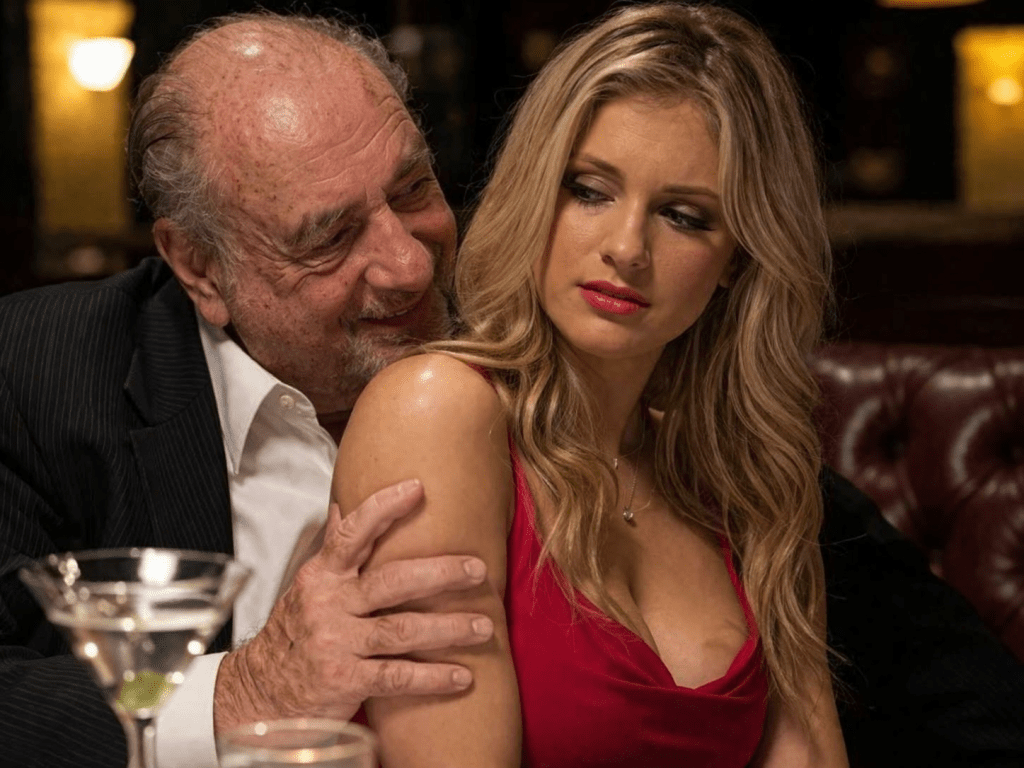
There’s a particular kind of audacity that walks into a room uninvited, adjusts its cufflinks, and decides it’s still 25. It usually smells faintly of cologne and entitlement. And more often than not, it looks like an older man convinced that young women are simply waiting to be impressed.
Let’s stop dressing this up as “preference” or “age-gap romance.” What we’re really talking about, in many cases, is a pattern that drips with imbalance. Older men pursuing significantly younger women isn’t new. But the persistence of it, especially in a culture where women are increasingly vocal about autonomy and boundaries, feels less like romance and more like a refusal to evolve.
The dynamic often comes wrapped in tired mythology. He’s “experienced.” She’s “mature for her age.” He can “provide.” Translation? A built-in power gap where one person holds the cards, and the other is expected to be impressed by the deck. It’s not always predatory, but when you zoom out, the pattern starts to look less like coincidence and more like a system that quietly rewards imbalance.
Young women aren’t imagining the discomfort. The unsolicited attention, the comments that toe the line between flattery and ownership, the way some older men bypass women their own age entirely as if youth itself is the prize. It creates an atmosphere where women, especially in their late teens and early twenties, are forced to develop a kind of social armor early. Not because they want to, but because they have to.
And here’s the part that doesn’t get enough airtime: women their own age are often not interested in them. That’s the inconvenient truth lurking beneath the surface. It’s easier to pursue someone younger, someone still figuring things out, than to engage with a peer who sees through the performance. Confidence isn’t always confidence. Sometimes it’s just unchecked ego wearing a nicer jacket.
Pop culture hasn’t helped. For decades, films, music, and media have packaged these relationships as aspirational. The older man is “distinguished.” The younger woman is “lucky.” That narrative has legs, even as reality keeps tripping it up. Because what’s marketed as glamorous often feels unsettling when it plays out in real life, especially when the attention is persistent, unwanted, or dismissive of boundaries.
None of this is about policing consenting adults. Grown women can and do make their own choices. But choice doesn’t exist in a vacuum. It’s shaped by social cues, power structures, and the stories we keep telling. And right now, one of those stories needs a serious rewrite.
Because young women are not trophies, not blank canvases, not ego boosters for men chasing their own fading reflections. They’re people. Fully formed, increasingly outspoken, and far less willing to entertain dynamics that feel off, even if society still tries to sell them as normal.
The real shift is already happening, quietly but unmistakably. Women are calling it out. They’re naming the discomfort. They’re setting boundaries without apology. And that polished, persistent myth that youth equals access? It’s starting to crack.
Good. It was overdue.
—Vanessa Edwards, B1Daily




Leave a comment