—Michael Lyles, B1Daily
China didn’t cross oceans with gunboats and flags; it arrived with contracts, cranes, and a calculator that never blinks. And across large stretches of Africa, those numbers are starting to read less like development and more like a ledger designed to keep entire nations running in place.
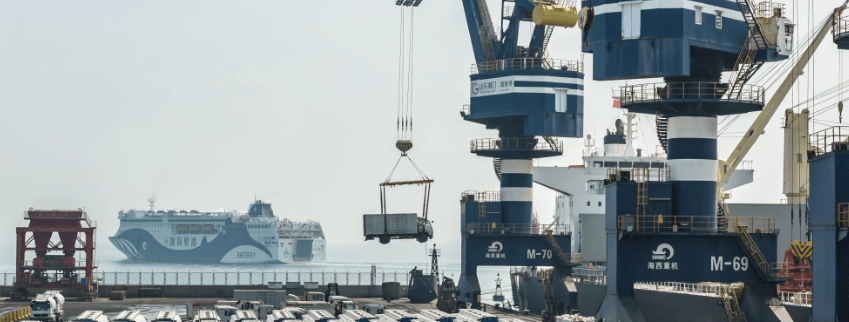
Beijing, through arms like the Belt and Road Initiative and the China Exim Bank, has poured billions into roads, railways, ports, and power plants from Kenya to Zambia. On paper, it looks like a renaissance: gleaming infrastructure where potholes and darkness once ruled. But scratch beneath the asphalt and steel, and the financing model reveals its teeth.
These deals are rarely grants. They are loans, often opaque, frequently collateralized, and sometimes tied to the very assets they build. When revenues underperform, and they often do, countries are left juggling repayment schedules that feel less like partnership and more like a slow tightening vice. Zambia’s debt crisis didn’t emerge in a vacuum, and Kenya’s struggles to make its Standard Gauge Railway profitable have become a cautionary tale whispered in finance ministries across the continent.
The pitch is always dressed in development language: growth, connectivity, modernization. But the structure can resemble a loop. Borrow heavily. Build quickly. Struggle to generate returns. Borrow again to service the first round. It is a cycle that critics argue echoes older patterns, where outside powers extracted value while local economies carried the weight.
This is where the comparison to European colonial-era economics starts to sting. The old empires built railways too, not as acts of charity, but as arteries for extraction. Today’s version is more polished, wrapped in diplomatic smiles and South-South cooperation rhetoric, but the endgame can look eerily familiar: control through dependency rather than direct rule.
To be clear, African leaders are not passive actors. Many have actively sought Chinese financing, frustrated by Western institutions that come with their own strings attached, lectures, and delays. China offers speed. It offers scale. It doesn’t ask uncomfortable governance questions. That combination is seductive, especially for governments under pressure to deliver visible results.
But speed without sustainability is a dangerous bargain. When debt servicing begins to crowd out spending on healthcare, education, and domestic investment, the shine fades quickly. Infrastructure that was supposed to unlock prosperity starts to feel like a toll booth on the future.
Beijing rejects the “debt trap” label, pointing to renegotiations and restructuring efforts as evidence of flexibility. And it’s true, China has, at times, extended maturities or adjusted terms. But restructuring a burden is not the same as removing it. The obligation remains, hanging over national budgets like a storm cloud that refuses to move on.
What’s unfolding is not a simple story of villains and victims. It’s a high-stakes economic relationship where power is uneven, incentives are misaligned, and the consequences are long-term. African nations need infrastructure. China needs influence, markets, and returns. The question is whether the current model delivers mutual growth or quietly locks one side into a cycle that looks suspiciously like the past with a fresh coat of paint.
Because if development becomes dependency, then the flags may have changed, but the outcome hasn’t.
—Michael Lyles, B1Daily






Leave a comment