—Sylvester Loving, B1Daily
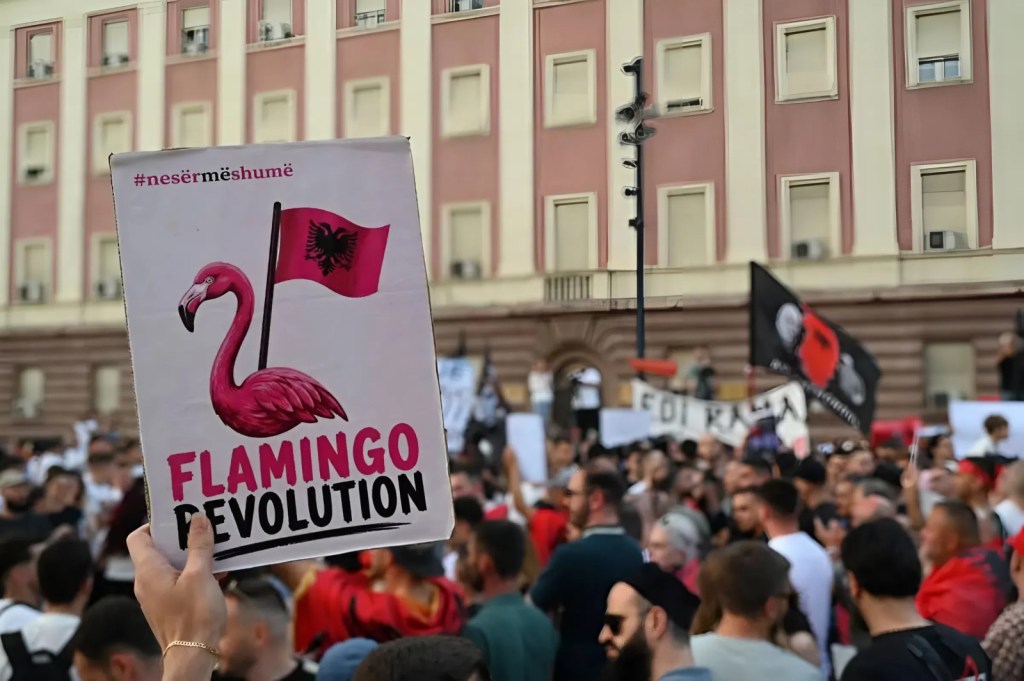
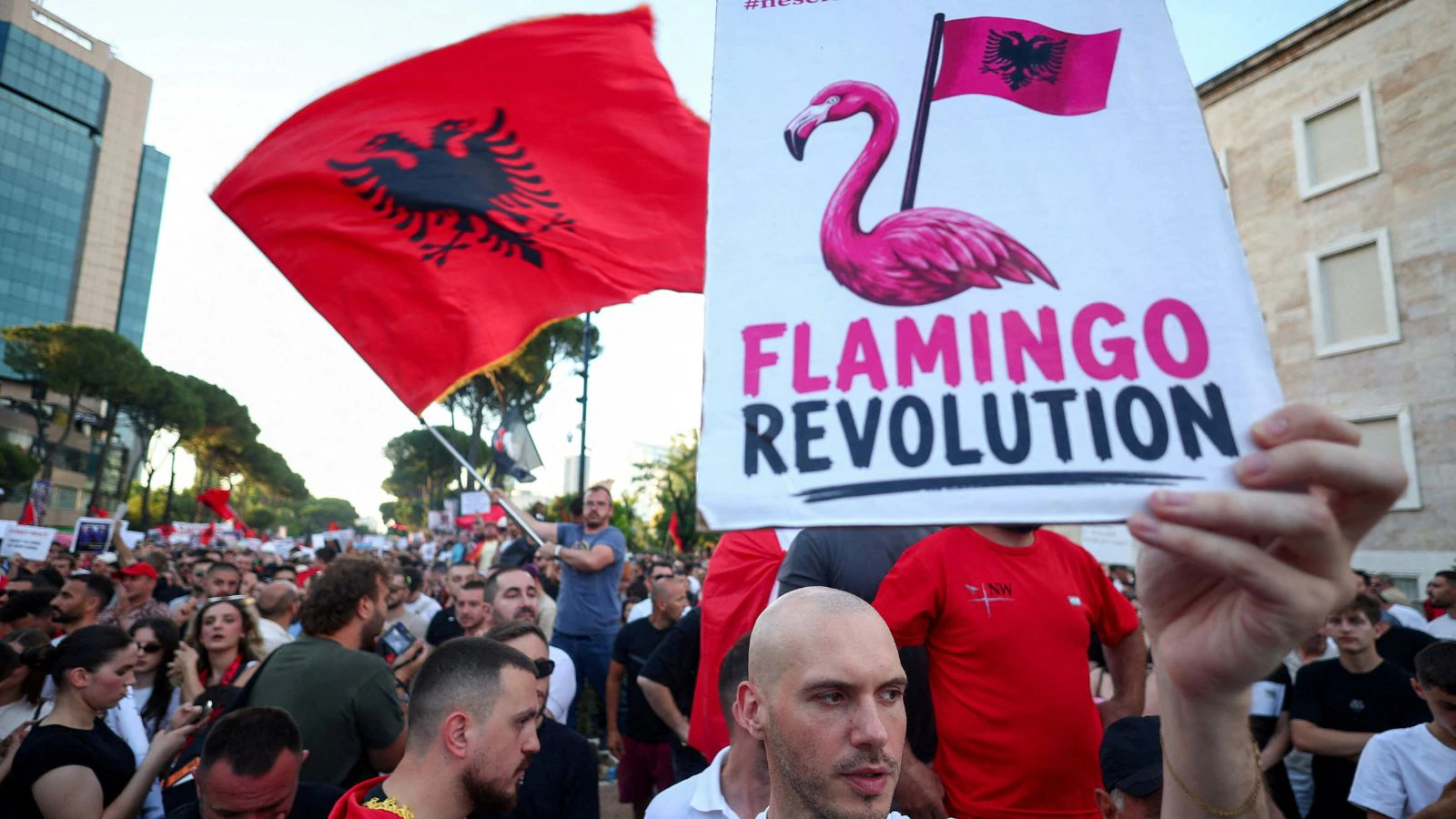
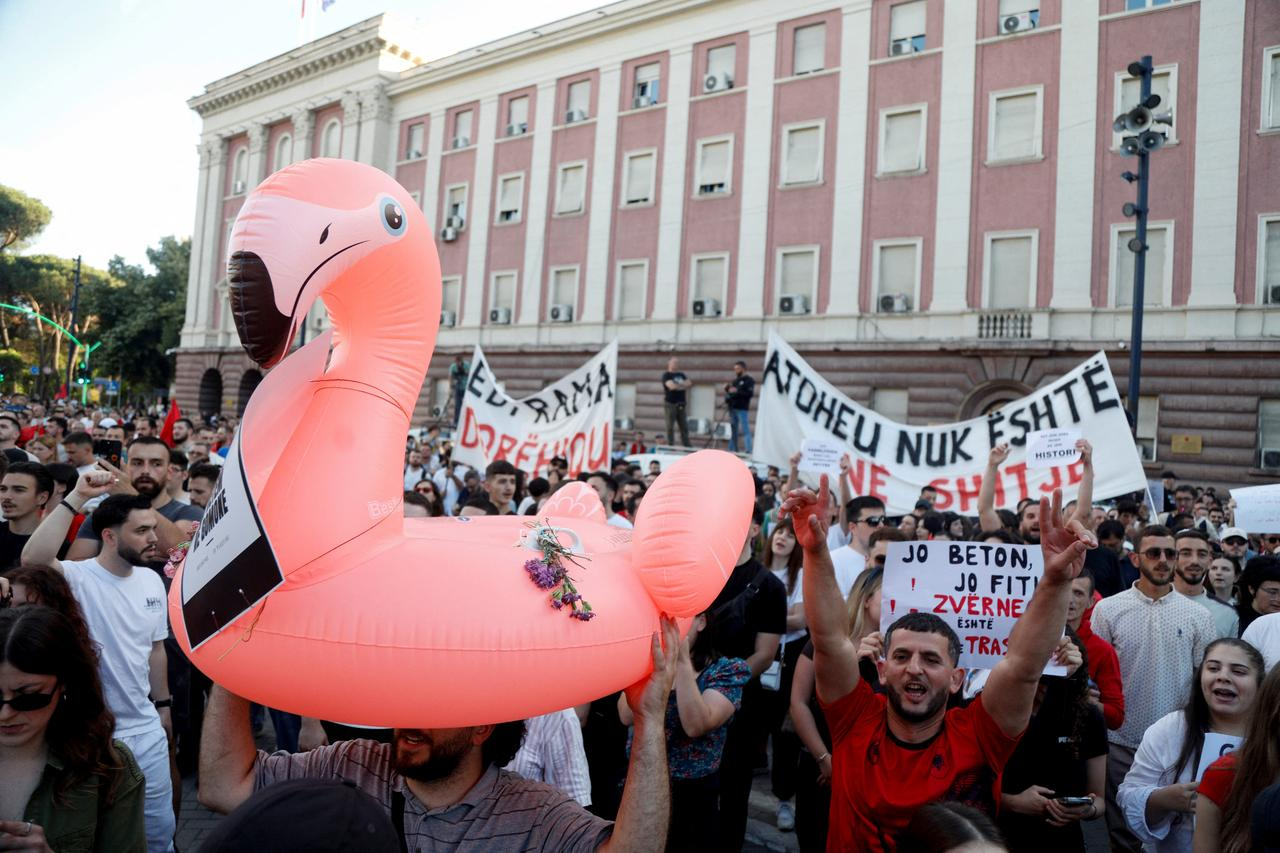
What began as opposition to a massive luxury development project has evolved into what many protesters are calling the “Flamingo Revolution,” a nationwide movement challenging the relationship between political power, foreign investment, and public ownership of some of Albania’s most treasured coastal lands.
More than 100,000 people have reportedly participated in demonstrations across the country, with the largest gatherings taking place in the capital city of Tirana. Protesters have marched through major streets, confronted police, and faced water cannons while carrying signs declaring, “Albania Is Not For Sale.”
The controversy revolves around plans to develop a pristine island and surrounding coastal areas that critics argue belong to the Albanian people, not wealthy investors.
Supporters of the project argue that Albania stands to gain billions of dollars in investment, thousands of jobs, increased tourism revenue, and international attention. Government officials have promoted the development as a once-in-a-generation economic opportunity capable of transforming parts of the country’s economy.
Opponents see something very different.
They argue that valuable public land is being transferred into the hands of politically connected elites while ordinary Albanians struggle with rising housing costs, low wages, and limited economic opportunities. Critics contend that the project represents a broader pattern in which prime real estate is increasingly being developed for wealthy foreigners while local communities receive few long-term benefits.
The controversy gained international attention because of the involvement of Jared Kushner and Ivanka Trump. Reports that entities connected to Kushner’s investment interests were pursuing major development opportunities in Albania quickly transformed a domestic dispute into a global story.
For protesters, the issue extends far beyond a single development project.
Many see the dispute as a referendum on the future direction of Albania itself. Should the country aggressively pursue foreign capital regardless of the social costs? Or should development be slowed to preserve public access, environmental protections, and national control over strategic assets?
Environmental concerns have become a major rallying point. Activists warn that large-scale luxury developments could threaten sensitive ecosystems, wildlife habitats, and some of the most scenic stretches of the Adriatic coastline. The flamingo, a bird associated with protected coastal wetlands in the region, has become an unofficial symbol of resistance against what protesters view as unchecked commercialization.
The demonstrations have also tapped into broader frustrations about corruption and transparency. Critics question whether politically connected investors receive preferential treatment when acquiring development rights. Protesters argue that decisions involving nationally significant land should undergo greater public scrutiny and consultation.
Government officials reject claims that Albania is being “sold off.” They maintain that foreign investment is essential for economic growth and that modern tourism projects can coexist with environmental protections. Supporters point to other Mediterranean countries that have successfully leveraged luxury tourism to boost employment and infrastructure development.
Yet the sheer size of the protests suggests that many Albanians remain unconvinced.
The “Flamingo Revolution” reflects a growing global tension visible from Southern Europe to Latin America and Africa: who truly benefits from development? Is economic growth enough to justify transforming public spaces into private luxury destinations? And how much influence should wealthy foreign investors have over the future of smaller nations?
For now, those questions remain unanswered.
What is clear is that a dispute over a small Mediterranean island has become something much larger. For thousands of Albanians, the battle is no longer just about a development project. It is about national identity, sovereignty, environmental stewardship, and whether ordinary citizens still have a meaningful voice in determining the future of their country.
The flamingo has become more than a bird. It has become a political symbol in a fight over who gets to shape Albania’s future.
—Sylvester Loving, B1Daily




Leave a comment