—Matt Gwinta, B1Daily
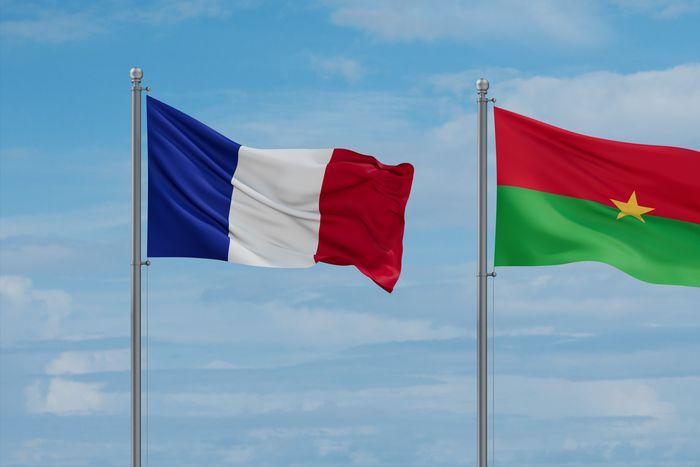
Burkina Faso has formally ended diplomatic relations with France, bringing to a close one of the most consequential bilateral relationships in modern West African history.
The announcement, delivered by government spokesman Gilbert Ouédraogo, accused France of violating the principles of mutual respect, national sovereignty, and non-interference. The military-led government also alleged that Paris had pursued “neo-colonial ambitions” and supported networks working against Burkina Faso’s interests, accusations France has firmly rejected.
For many observers, however, the diplomatic rupture did not come as a surprise. It is the culmination of nearly four years of steadily deteriorating relations following Captain Ibrahim Traoré’s rise to power in 2022.
Since taking office, Traoré’s government has expelled French troops, ordered French diplomats out of the country, reduced military cooperation with Paris, strengthened security partnerships elsewhere, and increasingly framed its foreign policy around national sovereignty rather than traditional alliances.
Breaking diplomatic relations represents the final symbolic step.
For decades, France maintained enormous political, military, and economic influence across its former African colonies through what critics commonly describe as “Françafrique,” a network of defense agreements, political partnerships, business interests, and cultural institutions that endured long after formal colonial rule ended.
Supporters of Burkina Faso’s decision argue that the relationship had become fundamentally unequal.
Many believe French military operations failed to stop the jihadist insurgency that has devastated much of the Sahel over the past decade. Others argue that continued dependence on former colonial powers limited African governments’ ability to chart independent economic and security policies.
Within Burkina Faso, the move is being portrayed by supporters as a reclaiming of national sovereignty.
France, meanwhile, expressed regret over the decision, calling it hostile and unfounded while indicating that reciprocal diplomatic measures are under consideration. French officials also advised citizens remaining in Burkina Faso to exercise heightened vigilance amid the changing political environment.
The diplomatic break also reflects a broader geopolitical transformation taking place across the Sahel.
Burkina Faso, Mali, and Niger have increasingly coordinated their foreign policy through the Alliance of Sahel States (AES), distancing themselves from traditional Western partners while seeking new security and economic relationships. The three governments have consistently argued that African nations should have greater control over their own defense and development strategies.
Whether that strategy ultimately improves security remains one of the region’s biggest unanswered questions.
Burkina Faso continues to battle one of Africa’s deadliest Islamist insurgencies, with armed groups controlling or contesting significant portions of the country. Critics argue that severing ties with France does not solve the underlying security crisis and could leave the country more isolated diplomatically.
Supporters counter that previous security partnerships produced few lasting results and that a new strategic direction deserves the opportunity to succeed.
Economically, the implications are equally significant.
France has historically been an important source of development assistance, investment, and technical cooperation. A complete diplomatic rupture could complicate future economic agreements, educational exchanges, and humanitarian coordination, although neither side has announced a complete halt to commercial activity.
The Burkina Faso government has emphasized that its dispute is with the French government, not with the French people, and has urged citizens to respect French nationals living in the country.
The larger significance of the decision extends well beyond Ouagadougou.
Across Africa, debates over sovereignty, foreign military presence, resource control, and post-colonial influence continue to reshape political discourse. Burkina Faso’s move will likely energize those calling for a redefinition of Africa’s relationships with former colonial powers while prompting Western governments to reconsider how they engage with rapidly changing political landscapes on the continent.
Whether history remembers this moment as the beginning of a stronger, more independent regional order or as another chapter in an increasingly unstable Sahel will depend less on symbolism and more on what follows.
For now, one fact is undeniable: one of France’s oldest diplomatic relationships in Africa has officially come to an end, marking a pivotal moment in the continent’s evolving political story.
—Matt Gwinta, B1Daily




Leave a comment