
—Sylvester Loving, B1Daily
“The best way to conquer a city is to offer to fix its potholes,” the old saying goes. But in the case of Jared Kushner, he isn’t interested in the potholes. He’s interested in who owns the land beneath them.
That is the unofficial motto of the modern Kushner-led development project. It is a phrase that has begun to echo through the streets of Tirana, Albania, as members of the “Flamingo Revolution” protest movement realize that the “modernization” promised to their city wasn’t a gift to the public, but a tailor-made suit for a very specific kind of investor.
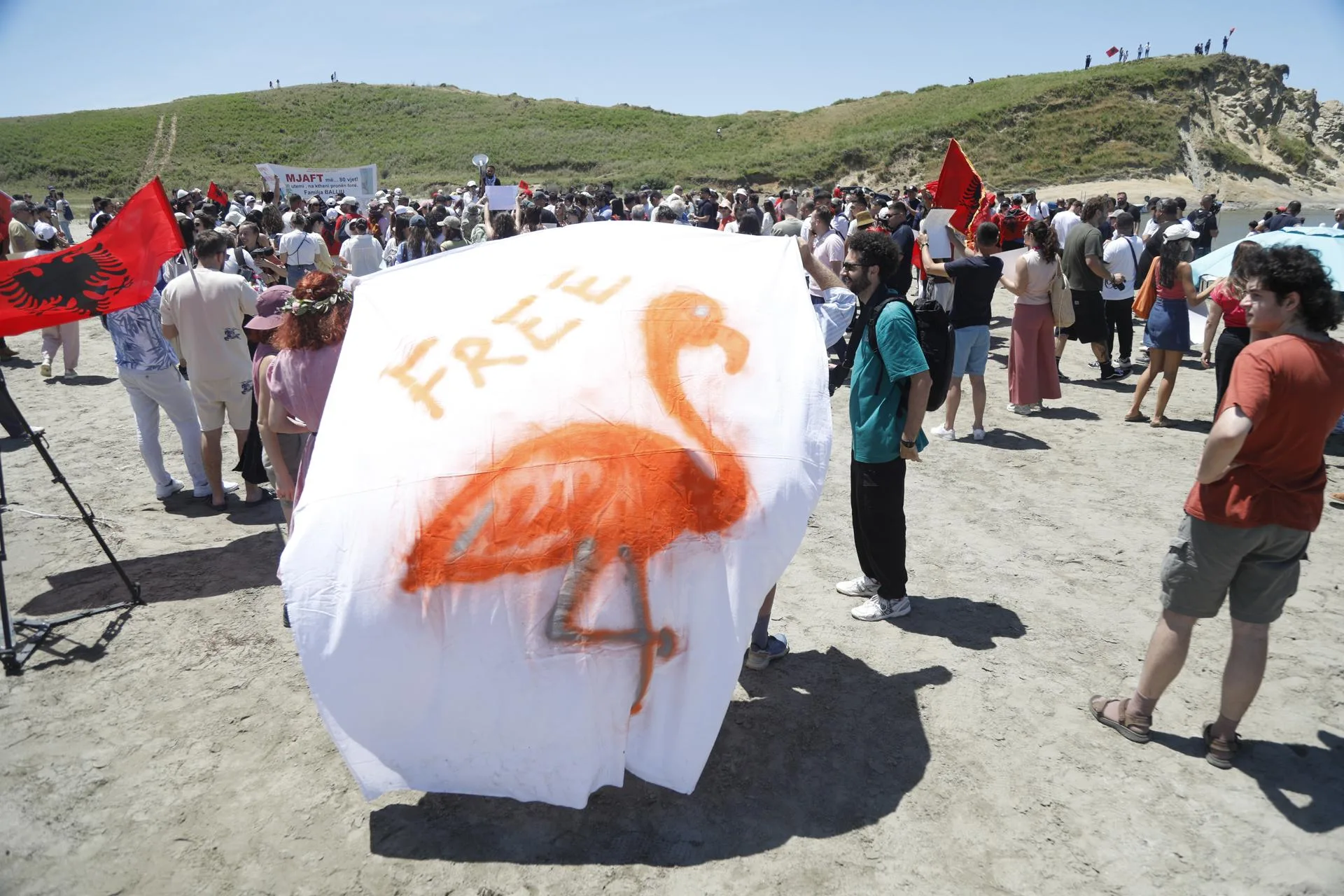
For those who view Jared Kushner as a benign figure of high-finance efficiency, the recent friction in Albania serves as a necessary reality check. To understand why Kushner is a polarizing and often dangerous, catalyst for urban development, one must look past the glossy architectural renders and into the machinery of “access capitalism.”
The primary issue with Jared Kushner is not simply his politics or his family pedigree; it is his methodology. Kushner operates on a model of transactional diplomacy. Whether it was his tenure in the White House or his current foray into international real estate, the pattern remains the same: identify a power vacuum, leverage high-level political connections to secure preferential terms, and build structures that serve the elite while displacing the existing social fabric.
In Albania, the “Flamingo Revolution” members aren’t protesting the idea of new buildings; they are protesting the way those buildings arrive. When a developer has a direct line to heads of state, the standard checks and balances of urban planning, environmental impact studies, zoning laws, and public hearings, become mere suggestions.
Kushner’s approach to development is often described as “revitalization,” but to the locals, it feels more like “eviction by aesthetics.”
The “Kushner Model” relies on a specific type of gentrification that doesn’t just raise rents, it replaces the soul of a neighborhood with a sanitized, luxury version of itself. By creating high-end enclaves that are physically and economically walled off from the local population, these projects create “micro-cities” of wealth. In the case of the Albanian developments, the protest is a visceral reaction to the feeling that their land is being carved up by a man who views a city not as a community, but as a portfolio.
Perhaps the most unsettling aspect of Kushner’s trajectory is the blurring of the line between private profit and public policy. When a former senior advisor to a superpower begins courting sovereign wealth funds and negotiating land deals with foreign governments, the potential for conflict is not a bug, it’s the feature.
The opposition from the Flamingo Revolution is a recognition that when Kushner enters a market, the “market” ceases to be fair. Competition is stifled because no other developer has the same level of perceived diplomatic immunity or access to the halls of power. It is a form of soft-power colonization, where the currency is luxury condos and the cost is local autonomy.
If you aren’t an Albanian citizen, it is easy to dismiss this as a localized dispute over zoning. But the “Kushner Model” is an export. From New York to Tel Aviv to Tirana, the strategy is the same: leverage prestige to bypass process.
The reason to oppose this approach, and the reason the Flamingo Revolution is fighting so hard, is that it erodes the idea of the “public square.” When cities are built by and for the hyper-elite, the people who actually live there become ghosts in their own hometowns.
Jared Kushner doesn’t build for the people; he builds for the image of the people he wants to attract. And as Albania is discovering, once the gilded blueprint is implemented, there is no room left for the people who were there first.
—Sylvester Loving, B1Daily





Leave a comment