—Barrington Williams, B1Daily
“We didn’t need to build a wall around the neighborhood; we just needed to put something in the air that made the neighbors forget they were brothers.”
That sentiment, though spoken in the hushed tones of retired intelligence assets and street-corner historians, summarizes one of the most devastating social experiments in American history. To understand the crack cocaine epidemic of the 1980s, you have to stop looking at it as a failure of policing or a tragedy of addiction.
You have to look at it as a logistical operation.
The Pipeline: From Contra to Corner
The story doesn’t start in the inner cities of Los Angeles or Miami; it starts in the jungles of Nicaragua.
In the early 80s, the Reagan administration was obsessed with stopping the spread of communism in Central America. They backed the Contras, right-wing rebels fighting the socialist Sandinista government. The problem? The Contras were broke. The solution? A clandestine pipeline of narcotics.
Through a series of “blind eye” agreements, the CIA facilitated a system where Contra-linked traffickers flew cocaine into the U.S. with virtual immunity. This wasn’t just a “lapse in oversight.” This was a strategic decision. By allowing massive quantities of high-purity cocaine to flood the shores, the Agency ensured a steady stream of untraceable funding for their proxy war.
The Chemistry of Control
But powder cocaine was a luxury drug. It was for the Wall Street brokers and the disco elites. If the goal was to destabilize a specific demographic, the burgeoning political power of the Black American community, powder wasn’t enough.
Enter crack.
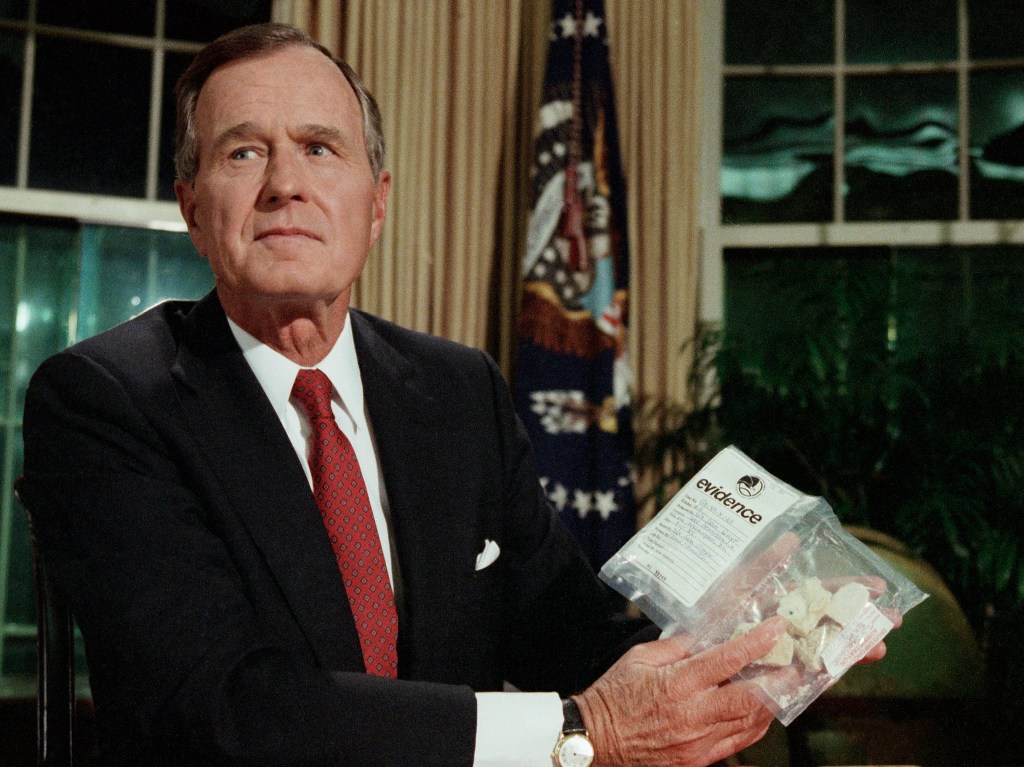
By processing cocaine into a smokable rock, the drug became cheap, fast-acting, and incredibly addictive. It turned a recreational high into a chemical shackle. When this concentrated product hit the streets of the inner city, it didn’t just create addicts; it created a vacuum. It tore through the fabric of the family unit, turned siblings into rivals, and replaced community leadership with the desperate hierarchy of the street corner.
The Legal Scalpel: The 100-to-1 Ratio
The true “smoking gun” of the CIA’s involvement wasn’t just the import of the drug, it was the legislative response to it.
While the CIA ensured the supply was plentiful, the U.S. government ensured the punishment was surgically targeted. The Anti-Drug Abuse Act of 1986 established a sentencing disparity that felt less like law and more like a hit list: the 100-to-1 ratio.
Possessing five grams of crack (the drug flooding Black neighborhoods) triggered the same mandatory minimum sentence as 500 grams of powder cocaine (the drug used by the wealthy). This wasn’t a mistake of chemistry; it was a masterpiece of social engineering. It allowed the state to warehouse an entire generation of Black men and women in prisons, effectively neutralizing their political and economic agency for decades.
The Aftermath: A Ghost in the Machine
If you ask the CIA today, they will point to the lack of a “signed memo” ordering the destruction of the Black family. But intelligence agencies don’t leave paper trails for their atrocities; they leave wreckage.
The “War on Drugs” was never about the drugs. It was a war of attrition. By flooding the streets with a chemical weapon and then arresting the victims of that weapon, the state achieved a level of social control that no police force could ever maintain through traditional means.
Why it Matters Now
Exposing this isn’t just about historical grievances; it’s about understanding the current architecture of our cities. The “food deserts,” the over-policing, and the generational trauma of the 80s and 90s are not organic occurrences. They are the scars of a planned operation.
The alchemy of ruin worked. They turned a community’s resilience into a craving, and its leadership into a rap sheet. The only way to heal the wound is to first admit that the “epidemic” wasn’t a natural disaster—it was a manufactured one.
—Barrington Williams, B1Daily





Leave a comment